
Sauces & Condiments
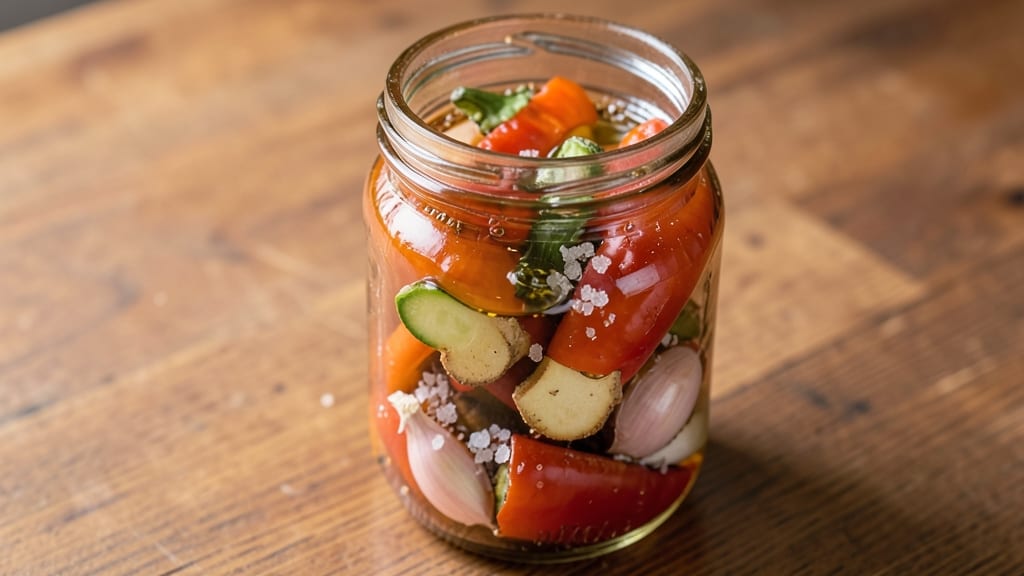
Brad's fermented hot sauce delivers a complex, umami-rich heat that goes beyond the sharpness of traditional vinegar-based sauces. This recipe builds flavor through controlled fermentation, transforming simple ingredients into a sauce with depth and character that develops over time. The process may sound intimidating, but with precise ratios and patience, you'll achieve a sauce that rivals artisanal brands—without the commercial shortcuts.
What sets this method apart is the fermentation stage, where natural bacteria and enzymes break down the peppers and aromatics into rich, layered flavors. Unlike quick-batch hot sauces, this approach creates a sauce with savory umami notes that balance the heat, making it versatile for everything from tacos to marinades.
The aging process also mellows the initial sharpness, resulting in a smoother, more sophisticated finish.
This recipe requires just five core ingredients—peppers, salt, water, and optional aromatics—but the technique is where the magic happens. You'll learn how to control fermentation temperature, monitor progress, and know when to bottle your sauce for maximum flavor.
The result is a deeply flavorful, vinegar-light hot sauce that builds complexity with each use, rewarding your patience with restaurant-quality heat.
Whether you prefer classic heat or want to experiment with smoky chipotle or fruity mango variations, this method adapts easily. Safety notes are included to ensure a successful fermentation, so you can focus on creating a sauce that stands out in your kitchen.
Let’s get started on building flavor the natural way.
Ingredients for brad's fermented hot sauce
Five core ingredients transform into a complex, umami-driven hot sauce through precise fermentation techniques.
| Ingredient | Amount | Notes |
|---|---|---|
| Fresh Habanero Peppers 🌶️ | 4 whole | Seeds removed for milder heat |
| Diamond Crystal Kosher Salt 🧂 | 1 ½ tbsp | Non-iodized for proper fermentation |
| Filtered Water 💧 | 2 cups | Chlorine-free for microbial activity |
| Fresh Garlic Cloves 🧄 | 4 cloves | Peeled, roughly chopped |
| Fresh Ginger Root 🌿 | 1 ½ oz | Peeled, grated finely |
| Extra-Virgin Olive Oil 🫒 | ½ cup | Added post-fermentation for richness |
| Apple Cider Vinegar 🍋 | 1 tbsp | Acidification step only |
| Honey 🍯 | 1 tbsp | Balances acidity naturally |
The habanero peppers form the heat foundation—opt for fresh, firm specimens with vibrant color for maximum capsaicin content. Whole Foods Market and specialty Latin markets typically carry the freshest varieties, though standard grocery stores often stock them too. Remove seeds carefully to control heat intensity; wear gloves as habanero oils cause skin irritation. The garlic and ginger should be organic when possible to avoid pesticide residue that could inhibit fermentation. For the salt, Diamond Crystal is preferred due to its coarse texture and pure sodium chloride composition, which ensures proper osmotic pressure during fermentation.
No habanero peppers? Serrano or Thai bird's eye peppers work as direct substitutes, though flavor profiles will differ slightly. The salt can be swapped for Maldon flaky salt at half the quantity, though texture may affect brine consistency. For those avoiding vinegar entirely, lemon juice at the same volume provides acidification without the sharpness. The olive oil should be high-quality extra-virgin—avoid light or refined oils that lack fruity depth. Honey can be replaced with agave nectar or maple syrup for vegan adaptations, though flavor nuances will shift. Always use filtered or distilled water to prevent chlorine from inhibiting microbial activity.
Fermented hot sauces require proper storage conditions to maintain safety and flavor. Once bottled, store in a cool, dark place for 4-6 weeks to develop complexity, then refrigerate indefinitely. The sauce will continue evolving in flavor over 6-12 months when properly preserved. For long-term storage, sterilized glass bottles with airtight seals are essential—avoid metal containers that can react with the acidity. Always use clean utensils when sampling to prevent contamination. The finished product can be diluted with water or broth for immediate use, though maximum flavor develops with 3-4 weeks of aging.
Why You'll Love This Recipe
- No Chopping Needed: I swear by this recipe because it’s basically hands-off after the initial prep. Just slice those habaneros and garlic, toss them in a jar with salt and water, and let time do the work. No dicing, no blending—just a few minutes of active time, then forget about it.
- Heat with Depth: The ginger and garlic in this fermented sauce add layers beyond just spice. It’s not just fiery—it’s got this funky, umami richness that builds over weeks. Drizzle it on eggs, toss it in tacos, or use it as a marinade, and you’ll taste why fermented heat beats store-bought every time.
- Lasts Months, Costs Pennies: A single batch keeps in my fridge for weeks, and I stretch it across breakfasts, lunches, and even as a cocktail garnish. Habaneros are cheap in bulk, and salt and water? You’ve got those on hand. It’s my go-to for when I want flavor without the grocery bill shock.
- Weeknight Superpower: I keep a jar in my fridge for those nights when I’m too tired to cook but still want something bold. A splash on grilled cheese, a drizzle over rice and beans—it’s the easy way to make simple meals feel special. No last-minute shopping, no complicated steps. Just open, pour, and enjoy.
Step-by-step instructions for brad's fermented hot sauce recipe
Here's the precise method to develop complex umami flavor through fermentation, balancing heat with depth.
Prepare the Fermentation Base
In a clean, sterilized quart-sized mason jar, combine the 4 whole fresh habanero peppers (seeds removed) with the 1.5 tablespoons diamond crystal kosher salt. Gently pack the peppers into the jar, pressing down lightly to create space for the remaining ingredients. The salt will begin drawing moisture from the peppers immediately, which is essential for creating the anaerobic environment needed for fermentation.
Add the 4 peeled, roughly chopped fresh garlic cloves and the 1.5 ounces finely grated fresh ginger root. Stir these ingredients together with the peppers and salt until they're evenly distributed throughout the jar. The ginger and garlic will contribute their own fermentative compounds, deepening the sauce's complexity beyond just heat.
Add Water and Begin Fermentation
Pour the 2 cups filtered water into the jar, ensuring all ingredients are fully submerged. The water level should be at least 1 inch above the top of the ingredients to prevent mold growth. Seal the jar tightly and place it in a dark, warm location—ideally between 70-75°F—where it will remain undisturbed for 7-10 days. This temperature range promotes optimal fermentation activity while preventing harmful bacteria from developing.
Check the jar daily for any signs of mold or excessive foam formation. If you see mold, simply remove the affected layer with a clean spoon and continue fermenting. The fermentation process should produce a subtle effervescence and develop a tangy aroma within 3-4 days, indicating active microbial activity.
Acidify and Stabilize the Ferment
After 7-10 days, open the jar and carefully pour in the 1 tablespoon apple cider vinegar. Stir thoroughly to distribute the acid throughout the mixture, which helps stabilize the fermentation and preserve the sauce. The vinegar also introduces a bright, clean acidity that balances the developing umami notes. Let the mixture sit at room temperature for an additional 24 hours to allow the acid to fully integrate.
During this time, you may notice some separation or cloudiness in the liquid. This is normal and indicates active fermentation. The peppers should have softened noticeably, and the mixture should smell distinctly tangy with underlying sweetness from the honey you'll add next.
Blend and Emulsify the Sauce
Transfer the fermented mixture to a high-speed blender or food processor. Add the 1 tablespoon honey and blend until completely smooth, scraping down the sides as needed. The honey will help balance the acidity and add subtle sweetness, while also contributing to the sauce's natural preservation.
With the blender running on low speed, slowly drizzle in the 0.5 cup extra-virgin olive oil. This step is critical—adding the oil gradually allows it to emulsify properly with the fermented liquid, creating a stable sauce rather than a separated mixture. The olive oil will also carry the heat and umami flavors, making each drop packed with intensity.
Rest and Bottle for Maximum Flavor Development
Pour the blended sauce into clean, sterilized bottles or jars, leaving about ½ inch of headspace to allow for any potential expansion. Seal tightly and store in a cool, dark place for at least 1 week before using. This resting period allows the flavors to fully meld and develop, with the heat becoming more integrated and the umami notes deepening.
The sauce will continue to improve over time, reaching peak flavor after 2-3 weeks. When ready to use, shake the bottle vigorously before each serving to redistribute any separated oil. The final product should have a vibrant red-orange color, a complex aroma combining heat, garlic, and ginger, and a balance of tangy, sweet, and umami flavors with a lingering habanero kick.
Pro Tips For Making Brad'S Fermented Hot Sauce
- STACK PEPPERS TIGHTLY: Pack those habaneros into the jar with their stems facing down—no gaps. I learned this the hard way when my first batch had too much air and turned out watery. Use a spoon to press them firmly, especially around the edges, so they release their juices faster and start fermenting evenly.
- SALT THE GARLIC GINGER: Toss the sliced garlic and ginger in a bowl with 1 teaspoon of kosher salt before adding them to the jar. This draws out moisture and prevents mold—something that happened to me twice before I realized the raw aromatics needed a little help staying dry.
- WEIGH DON’T MEASURE SALT: Diamond Crystal kosher salt clumps differently than table salt. For every pound of peppers, use 1.5 ounces of salt by weight (not volume)—I used a kitchen scale after my first batch came out too mild. Too little salt = no fermentation; too much = a brine bomb.
- BURP THE JAR DAILY: Open the jar just enough to let gases escape for the first 3–4 days, then switch to a loose lid. I skipped this and ended up with a jar that looked like a soda bottle ready to explode. Fermentation creates CO₂, and you need that pressure to release.
Regional styles of brad's fermented hot sauce
Carolina Heat Style
In the Carolinas, fermented hot sauces often incorporate smoked paprika and liquid smoke for a signature smoky depth. Replace 1 tbsp of the apple cider vinegar with 1 tsp liquid smoke (like Albertsons brand) and add 1 tsp smoked paprika during blending.
This creates a sauce perfect for pulled pork or grilled meats, where the smoky notes complement the natural char. 🌶️
Texas Chipotle Twist
For a Tex-Mex inspired variation, blend in 2-3 canned chipotle peppers in adobo sauce (about 2 tbsp total) after the initial fermentation. The adobo sauce adds a smoky, slightly sweet dimension that pairs beautifully with tacos or enchiladas.
Reduce the habanero count to 2 peppers to balance the intensity. 🔥
Louisiana Cajun Fusion
Cajun cuisine loves bold, layered flavors—this version swaps the ginger for 1 tsp dried thyme and 1 tsp filé powder (made from ground sassafras leaves). Add 1/2 tsp cayenne pepper during blending for extra heat.
This sauce works perfectly with gumbo or jambalaya, where it can be simmered directly into the dish. 💛
Mexican Mango Heat
For a fruity-sweet balance, blend in 1/2 cup diced mango (fresh or frozen) after fermentation. Add 1 tsp ground cumin and 1/2 tsp cinnamon during the emulsification step. This variation is ideal for drizzling over grilled fish or ceviche, where the tropical fruit notes complement the habanero heat. 🌿
Southern BBQ Glaze
Reduce the water to 1 cup and add 1/4 cup tomato paste during fermentation for a thicker, glaze-like consistency. After blending, stir in 1 tbsp molasses for depth. This version works as a dipping sauce for wings or a glaze for ribs, with a slightly sticky, smoky-sweet profile. 💡
Nutrition facts
Frequently asked questions about fermented hot sauce
Why does this recipe use fermentation instead of vinegar?
Fermentation develops complex umami depth and natural sweetness that vinegar-based sauces lack. The process breaks down peppers and aromatics into rich, layered flavors over time, creating a smoother, more sophisticated heat profile. Think of it like making kombucha—controlled fermentation transforms simple ingredients into something extraordinary.
Can I adjust the heat level in this sauce?
For milder heat, remove all seeds and membranes from the habanero peppers before fermenting. Want more fire? Keep the seeds intact or add 1-2 extra peppers to the batch. The fermentation process naturally mellows the heat over time, so don't worry about starting too spicy—it'll balance out.
What if mold appears during fermentation?
Small amounts of mold on the surface are normal—just skim it off with a clean spoon and continue fermenting. However, if you see black or fuzzy mold spreading or smell something off, discard the batch immediately. Always use sterilized equipment and maintain at least 1 inch of liquid above the ingredients to prevent contamination.
How long will the finished sauce keep?
Properly stored in sterilized glass bottles, this sauce will last 6-12 months at room temperature or indefinitely in the refrigerator. The flavors actually improve with age, developing deeper complexity over time. For best quality, use within 1 year and always check for any signs of spoilage before opening.
Can I make this sauce without vinegar?
Yes! Replace the apple cider vinegar with 1 tbsp lemon juice or 1 tsp citric acid dissolved in water. The acidification step is critical for safety—it lowers the pH to prevent harmful bacteria growth while preserving the fermented flavors. Just be aware the final product may have slightly different brightness.