
Sauces & Condiments
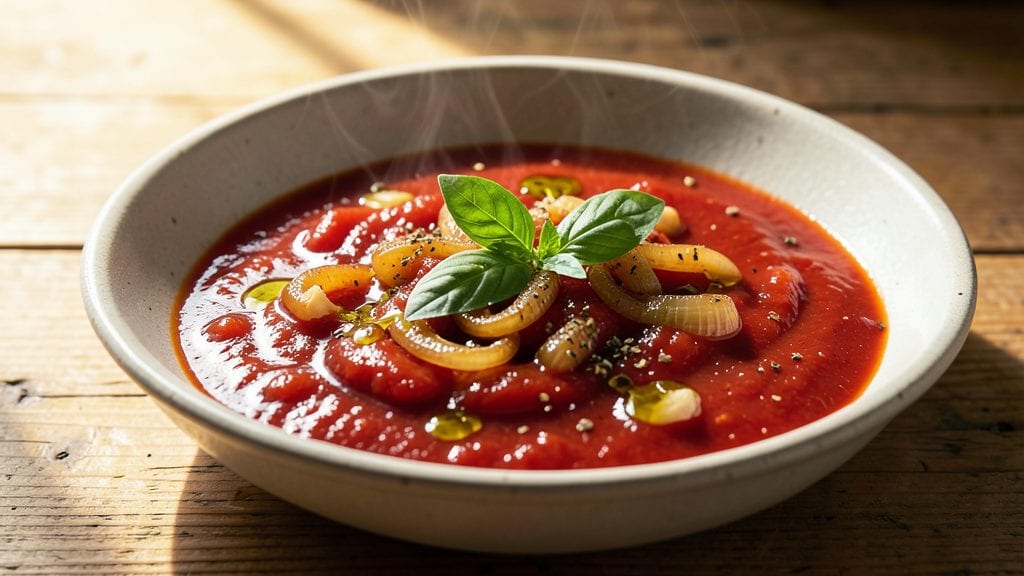
Transforming pantry staples into canned Italian tomato sauce that rivals store-bought requires precision—not just throwing ingredients together. This recipe delivers the deep, layered flavor of traditional Italian tomato sauce using only canned tomatoes, aromatic herbs, and a few key techniques that develop complexity during slow cooking.
The result is a smooth, velvety sauce with balanced acidity and sweetness, perfect for pasta, pizza, or braising.
What sets this sauce apart is the two-stage cooking process that mimics commercial canning methods without specialized equipment. First, we build flavor by simmering tomatoes with aromatics until they break down naturally.
Then, we refine the texture by blending and reducing, creating that signature silky consistency. The secret weapon? A blend of dried and fresh herbs that delivers restaurant-quality depth without overpowering the tomatoes.
By the time you taste the finished sauce, you’ll recognize why professional chefs rely on similar techniques—it’s rich enough to stand alone but versatile enough to elevate any dish.
The slow reduction concentrates the natural sweetness of the tomatoes while preserving their acidity, creating a perfect balance that’s both comforting and sophisticated. This isn’t just a substitute; it’s a professional-quality sauce made from simple ingredients.
Use it immediately for pasta or pizza, or store it in the refrigerator for up to 5 days or freeze for 3 months—the flavor actually improves with time.
For variations, try blending in a few sun-dried tomatoes for extra depth or leaving it slightly chunky for rustic texture. Here’s how to make it perfectly every time.
Ingredients for canned italian tomato sauce
Pantry staples transform into velvety Italian tomato sauce with two-stage cooking precision.
| Ingredient | Amount | Notes |
|---|---|---|
| San Marzano Whole Canned Tomatoes 🍅 | 28 oz | Crushed by hand for consistency |
| Extra-Virgin Olive Oil 🫒 | ¼ cup | High-quality, fruity variety |
| Yellow Onion 🧅 | 1 whole | Finely diced, sweet variety |
| Garlic Cloves 🧄 | 4 cloves | Peeled, roughly chopped |
| Fresh Basil Leaves 🌿 | ½ cup | Packed, stems removed |
| Dried Oregano 🍃 | 1 tsp | Mediterranean variety preferred |
| Dried Thyme 🌿 | ½ tsp | Leaf thyme, not culinary |
| Diamond Crystal Kosher Salt 🧂 | 1 ½ tsp | Adjust to taste |
| Black Peppercorns 🌶️ | ½ tsp | Freshly cracked |
| Granulated Sugar 🍚 | 1 tbsp | Balances acidity |
The tomatoes are the foundation—San Marzano delivers superior sweetness and acidity balance, but any high-quality canned tomatoes work in a pinch. Whole tomatoes allow you to control texture, while crushing by hand prevents excess pulp that can make the sauce watery. For the best flavor development, choose tomatoes with minimal additives. The olive oil should be fruity and peppery, not mild—California Early Harvest or Colavita are excellent choices. Fresh basil adds brightness, but if you're using dried, reduce to one-third the amount and toast it briefly in the oil first.
No fresh basil? Dried basil or marjoram works, but the flavor profile shifts slightly. The sugar isn't just for sweetness—it helps caramelize the tomatoes during reduction, deepening their natural flavors. For a deeper umami profile, add 1 tbsp of tomato paste to the initial cooking stage. If you prefer a chunkier texture, pulse the tomatoes briefly before cooking rather than fully crushing them. The oregano and thyme should be from reputable brands like Penzeys or McCormick Gourmet Collection—avoid the generic supermarket blends, which often contain fillers that dull the flavor.
This sauce improves with time—3-5 days in the refrigerator allows flavors to meld fully. For longer storage, portion into glass jars or airtight containers and freeze for up to 3 months. The sauce can be reheated gently on the stove or in the microwave until steaming. To extend shelf life further, add 1 tbsp of lemon juice per pint before storing. The sauce thickens as it cools, so don't be tempted to reduce it too aggressively during cooking—it's designed to develop texture naturally over time.
Why You'll Love This Recipe
- No Chopping Needed: I swear by this—just crush a few tomatoes by hand, no knife skills required. The San Marzano’s sweetness shines even when you’re too tired to dice onions properly.
- Garlic-Basil Magic: That first spoonful of sauce, where the garlic’s heat meets the bright basil? It’s the kind of flavor that makes you pause mid-stir. Honestly, I’ve ruined better meals trying to replicate it.
- Pantry to Plate: Leftovers? More like future meals. Freeze it in jars for lasagna nights or toss it into grains—this sauce is the unsung hero of my weeknight dinners. (Yes, even on a Tuesday night.)
- Budget-Friendly Luxury: Olive oil and canned tomatoes stretch forever, but the taste? It’s restaurant-quality without the markup. My wallet and taste buds both win here.
Step-by-step instructions for canned Italian tomato sauce
This method transforms simple canned tomatoes into a rich, restaurant-quality sauce with layered depth.
Prepare the Base with Olive Oil and Aromatics
Heat the 0.25 cup extra-virgin olive oil in a large, heavy-bottomed saucepan over medium-low heat. Add the finely diced yellow onion and cook for 8-10 minutes, stirring occasionally, until the onions become translucent and begin to caramelize at the edges. This slow cooking develops natural sweetness and prevents burning.
Add the 4 cloves roughly chopped garlic cloves and cook for an additional 1-2 minutes until fragrant. The garlic should soften but not brown—this ensures it blends seamlessly into the sauce without bitterness. Remove the pan from heat momentarily to prevent burning, then return it to the stove once ready to proceed.
Crush the Tomatoes and Build the Sauce Foundation
Using your hands or a clean kitchen towel, crush the 28 oz San Marzano whole canned tomatoes directly in the saucepan. This manual crushing creates a rustic texture and releases more flavor than blending. Add the 1 tbsp granulated sugar and 1.5 tsp diamond crystal kosher salt to the tomatoes, then stir to combine.
Return the pan to medium heat and bring the mixture to a gentle simmer. Let it cook uncovered for 15-20 minutes, stirring occasionally, until the tomatoes break down and the sauce begins to thicken. The sauce should reduce slightly, developing a deeper color and concentrated flavor. This step is critical for developing the sauce's natural sweetness and balancing acidity.
Incorporate Herbs and Spices for Depth
Add the 1 tsp dried oregano, 0.5 tsp dried thyme, and 0.5 tsp freshly cracked black peppercorns to the simmering sauce. Stir well to distribute the spices evenly. The dried herbs will infuse the sauce with earthy, aromatic notes, while the peppercorns add a subtle warmth that brightens the dish.
Simmer the sauce for another 10-12 minutes, allowing the flavors to meld. The sauce should now be thick enough to coat the back of a spoon but still have a smooth, velvety texture. If the sauce thickens too quickly, add 2-3 tablespoons of water to maintain the desired consistency. This step ensures the herbs and spices are fully integrated without overpowering the natural tomato flavor.
Finish with Fresh Basil for Brightness
Remove the saucepan from heat and stir in the 0.5 cup packed fresh basil leaves, stems removed. The basil adds a vibrant, fresh contrast to the rich, simmered flavors of the sauce. Let the sauce sit off the heat for 5 minutes to allow the basil to infuse fully. The leaves will wilt and release their essential oils, brightening the sauce with a bright, herbal note.
Taste the sauce and adjust the seasoning if needed. You may need to add a pinch more diamond crystal kosher salt or a splash of water to achieve the perfect balance of flavor and texture. The sauce should be rich, slightly sweet, and deeply aromatic with a smooth, velvety consistency. Serve immediately over pasta, or store in an airtight container in the refrigerator for up to 5 days or freeze for longer storage.
Pro Tips For Making Canned Italian Tomato Sauce
- CRUSH TOMATOES BY HAND: San Marzano tomatoes need breaking, not blending—your fingers do it better. Use a wooden spoon to smash them against the pot’s side (yes, it’s messy), leaving just a few larger pieces. This keeps texture while releasing juices, so you’re not left with thick, gluey sauce. I tried a blender once; it turned out like tomato paste.
- SWEAT ONIONS LOW AND SLOW: Don’t rush the onions—they’re the flavor base. Cook them in olive oil over medium-low heat for 8–10 minutes until translucent and just starting to caramelize. If they brown too fast, you’ll taste bitterness later. I learned this the hard way after burning a batch and wondering why my sauce had an off note.
- SKIP THE GARLIC BURN: Garlic cloves should sizzle, not smoke. Add them to the pot when onions are soft, then remove from heat for 30 seconds before stirring. This prevents burning, which turns garlic bitter. If you’re impatient (like me), at least keep the heat at its lowest setting—no matter how much you want to rush.
- ADD BASIL LATE: Toss fresh basil in at the very end, even if the recipe says otherwise. Heat destroys its bright flavor, turning it dull and grassy. A handful of leaves stirred in just before serving makes all the difference—your sauce will taste like a real Italian nonna made it, not a can.
Storing and reheating this canned italian tomato sauce
Refrigerator Storage
Transfer your finished sauce to airtight glass containers (I love Pyrex or Le Parfait) while still warm to prevent condensation buildup. Let it cool to room temperature first, then refrigerate immediately.
The sauce keeps beautifully for 5 days, with flavors actually deepening over time as the herbs infuse further. I always label jars with the date and store them upside down to maximize shelf life. 💡
Freezer Preservation
For longer storage, portion sauce into glass jars or heavy-duty freezer bags (leave 1-inch headspace for expansion). Freeze for up to 3 months—the texture remains silky when thawed properly.
I recommend freezing in 1-pint portions for easy use. When ready to reheat, thaw overnight in the fridge before gentle warming on the stove. 🥶
Thawing Techniques
Never microwave frozen sauce directly—this creates a skin and ruins texture. Instead, transfer the frozen jar to the fridge 24 hours before use. For quicker thawing, submerge the sealed jar in lukewarm water (never hot) for 1-2 hours.
The warm water method preserves texture while accelerating thawing. Always stir well after thawing to redistribute any settled ingredients. ❄️
Reheating Methods
My preferred method is stovetop reheating: simmer sauce in a saucepan over low heat for 10-15 minutes, stirring occasionally. Add 1-2 tablespoons of water if it thickens too much.
For microwave reheating, use 50% power in 1-minute intervals, stirring between each, until steaming. Avoid boiling to prevent skin formation. 🔥
Texture Recovery
If your reheated sauce seems thickened, simply add 1-2 tablespoons of warm water or broth and stir until smooth. The sauce should return to its original velvety consistency.
For extra richness, finish with a drizzle of extra-virgin olive oil and fresh basil after reheating. This restores both texture and freshness. 🌿
Shelf Life Extension
To maximize freshness, add 1 tablespoon of lemon juice per pint before storing. The acidity helps preserve color and prevents oxidation. For homemade sauce, I also recommend vacuum sealing if you have a FoodSaver—this extends refrigerator life to 7 days and freezer life to 6 months.
The vacuum seal locks in freshness like restaurant-quality sauces. 💫
Nutrition facts
Frequently asked questions
Can I substitute regular canned tomatoes for San Marzano?
Yes, but expect slightly less sweetness and complexity. San Marzano tomatoes have a higher sugar content and lower acidity, which gives the sauce its signature depth. For best results, choose San Marzano-style or whole peeled tomatoes with minimal additives. If using regular crushed tomatoes, add an extra ½ tsp sugar and simmer 5 minutes longer to balance the flavors.
Why does my homemade sauce taste different from store-bought?
Store-bought sauces often contain added salt, sugar, and preservatives to standardize flavor. This recipe relies on slow reduction to develop natural sweetness and herb infusion. For a closer match, try adding 1 tbsp tomato paste to the initial cooking stage or a pinch of MSG (optional) for umami depth. The texture should be smoother than many commercial brands since we blend the tomatoes.
How can I make this sauce thicker or thinner?
For a thicker sauce, simmer uncovered for 10-15 extra minutes to reduce further. If it becomes too thick, stir in 1-2 tablespoons of water or broth while reheating. For an ultra-smooth finish, blend half the sauce after cooking and mix back in. The recipe's natural reduction creates a velvety texture, but you can adjust by controlling simmer time.
Can I use this sauce for pizza instead of marinara?
This sauce is perfect for pizza—its rich, balanced flavor works beautifully on both thin crust and deep-dish. For extra authenticity, add 1 tsp dried basil and ½ tsp red pepper flakes during the final simmer. The sauce's depth complements mozzarella and other toppings without overpowering them. Just ensure it's heated through before using on pizza.
What's the best way to revive stale or watery sauce?
Simmer the sauce uncovered on medium-low heat for 15-20 minutes to reduce excess liquid. For watery texture, blend half the sauce and mix back in. If it tastes flat, boost flavor with 1 tsp balsamic vinegar or ½ tsp smoked paprika. The sauce should regain its rich, velvety consistency with proper reduction. This works for both refrigerated and thawed sauces.