
Sauces & Condiments
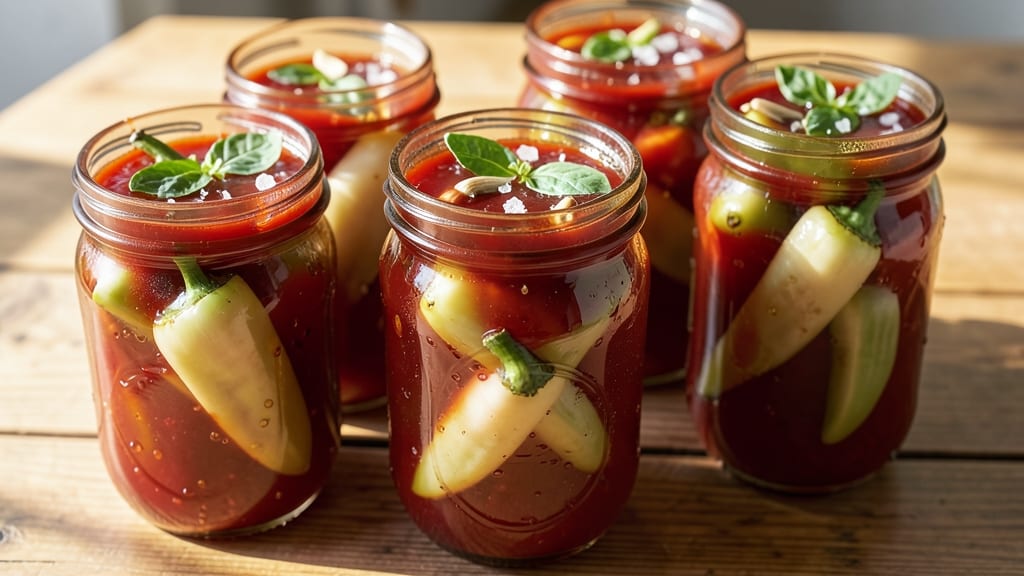
Canning banana peppers in tomato sauce transforms summer's bold flavors into a pantry staple that delivers restaurant-quality heat in every spoonful. The acidity from vinegar and tomatoes creates a safe, shelf-stable sauce where sweet, tangy peppers shine through—perfect for preserving that perfect balance of spice and sweetness year-round. I developed this recipe after struggling with watery canned peppers, and the key difference is the tomato base that thickens naturally while preserving the peppers' signature crunch.
This professional-grade sauce requires just 10 minutes of active prep before processing, making it ideal for home canners of all levels. The recipe maintains proper acidity (pH below 4.6) through vinegar and lemon juice, ensuring safe preservation while letting the banana peppers' natural sweetness complement the tomatoes' depth.
Every jar delivers that first-bite heat that makes homemade canned goods taste worlds better than store-bought.
What you'll end up with is a vibrant red sauce where banana peppers remain plump and fiery, suspended in a rich tomato broth that's perfect for drizzling, cooking, or eating straight from the jar.
The sterilization process locks in freshness while developing complex flavors over time—each jar tastes better with age. This isn't just preservation; it's flavor preservation that turns ordinary meals into memorable ones.
Use this sauce as a condiment for pizza, pasta, or sandwiches, or incorporate it into recipes where you'd normally use jarred peppers. The versatility makes it a kitchen essential that pays dividends in both flavor and convenience. Let's get started with the precise method that ensures perfect results every time.
Ingredients for canning banana peppers in tomato sauce
Nine essential ingredients transform summer's bold flavors into a restaurant-quality pantry staple.
| Ingredient | Amount | Notes |
|---|---|---|
| Banana Peppers 🌶️ | 2 ½ lbs | Fresh, firm, bright green or red |
| San Marzano Tomato Paste 🍅 | 1 cup | High-quality, no sugar added |
| White Vinegar 💧 | ½ cup | Distilled, 5% acidity minimum |
| Lemon Juice 🍋 | ¼ cup | Freshly squeezed, bright flavor |
| Granulated Sugar 🍚 | ½ cup | White, for balancing acidity |
| Salt 🧂 | 1 ½ tsp | Diamond Crystal kosher salt |
| Garlic Cloves 🧄 | 4 cloves | Fresh, peeled, minced |
| Dried Oregano 🌿 | 1 tsp | Italian variety, toasted |
| Black Peppercorns 🌶️ | ½ tsp | Freshly cracked, coarse |
The banana peppers are the star—pick firm, vibrant ones with thick walls, not the thin, watery supermarket varieties. Local farmers markets or specialty grocers like Whole Foods carry the best quality. If you can't find fresh, frozen banana peppers work in a pinch, but thaw and drain them thoroughly. The San Marzano tomato paste is non-negotiable here—its natural sweetness and depth make all the difference. Grab a 26 oz can for this recipe; it's worth the splurge for canning projects. For vinegar, stick with distilled white vinegar—it's consistent and reliable for safe canning.
No San Marzano paste? Crushed tomatoes with a pinch of sugar can substitute, but you'll lose some of that rich, concentrated flavor. Short on vinegar? Lemon juice at double the amount works, but the acidity level will be slightly different. The garlic can be garlic powder at half the amount, but fresh is absolutely essential for that authentic depth. If you're avoiding sugar, honey or maple syrup at the same ratio balances the acidity beautifully. For dried oregano, Italian seasoning at the same amount adds a nice complexity, though it's not identical.
This sauce keeps for 12-18 months in a cool, dark pantry once processed. The sterilization process locks in freshness, so don't skip the boiling water bath—safety first! For best results, use within 6 months of opening. I like to portion into pint-sized jars for easy use in recipes. The sauce thickens as it ages, so it's perfect for drizzling over pizza or pasta after a few months of storage. Freeze extras in ice cube trays for single-serving convenience.
Why You'll Love This Recipe
- I’ll be real: once you make a batch, you’ll find these peppers everywhere. Toss them into scrambled eggs for a zesty wake-up, stir into marinara for a quick weeknight dinner, or even chop them raw over grilled cheese. They last months, so you’re basically future-proofing your fridge.
- No-Fuss Preservation: Honestly, this recipe takes less time than waiting for a pizza delivery. You blanch those banana peppers, toss them in a quick tomato-vinegar bath (just paste, vinegar, lemon, sugar—no fancy steps), and let the water bath do the work. That’s it. Even if you’ve never canned before, the process feels almost meditative.
- Sweet Heat Magic: Between us, the combo of San Marzano paste and white vinegar gives these peppers a ridiculously balanced kick—bright, tangy, with just enough sweetness to cut the bite. The lemon juice seals the deal, leaving you with a flavor that’s bold enough for charcuterie boards but still sneaks into pasta sauces without overpowering.
- Pantry Staple Power: I’ll be real: once you make a batch, you’ll find these peppers everywhere. Toss them into scrambled eggs for a zesty wake-up, stir into marinara for a quick weeknight dinner, or even chop them raw over grilled cheese. They last months, so you’re basically future-proofing your fridge.
Step-by-step instructions for canning banana peppers in tomato sauce
Here's how to transform fresh banana peppers into vibrant, flavorful preserves that capture their signature sweet heat.
Prepare the Banana Peppers for Processing
Start by washing the 2.5 lbs of banana peppers thoroughly under cool water to remove any dirt or debris. I like to work with them whole at first—this preserves their natural shape and makes packing easier later. Using a sharp knife, trim off the stems and any blemished spots, but leave the peppers intact. You'll want to keep the peppers firm and unbroken to prevent them from turning mushy during canning.
Next, blanch the peppers for 3 minutes in boiling water to soften them slightly and help remove any surface bacteria. Immediately transfer them to an ice bath to stop the cooking process. This step is crucial—it ensures the peppers will hold their shape while absorbing the rich tomato sauce during processing. Drain well and let them cool completely before packing into jars.
Create the Flavorful Tomato Sauce Base
In a large saucepan, combine the 1 cup of San Marzano tomato paste with the 0.5 cup of white vinegar and 0.25 cup of lemon juice. Stir over medium heat until the mixture begins to bubble gently, then add the 0.5 cup of granulated sugar and 1.5 tsp of salt. Let it simmer for 5 minutes until the sugar fully dissolves and the sauce thickens slightly—you're aiming for a consistency that coats the back of a spoon.
Add the 4 minced garlic cloves, 1 tsp of dried oregano, and 0.5 tsp of cracked black peppercorns to the sauce. Stir well and let it simmer for an additional 3 minutes to allow the flavors to meld together. The aroma should be vibrant and inviting—this is where the magic happens. Keep the sauce warm over low heat while you prepare the jars and peppers for packing.
Pack and Process the Jars
Fill each sterilized pint jar with 3-4 whole banana peppers, packing them snugly but not overly tight. Pour the warm tomato sauce over the peppers until they're completely submerged, leaving about ½ inch of headspace at the top. This ensures the peppers stay covered during processing and prevents mold growth. Wipe the jar rims clean with a damp cloth to remove any sauce residue that could interfere with sealing.
Place the lids on the jars and screw on the bands until they're fingertip tight—just snug enough to hold the lids in place, but not so tight that you risk cracking the jars. Place the jars in a canning pot and cover them with water, ensuring they're fully submerged. Bring the water to a gentle boil and process the jars for 15 minutes—this time ensures the peppers and sauce reach a safe temperature to preserve them for months.
Cool and Store for Long-Term Enjoyment
Once the processing time is complete, carefully remove the jars from the canning pot using tongs and place them on a clean towel. Let them cool undisturbed for 12-24 hours—this allows the lids to seal properly. You'll hear a satisfying ping as the lids seal, and you'll see the center of the lid dip slightly. If any jars don't seal, refrigerate them and use them within a week.
The sealed jars can be stored in a cool, dark place for up to 12 months. The banana peppers will retain their bright color and sweet, spicy flavor, making them perfect for adding to pizzas, pasta dishes, or even as a tangy topping for grilled meats. The sauce will thicken slightly as it cools, creating a rich, concentrated flavor that enhances every bite.
Pro Tips For Making Canning Banana Peppers In Tomato Sauce
- STERILIZE JARS HOT TO HOT: I learned this the hard way—cold jars in a boiling water bath crack like eggshells. Instead, keep your sterilized jars and lids in the oven at 200°F (93°C) until you’re ready to fill them, then pop them straight into the canning pot. The temperature shock is what causes failures, and you’ll never notice the difference in flavor.
- PEEL PEPPERS AFTER BLANCHING: Banana pepper skins are stubborn, but blanching first makes them slide off like magic. Drop whole peppers in boiling water for 30 seconds, then transfer to ice water. The skins will wrinkle and peel away in seconds—no more struggling with a paring knife. (Yes, even if you’re impatient like me.)
- SIMMER PASTE LONGER THAN YOU THINK: That San Marzano paste won’t thicken properly if you rush it. After mixing with vinegar, lemon juice, and sugar, let it bubble gently for at least 20 minutes—no stirring, just steady heat. I used to walk away after 10, and the sauce always ended up watery. Patience here guarantees a glossy, clingy coating on those peppers.
- USE A CUP OF WATER IN THE JARS: This isn’t about diluting the flavor—it’s about headspace. Fill your jars with peppers and sauce, then top with about ½ cup of plain water before sealing. The extra liquid prevents the sauce from shrinking and leaving the peppers dry during storage. (Your future self will thank you when you open a jar next year and the peppers aren’t rubbery.)
Essential equipment for great canning banana peppers in tomato sauce
Canning Pot Essentials
Your canning pot is the workhorse of this process, and I recommend a Ball Mason Jar Canner—it's designed to handle pint jars safely and evenly. This 8-quart stainless steel model from Ball distributes heat perfectly, preventing hot spots that could cause jars to crack.
If you're on a budget, a large stockpot with a rack (like the All-Clad Stainless Steel Stockpot) works, but ensure it's deep enough to submerge pint jars by 2 inches.
Never use a pressure canner for this recipe—water bath processing is all you need for high-acid tomato sauce. 🌡️
Jar and Lid System
Invest in new lids and rings every time you can—old lids won't seal properly. I use Ball Regular Mouth Pint Jars with Tattler lids for their reliable sealing performance. The pint size is perfect for this recipe, giving you just the right amount of sauce and peppers per jar.
For sterilization, boil jars and lids in the canning pot for 10 minutes before packing—this ensures a clean, bacteria-free environment. Store unused lids in a cool, dry place to maintain their sealing quality.
Measuring Tools
Precision matters when canning, so grab a stainless steel measuring cup set (like OXO Good Grips) for accurate liquid measurements. A digital kitchen scale (I use the Escali Primo) helps weigh the 2.5 lbs of banana peppers with precision.
For small ingredients like garlic cloves and spices, a small scoop or microplane ensures consistent amounts. A headspace measuring tool (or even a ruler) guarantees the ½-inch headspace critical for safe processing.
Safety Gear
Always wear heat-resistant gloves (like Oven Mitts by Northfield) when handling hot jars and lids—they prevent burns and give you better grip. A jar lifter (I recommend the Ball Jar Grabber) is a game-changer for safely removing jars from boiling water.
Keep a clean kitchen towel nearby to wipe jar rims before sealing, and have a thermometer (like the Thermoworks Thermapen) handy to monitor water temperature—it should reach 180°F before processing begins. Safety first! ⚡
Optional Upgrades
For flavor consistency, a high-quality immersion blender (like the Ninja Foodi) helps emulsify the sauce if you prefer a smoother texture. A canning rack (if your pot doesn't have one) ensures even heat distribution. For organization, label jars with masking tape and a Sharpie—include the date and contents.
I also keep a small spray bottle with vinegar and water (1:1 ratio) nearby to quickly sanitize surfaces during prep. These extras make the process smoother and more professional.
Nutrition facts
Frequently asked questions
Can I use jarred banana peppers instead of fresh?
Fresh banana peppers are ideal for this recipe, but you can use jarred peppers in a pinch. Drain and rinse them thoroughly to remove excess liquid, then pack them into jars. However, the texture and flavor won't be as vibrant as fresh peppers. For best results, stick with fresh when possible!
How do I know if my canned banana peppers are properly sealed?
After cooling for 12-24 hours, check the lids by pressing down on the center. If it doesn't pop back up, the jar is sealed. You'll also hear a satisfying "ping" sound when the lid seals. If any jars don't seal, refrigerate and use them within 1 week.
Can I adjust the spice level in this sauce?
For milder heat, remove the seeds and membranes from the banana peppers before canning. For extra spice, add ½ tsp of red pepper flakes or 1-2 sliced jalapeños to each jar. Remember, the sauce will intensify in flavor over time, so start with your preferred level.
Why does my sauce look too thin after canning?
The sauce naturally thickens as it cools and ages. If it's still too thin after processing, simmer it for 5-10 minutes on the stove to reduce it before packing into jars. The tomato paste will help stabilize the texture during storage.
Can I freeze this sauce instead of canning?
Yes, you can freeze the sauce for up to 6 months! Portion it into freezer-safe containers, leaving ½ inch of headspace. Thaw in the refrigerator overnight before using. Freezing preserves the flavor well, though the texture may be slightly softer than canned.