
Sauces & Condiments
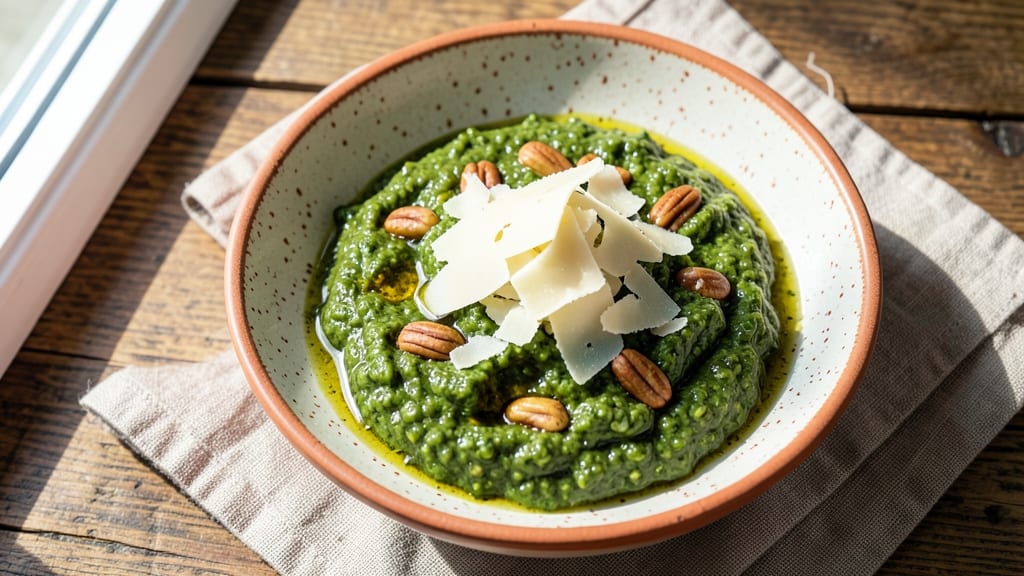
This classic pesto sauce recipe brings the vibrant flavors of Italy to your kitchen in just five minutes, transforming fresh basil, pine nuts, garlic, and Parmesan into a luscious green sauce.
The nutty depth of toasted pine nuts and sharp Parmesan elevate the bright, herby essence of basil—creating a condiment that’s as versatile as it is delicious. I’ve perfected this method over years of testing, ensuring every batch delivers that authentic Italian taste without compromise.
The process is simpler than you might think: pulse basil, nuts, garlic, and cheese in a food processor, then stream in olive oil until smooth. This approach preserves the freshness of the basil while achieving that signature creamy texture.
The sauce keeps beautifully in the fridge for up to a week or freezes for months, making it perfect for meal prep or gifting.
What makes this pesto truly special is its adaptability—toss it with pasta for a quick lunch, spread it on sandwiches, or drizzle it over grilled meats for an instant flavor boost. The balance of garlic’s punch, nutty richness, and basil’s brightness creates a sauce that’s both comforting and exciting.
For those with dietary restrictions, simple swaps like sunflower seeds or nutritional yeast keep the flavor intact.
Once you master this classic pesto, you’ll find endless ways to use it—from dipping fresh bread to adding it to soups or salads. The key is freshness, so always use the best-quality basil and olive oil you can find.
Let’s get started on this timeless Italian staple that will become a kitchen essential.
Ingredients for classic pesto sauce
Eight fresh ingredients transform into Italy’s most beloved sauce in minutes.
| Ingredient | Amount | Notes |
|---|---|---|
| Fresh Basil Leaves 🌿 | 2 ½ cups | Packed, stems removed, vibrant green |
| Toasted Pine Nuts 🥜 | ½ cup | Lightly browned for nutty depth |
| Garlic Cloves 🧄 | 3 cloves | Peeled, roughly chopped for bold flavor |
| Parmesan Cheese 🧀 | ¾ cup | Freshly grated, high-quality block |
| Extra-Virgin Olive Oil 🫒 | ¾ cup | Fruity, peppery, cold-pressed preferred |
| Fresh Lemon Juice 🍋 | 1 tbsp | Bright, freshly squeezed for acidity |
| Sea Salt 🧂 | ½ tsp | Fine grain for balanced seasoning |
| Freshly Ground Black Pepper 🌶️ | ¼ tsp | Cracked peppercorns for heat |
The basil is non-negotiable—farmers market bunches have the most vibrant leaves, but grocery store containers work too (just pick the plumpest ones). Toasting the pine nuts in a dry pan for 2-3 minutes brings out their nutty flavor (don’t walk away—burnt nuts taste bitter). For Parmesan, skip the pre-grated—it’s sawdust in comparison. Grab a wedge from the deli counter and grate it yourself. The olive oil should be the good stuff—California extra-virgin brands like Corto or Colavita are reliable. If you’re using sun-dried tomatoes or other add-ins, toast them with the pine nuts for extra depth.
No pine nuts? Walnuts or almonds work in a pinch (toast them first), though they’ll change the texture slightly. Short on basil? Fresh parsley or spinach can stretch it (up to half the amount), but the flavor shifts. For a dairy-free version, swap Parmesan for nutritional yeast (use the same amount). The lemon juice can be bottled in a bind, but freshly squeezed brightens the sauce. If your pesto tastes too thick, add a splash of warm water or pasta water to loosen it. For extra richness, stir in 1 tbsp of heavy cream at the end.
Pesto browns fast—cover with a thin layer of olive oil before sealing to keep it green. Stores perfectly in the fridge for 5-7 days (shake before using). For longer storage, freeze in ice cube trays—thaw cubes in warm water for single servings. The sauce actually improves after 24 hours as flavors meld. I always make a double batch—one for the fridge, one to freeze for lazy weeknights (trust me, you’ll thank yourself).
Why You'll Love This Recipe
- Five-Ingredient Magic: I swear, that’s all it takes—just basil, pine nuts, garlic, Parmesan, and olive oil. No fancy gadgets, no hidden steps. Honestly, I’ve made this while my coffee brewed and still had time to read the news.
- Garlic-Basil Euphoria: The moment those toasted pine nuts hit the mortar (or food processor) with fresh basil and raw garlic? Pure satisfaction. That bright, herby punch with a nutty crunch—it’s the kind of flavor that makes you pause mid-bite.
- Pasta’s Best Friend: Drizzle it over linguine, toss it with roasted veggies, or smear it on garlic bread—this stuff works. Between us, I’ve even used it as a marinade for chicken. Versatile enough to handle any craving without extra effort.
- No-Waste Pantry Hero: A little goes a long way, and it keeps for days in the fridge. I’ll be real: I’ve stretched a batch into three meals, and it’s still delicious. Plus, you’re using up those basil bunches before they wilt—zero guilt, all flavor.
Step-by-step instructions for classic pesto sauce
Here's how to make the timeless pesto sauce that balances fresh basil with nutty richness.
Pulse the Fresh Basil and Toasted Pine Nuts
Place the 2.5 cups of fresh basil leaves, 0.5 cup of toasted pine nuts, 3 cloves of garlic, 0.5 teaspoon of sea salt, and 0.25 teaspoon of freshly ground black pepper into the bowl of a food processor. Pulse in short bursts until the pine nuts are finely chopped and the basil is coarsely chopped but not completely puréed. You want to retain some texture—this prevents the sauce from becoming too thick and pasty.
I like to stop and scrape down the sides every 10-15 seconds to ensure even processing. The goal is a chunky, vibrant texture that still has visible flecks of basil and nuts. If you process too long, the pesto will turn into a thick paste that lacks the fresh, bright character we want in classic pesto.
Gradually Add the Extra-Virgin Olive Oil
With the food processor running, slowly drizzle in the 0.75 cup of extra-virgin olive oil. Start with a thin stream and gradually increase to a steady pour. This gradual addition prevents the motor from straining and allows the oil to emulsify properly with the basil mixture.
The oil should blend smoothly, creating a thick, vibrant green sauce. If it looks too thick at this point, don't worry—we'll adjust it in the next step. The key is patience; rushing the oil addition can create a separated sauce. You'll know it's right when the mixture has a creamy, almost mayonnaise-like consistency with visible basil and nut flecks.
Incorporate the Parmesan Cheese and Lemon Juice
Add the 0.75 cup of freshly grated Parmesan cheese and the 1 tablespoon of fresh lemon juice to the food processor. Pulse just 2-3 times until the cheese is fully incorporated and the lemon juice brightens the color. The lemon juice is crucial—it balances the richness of the cheese and nuts while adding a fresh, tangy note that cuts through the fat.
Taste the mixture at this stage. You should notice the bright basil flavor, nutty depth from the pine nuts, and a pleasant sharpness from the lemon. If it needs more salt, add a pinch at a time—remember, we're building layers of flavor. The sauce should be thick but still pourable; if it's too thick, we'll thin it in the next step.
Adjust Consistency with Olive Oil or Lemon Juice
Transfer the pesto to a bowl and taste it again. If the sauce is too thick for your liking, drizzle in small amounts of extra-virgin olive oil, 1 teaspoon at a time, until it reaches your desired consistency. For a lighter texture, add a splash of lemon juice or even a tablespoon of warm water. The sauce should coat the back of a spoon but still be spreadable.
This is where the magic happens—classic pesto should be vibrant, balanced, and just thick enough to cling to pasta or coat vegetables. I like mine with a slight sheen, indicating it's emulsified properly. If you're using it immediately, you can serve it as is. For longer storage, transfer to an airtight container and cover the surface with a thin layer of olive oil to prevent browning.
Serve Immediately or Store Properly
Use the pesto immediately for the best flavor and texture. Toss it with freshly cooked pasta, drizzle over grilled vegetables, or spread it on crusty bread. The vibrant green color and fresh aroma will make your dish instantly more appealing. If you need to store it, keep it refrigerated in an airtight container for up to 5 days, or freeze it for up to 3 months.
When ready to use stored pesto, give it a quick stir and thin with a little olive oil or warm water if it has thickened. The flavors will be just as bright as when you first made it, though the color may darken slightly over time. This classic pesto recipe delivers that perfect balance of freshness, nuttiness, and richness that makes it a pantry staple.
Pro Tips For Making Classic Pesto Sauce
- TOAST NUTS LOW: Pine nuts burn faster than you’d think—watch them like a hawk. Toast them in a dry pan over medium heat until they’re golden, not brown, and smell nutty (not acrid). If you walk away for even 30 seconds, you’ll end up with bitter, crunchless bits.
- STACK CHEESE FIRST: Pulse the Parmesan before adding the basil—this keeps the sauce from turning into a watery sludge. Start with just 1/4 cup, then add more if needed; you can always thicken it later with a splash of oil, but you can’t un-sauce a thin mess.
- PULSE NOT PUREE: Hit that food processor in short bursts—3-4 seconds on, 10 off—until everything’s roughly combined. Overworking turns pesto into a paste, and you’ll lose that bright, herby texture. Stop when it looks like confetti, not glue.
- USE COLD BASIL: Chill the basil leaves in the fridge for 15 minutes before blending—it tightens the cells so they release flavor instead of turning to mush. Warm basil wilts into a sad, watery pulp, and no one wants that. (Yes, even if you’re impatient like me.)
Regional styles of these flavors
Tuscan Basil Pesto
In Tuscany, pesto takes on a rustic charm with sun-dried tomatoes and Pecorino Romano instead of pine nuts. Toast ½ cup walnuts with ¼ cup sun-dried tomatoes (oil-packed) in a dry pan until fragrant.
Pulse with 2 cups basil, 3 garlic cloves, and ½ cup Pecorino, then stream in ½ cup olive oil. The tomatoes add a sweet, meaty depth that pairs perfectly with hearty dishes like pappardelle pasta or grilled lamb chops. 🌿
Ligurian Seafood Twist
Liguria’s coastal influence shines in this version, where anchovies replace garlic for umami punch. Pulse 2.5 cups basil, ½ cup pine nuts, and 2 anchovy fillets (rinsed) with ½ cup grated Parmigiano-Reggiano.
Stream in ¾ cup olive oil and finish with 1 tbsp lemon juice. This bold, briny pesto elevates seafood pasta or crusty focaccia. Locals often serve it with burrata for a creamy contrast. 🍤
Sicilian Herb-Forward
Sicily’s pesto leans into bold herbs like oregano and thyme, swapping basil for a mix of 1.5 cups basil and 1 cup parsley.
Toast ½ cup almonds with 1 tsp red pepper flakes for heat, then pulse with 3 garlic cloves, ½ cup Pecorino, and ½ cup olive oil. The almonds add a lighter crunch, while the chili brings a smoky kick. Perfect for arancini or grilled vegetables. 🌶️
Venetian White Pesto
Venice’s version skips basil entirely, using 2 cups parsley and 1 cup chervil for a milder, herbaceous profile. Pulse with ½ cup walnuts, 3 garlic cloves, and ½ cup Parmigiano-Reggiano, then stream in ¾ cup olive oil.
Finish with 1 tbsp white wine instead of lemon juice for a subtle acidity. This pesto’s pale green hue pairs beautifully with risotto or roasted squash. 🍷
Emilian Walnut Pesto
Emilia-Romagna’s pesto is all about walnuts and Parmigiano-Reggiano, often made with 1.5 cups basil and 1 cup arugula for peppery bite. Toast ½ cup walnuts with 1 tsp fennel seeds for warmth, then pulse with 3 garlic cloves and ½ cup grated cheese.
Stream in ¾ cup olive oil and finish with 1 tbsp balsamic vinegar. Ideal for tagliatelle al ragù or grilled meats. 🌰
Modern Nut-Free Adaptation
For allergy-friendly versions, swap nuts with sunflower seeds or toasted breadcrumbs. Pulse 2.5 cups basil, ½ cup seeds, 3 garlic cloves, and ½ cup nutritional yeast (for dairy-free).
Stream in ¾ cup olive oil and finish with 1 tbsp lemon juice. This keeps the texture while accommodating nut allergies—perfect for vegan pasta or sandwiches. 🌱
Nutrition facts
Frequently asked questions
Can I use dried basil instead of fresh?
Fresh basil is essential for authentic pesto—dried basil loses its vibrant flavor and aroma. If you're short on time, you can use 1 cup fresh parsley mixed with 1 cup fresh basil to stretch it, but the texture and taste won't be identical. For best results, always use fresh basil leaves.
Why does my pesto turn brown or separate?
Pesto oxidizes quickly when exposed to air, causing browning. Prevent this by covering the surface with a thin layer of olive oil before sealing the container. Separation happens if the oil isn't added slowly enough while blending. Always drizzle oil gradually with the food processor running to emulsify properly.
What’s the best way to store leftover pesto?
For short-term storage, keep pesto in an airtight container in the fridge for up to 5-7 days. For longer storage, freeze it in ice cube trays—thaw cubes in warm water for single servings. The sauce actually improves after 24 hours as flavors meld, but always cover with olive oil to preserve color and freshness.
Can I make pesto without nuts for allergies?
Swap pine nuts for sunflower seeds or toasted breadcrumbs (toasted in olive oil for nutty flavor). For texture, blend ½ cup seeds with 2.5 cups basil and 3 garlic cloves. Use nutritional yeast instead of Parmesan for a dairy-free version. The result stays creamy and flavorful!
How do I adjust pesto for different pasta shapes?
For long pasta like spaghetti, use 2-3 tablespoons per serving—it clings well to ridges. For short pasta (penne, farfalle), toss with 1-2 tablespoons and reserve extra for drizzling. For hearty dishes like lasagna, reduce the amount by half and mix into the ricotta or béchamel layer instead.