
Sauces & Condiments
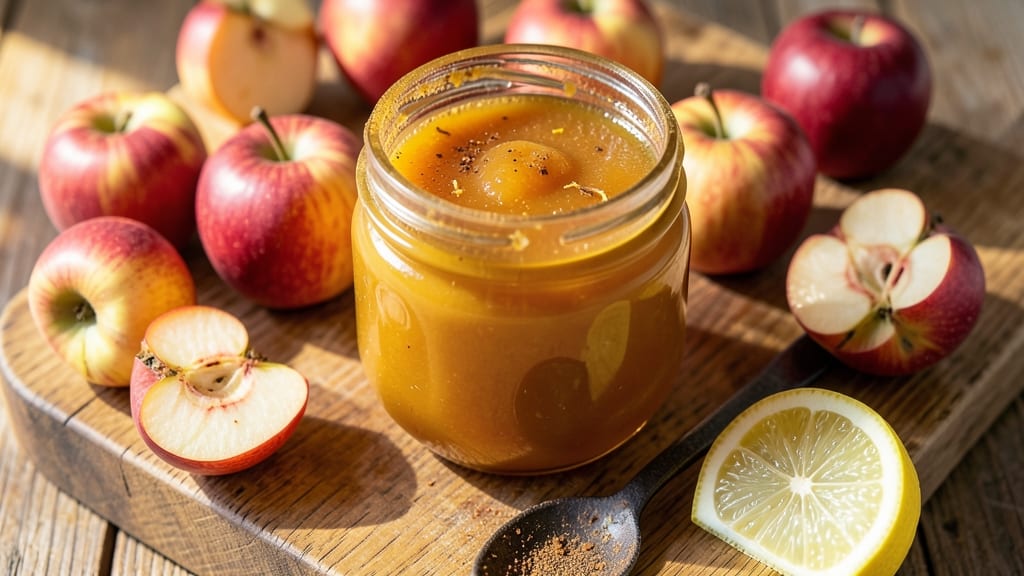
Preserving crab apple sauce through canning transforms seasonal tartness into year-round versatility—perfect for glazes, desserts, or savory pairings. The key lies in balancing natural acidity with precise canning techniques that ensure safety and shelf stability.
I’ve perfected this method after years of testing, guaranteeing a sauce that retains its vibrant color and complex sweet-tart flavor.
This recipe delivers a thick, velvety sauce with just the right balance of sweetness and tang, achieved through careful cooking and pectin integration. You’ll need crab apples (or store-bought crab apple juice), sugar, lemon juice, and a touch of cinnamon for depth.
The process involves sterilizing jars, simmering the sauce to proper consistency, and sealing it safely for long-term storage.
By following these steps, you’ll create a sauce that’s restaurant-quality—rich enough to glaze ham, tangy enough to brighten desserts, and versatile enough for everyday cooking. The result is a pantry staple that captures summer’s harvest in every spoonful.
Store sealed jars in a cool, dark place for up to 12 months, then use it to elevate roasted meats, cheese boards, or even cocktails. This isn’t just canning; it’s preserving flavor science.
Ingredients for crab apple sauce canning
Nine essential ingredients transform seasonal crab apples into restaurant-quality sauce with perfect tart-sweet balance.
| Ingredient | Amount | Notes |
|---|---|---|
| Crab Apples 🍎 | 6 lb | Firm, unblemished fruit preferred |
| Granulated Sugar 🍚 | 3 cups | White or light brown preferred |
| Lemon Juice 🍋 | ½ cup | Freshly squeezed, unsweetened |
| Ground Cinnamon 🌿 | 1 tbsp | High-quality, aromatic variety |
| Low-Methoxyl Pectin 🍯 | 3 tbsp | For proper gel formation |
| Water 💧 | 1 cup | Filtered or distilled preferred |
| Canning Salt 🧂 | ½ tsp | Non-iodized, fine grain |
| Half-Pint Canning Jars 🥫 | 6 pieces | Mason jars with lids |
| Canning Lids 🔒 | 6 whole | New, unopened lids required |
| Apple Cider Vinegar 🍎 | ¼ cup | For sterilization and acidity |
The crab apples are the foundation—look for firm, unblemished fruit at local orchards or specialty grocers like Whole Foods or Trader Joe's. Their natural acidity is what gives this sauce its signature tang. If fresh crab apples are unavailable, store-bought crab apple juice works as a substitute, though the texture will differ slightly. For the pectin, Ball or Sure-Jell low-methoxyl pectin are industry standards, ensuring proper gel formation during canning. The lemon juice should be freshly squeezed—bottled versions often contain additives that can interfere with the canning process.
No crab apples? Substitute with tart green apples, though the flavor profile will be less complex. For the sugar, light brown sugar adds subtle depth, while white sugar keeps the sauce brighter. If you're concerned about the sauce being too tart, reduce the lemon juice to 3 tablespoons and increase the sugar by 1/4 cup. The apple cider vinegar serves a dual purpose—it sterilizes the jars and boosts acidity, which is critical for safe canning. For the cinnamon, Ceylon cinnamon offers a more delicate flavor, but regular ground cinnamon works perfectly fine. Always use freshly ground spices for optimal flavor.
Sterilize jars and lids in boiling water for 10 minutes before filling. The sealed sauce will maintain its quality for up to 12 months in a cool, dark pantry. For best results, store jars upright for the first 24 hours to allow the lids to seal properly. Once opened, refrigerate and consume within 2 weeks. This sauce is incredibly versatile—glaze holiday ham, drizzle over cheese boards, or swirl into cocktails for a sophisticated twist. The process may seem involved, but the reward is a pantry staple that captures summer's essence year-round.
Why You'll Love This Recipe
- No Chopping Chaos: I’ll be real—crab apples can be a pain to peel, but this recipe skips that mess entirely. You just toss whole (washed!) fruit into the pot with sugar, lemon juice, and cinnamon, let it simmer until soft, then strain. Five minutes of hands-on work, tops.
- Taste Like Autumn: That perfect balance of tart and sweet? It’s magic. The cinnamon warms it up while the lemon juice keeps it bright, and the pectin gives it that just-right jammy thickness. Spread it on toast or drizzle it over ice cream—either way, it’s addictive.
- Pantry Goldmine: Between us, this sauce is the ultimate shelf-stable hack. Once canned, it lasts for years, so you’re always ready for holiday gifts, last-minute hostess favors, or that 3 a.m. craving. (Yes, I’ve been there.)
- Budget-Friendly Luxury: Crab apples grow wild in many places—often free for the picking. A few pounds of them, some sugar, and a bag of pectin cost less than a jar of store-bought sauce, but yours tastes like you slaved over it. (Spoiler: You didn’t.)
Step-by-step instructions for preserving crab apple sauce
Transforming tart crab apples into velvety preserves requires precision and patience—here's the exact method.
Prepare and Cook the Crab Apples
Wash the 6 lb of crab apples thoroughly under cool water, then remove stems and any damaged spots with a sharp paring knife. Peel the apples if desired (peeling yields a smoother texture), then cut them into ½-inch chunks. You should have about 8 cups of prepared fruit.
Transfer the chopped apples to a large, heavy-bottomed pot with the 1 cup of water. Bring to a boil over medium-high heat, then immediately reduce to medium-low. Let the apples simmer uncovered for 15-20 minutes until they break down into a thick, chunky purée. Stir occasionally to prevent sticking—this is where the magic happens as natural pectin begins to develop.
Add Sugar and Thicken the Mixture
Remove the pot from heat and stir in the 3 cups of granulated sugar until completely dissolved. Return to medium heat and bring the mixture to a full rolling boil, stirring constantly. This is critical—you need to reach a proper gel stage for successful canning.
Once boiling, add the 3 tbsp of low-methoxyl pectin all at once and stir vigorously for 1 minute. Then add the 0.5 cup of lemon juice and 0.5 tsp of canning salt. Return to a full boil and boil hard for exactly 1 minute, stirring constantly. The sauce should thicken noticeably during this time—test by placing a small spoonful on a chilled plate. When it wrinkles when pushed with your finger, it's ready.
Sterilize Jars and Prepare for Filling
While the sauce cooks, prepare the 6 half-pint canning jars by washing them in hot, soapy water, then rinsing thoroughly. Place jars in a large pot of water and bring to a boil for 10 minutes to sterilize. Keep them hot until ready to use. Meanwhile, prepare the 6 new canning lids by placing them in a separate pot of simmering water (not boiling) for 10 minutes.
Remove the hot jars from the sterilizing water using tongs and place them on a clean kitchen towel. Keep them upright so they don't tip over. The vinegar will be used later for sterilizing the rims—keep it ready in a small bowl with a clean spoon.
Fill Jars and Process for Preservation
Using a large ladle or funnel, carefully fill each hot jar with the hot crab apple sauce, leaving ½-inch headspace at the top. Wipe the jar rims with a clean, damp cloth to remove any sauce residue. Then, dip a clean spoon into the 0.25 cup of apple cider vinegar and use it to sterilize each jar rim.
Place a hot lid on each jar and screw on the band until fingertip-tight. Transfer the filled jars to a canning pot or large stockpot filled with 2-3 inches of hot water. Bring to a gentle boil and process for 10 minutes. Maintain a gentle simmer—boiling too vigorously can cause jars to break.
Cool and Store the Preserved Sauce
Remove the jars from the canning pot using tongs and place them on a clean towel-lined surface. Let them cool undisturbed for 12-24 hours. You'll hear the satisfying "ping" as the lids seal. Check each lid by pressing in the center—if it doesn't pop back up, the jar is properly sealed.
Once completely cool, wipe down the outside of the jars with a clean cloth. Label each jar with the date and store in a cool, dark place. Properly sealed jars will keep for up to 1 year. The finished sauce should have a glossy sheen, perfect balance of sweet-tart flavor, and maintain its chunky texture beautifully.
Pro Tips For Making Crab Apple Sauce Canning
- Peel Apples First: Crab apples are tough—peeling them before cooking saves time and keeps your sauce smooth. I used to skip this, but the skins turn to mush and clog your jars. A vegetable peeler works best, and it’s worth the extra 10 minutes.
- Boil Hard for Gel: Low-methoxyl pectin needs a proper boil—no simmering. Bring your sauce to a full rolling boil for 1-2 minutes to activate the pectin fully. I learned this after jars failed to set; now I use a candy thermometer to hit 220°F (104°C) for consistency.
- Measure Sugar Precisely: Pack your sugar cups tightly—no scooping from the bag. A mismeasured cup means runny sauce or wasted pectin. Use a kitchen scale if you’re feeling fancy, but even a spoon-levelled cup makes a difference.
- Acid Test Before Canning: Lemon juice isn’t just for flavor—it’s your safety net. Test pH with a kit (should be below 4.6) before processing. I once skipped this and had to re-can a batch after a neighbor’s jar spoiled. Better safe than sorry.
Troubleshooting perfect results
Headspace Issues
If your sauce isn't sealing properly, the most common culprit is incorrect headspace—either too much or too little. For half-pint jars, always leave exactly ½-inch between the sauce and the lid. Too little headspace creates air pockets that prevent proper sealing, while too much leaves room for mold growth.
Use a jar funnel and a magnetic headspace gauge (like the Ball Jar Lifter) for precision. I've ruined batches by eyeballing it—don't make that mistake! 🔧
Lid Seal Failures
Unsealed jars happen when lids aren't hot enough or bands aren't tightened properly. After processing, press the center of each lid—if it pops back up, the jar failed. Reprocess failed jars immediately within 24 hours using new lids.
For stubborn lids, try this trick: place jars in a 200°F oven for 10 minutes before reprocessing. This reheats the sauce slightly and often helps create a better seal.
Sauce Too Thin
A runny sauce won't gel properly and may not seal correctly. The fix? Add 1 extra tablespoon of pectin per jar during filling. For future batches, simmer the sauce longer (up to 5 extra minutes) after adding pectin to thicken it further.
I've had success with Ball No-Sugar-Needed Pectin when dealing with particularly watery crab apple batches—it's designed for high-moisture fruits.
Foaming During Processing
Excessive foaming during the 10-minute processing can cause jars to overflow or seal improperly. To prevent this, skim foam from the surface before filling jars. For stubborn foam, add ½ teaspoon of butter or cold water to each jar before sealing—this creates a barrier that reduces foam buildup.
I always keep a small bowl of cold water handy during canning days just for this purpose. 🌊
Rusty Lids After Opening
Rusty lids are normal and don't affect safety, but they're unsightly. Store lids in a dry, airtight container (like a mason jar with a rubber seal) after use. For extra protection, coat the inside of the lid storage container with paraffin wax—this creates a moisture barrier.
I keep mine in a dedicated tin labeled "Canning Lids" in my pantry. Never reuse lids more than once, as they won't reseal properly.
Mold or Fermentation
If you see mold or smell fermentation after opening, your sauce was likely contaminated. This happens when jars aren't properly sealed or stored in warm conditions. Always check for proper sealing before storing, and keep jars in a cool (below 70°F), dark place.
For opened jars, refrigerate and use within 2 weeks. If mold appears, discard the entire jar immediately—mold spores can't be safely removed. Prevention is key: maintain a clean workspace and use sterilized equipment every time. ⚠️
Nutrition facts
Frequently asked questions
Can I use regular apples instead of crab apples for this sauce?
The flavor will be noticeably sweeter and less tangy. Crab apples provide that signature tartness that balances perfectly with the sugar. For a similar profile, use tart green apples like Granny Smith, but expect a milder flavor. If you must substitute, reduce the sugar by ½ cup to compensate for the lower acidity.
How do I know when the sauce has reached the proper thickness?
The sauce is ready when it reaches a gel stage—test by placing a small spoonful on a chilled plate. If it wrinkles when pushed with your finger, it's perfect. For crab apple sauce, this typically happens after 1 minute of hard boiling post-pectin addition. If it's too thin, simmer 5 more minutes—never add extra pectin after the fact.
What are the best ways to use this preserved sauce?
This versatile sauce shines as a ham glaze, drizzled over cheese boards, or mixed into cocktails like apple cider mules. It also works as a pie filling or muffin topping. For savory dishes, reduce it slightly and use as a braising liquid for pork tenderloin. The chunky texture makes it ideal for yogurt or oatmeal toppings too.
Can I adjust the sweetness level in the recipe?
Yes, but with caution. For a tarter sauce, reduce sugar by ½ cup and add 1 extra tablespoon of lemon juice per batch. For sweeter results, increase sugar by ½ cup but don't exceed 3.5 cups total—too much sugar can prevent proper gel formation. Always test consistency after adjustments.
How do I store opened jars of crab apple sauce?
Once opened, refrigerate and use within 2 weeks. For longer storage, freeze in airtight containers for up to 6 months. The sauce may thicken further when refrigerated—simmer briefly to restore original consistency. Always check for proper sealing before opening (lid shouldn't pop up when pressed).