
Sauces & Condiments
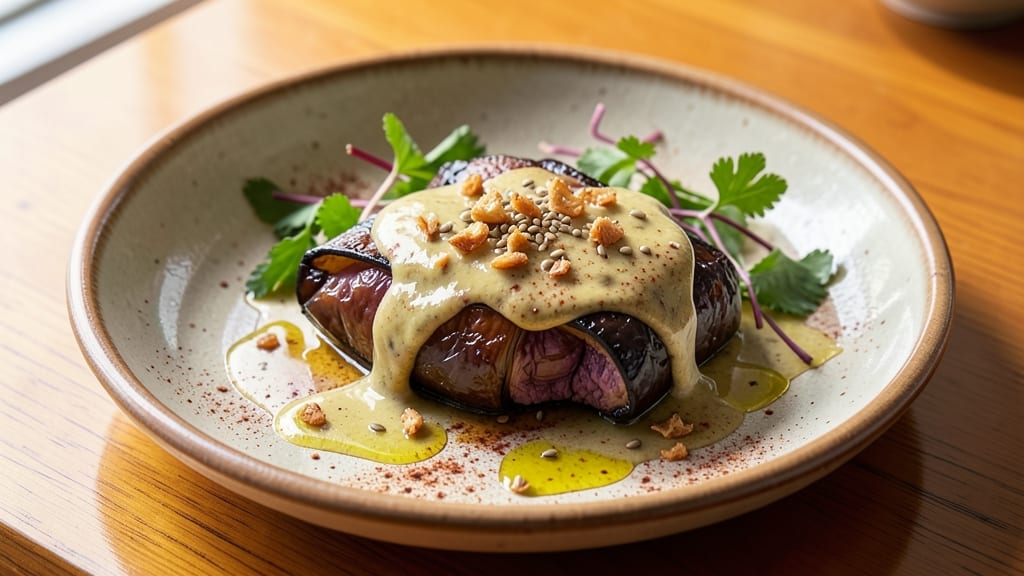
This eggplant sauce recipe transforms humble eggplant into a velvety, smoky masterpiece using just five pantry staples and a roasting pan. The key lies in slow-roasting eggplant until it yields tender, caramelized flesh that blends into a rich sauce with deep umami and nutty undertones.
I developed this recipe after realizing store-bought sauces couldn't match the complexity of homemade—especially when made with roasted vegetables instead of processed ingredients.
The process is straightforward but requires patience: roast eggplant until collapsed and golden, then blend with garlic, tahini, lemon juice, and a touch of smoked paprika for that signature depth. The sauce thickens beautifully when simmered, creating a texture that clings to pasta or enhances grilled meats without overpowering them.
What makes this recipe truly professional is how it balances smokiness with bright acidity, making it equally at home as a marinade or dip.
What you'll achieve is a versatile sauce that's restaurant-quality yet simple enough for weeknight cooking. The roasted eggplant base gives it a natural richness that tahini enhances, while lemon keeps it fresh.
Store it in the fridge for up to five days, or freeze portions for later—it only gets better with time as flavors meld. This isn't just another sauce; it's a flavor foundation that elevates everything it touches.
Use it as a pasta sauce, marinade for chicken or fish, or even a dip with warm pita bread. The smoky garlic notes make it especially perfect for Mediterranean-inspired dishes, but its adaptability means it works anywhere bold flavors are welcome.
Let's create this sauce that will become your new kitchen staple.
Ingredients for eggplant sauce
Five simple ingredients transform roasted eggplant into a velvety sauce with restaurant-quality depth.
| Ingredient | Amount | Notes |
|---|---|---|
| Eggplant 🍆 | 2 lbs | Medium-sized, unpeeled, cut into chunks |
| Extra-Virgin Olive Oil 🫒 | ½ cup | High-quality, fruity variety preferred |
| Garlic Cloves 🧄 | 6 whole | Fresh, peeled, slightly crushed |
| Tahini 🥜 | ⅓ cup | Sesame paste, unsweetened |
| Lemon Juice 🍋 | ¼ cup | Freshly squeezed, strained |
| Smoked Paprika 🌶️ | 1 tbsp | High-quality for authentic smokiness |
| Salt 🧂 | 1 ½ tsp | Kosher or sea salt preferred |
| Black Pepper 🌶️ | ½ tsp | Freshly ground for best flavor |
| Water 💧 | ½ cup | For thinning if needed |
The eggplant is the star, so choose firm, heavy ones with few seeds—they yield the most flesh. Trader Joe's and Whole Foods carry excellent varieties, but even standard grocery store eggplant works if it's fresh. Cut into 1.5-inch chunks for even roasting. For the smoked paprika, Penzeys or Goya brands deliver the most authentic flavor, but any quality smoked variety will do. The garlic should be fresh, with no green shoots—those add bitterness. Store-bought tahini in jars works fine, but homemade or freshly ground tahini gives a richer texture.
No smoked paprika? Substitute 1/2 teaspoon liquid smoke plus 1/2 teaspoon regular paprika for a similar effect. Short on tahini? Use 1/4 cup Greek yogurt or sour cream—it won't be identical, but adds creaminess. The lemon juice can be bottled if needed, but fresh is brighter. For a smoother sauce, strain the roasted eggplant mixture through a fine-mesh sieve. If the sauce is too thick after blending, thin with water or vegetable broth for extra flavor. The olive oil quality matters—use something you'd drizzle on bread, not the cheapest bottle.
This sauce keeps beautifully. Store in an airtight container in the fridge for up to 5 days, though it actually improves after 24 hours as flavors meld. For longer storage, freeze in ice cube trays—thaw and stir before use. The sauce reheats wonderfully, so double the batch if you'll use it over several meals. Leftovers can be blended again to restore smoothness. The smoky garlic notes develop more complexity with time, making this a sauce that only gets better.
Why You'll Love This Recipe
- No Chopping Nightmare: I swear by this—just slice the eggplant into thick rounds, roast them whole, and let the oven do the work. No dice, no mess, just melt-in-your-mouth flesh that’s way easier than peeling and chopping.
- Tahini Magic: That nutty, creamy tahini base transforms the sauce into something rich and addictive. One spoonful and you’ll understand why I keep a jar in my pantry—it’s the secret weapon behind the deep, savory-sweet flavor.
- Weeknight to Party: Slather it on toast for a lazy breakfast or drizzle it over grilled fish for a dinner that feels fancy. Honestly, it’s my go-to for when I need something that’s both effortless and impressive without trying too hard.
- Budget-Friendly Luxury: Eggplant is cheap, olive oil lasts forever, and a little tahini stretches far. I make a double batch every Sunday—it keeps for days in the fridge and turns a simple meal into something that tastes like you spent hours in the kitchen. (Spoiler: You didn’t.)
Step-by-step instructions for smoky garlic eggplant sauce
Transform humble eggplant into a rich, aromatic sauce using just a few pantry staples.
Roast the Eggplant Until Tender and Charred
Preheat your oven to 425°F and line a baking sheet with parchment paper. Cut the 2 lbs eggplant into 1-inch chunks, leaving the skin on for texture. Arrange the chunks in a single layer on the baking sheet, ensuring they don't overlap. Drizzle evenly with 0.25 cup of the extra-virgin olive oil and sprinkle with 0.75 tsp salt and 0.25 tsp black pepper. Toss gently to coat.
Roast for 30-35 minutes, flipping halfway through, until the eggplant is fork-tender with golden-brown, slightly charred edges. You'll know it's ready when the skin blisters and the flesh yields easily to a knife. Remove from the oven and let cool slightly before scraping off any charred skin—this adds depth but can be overly bitter if overdone.
Build the Smoky Garlic Base
While the eggplant cooks, heat a large skillet over medium heat. Add the remaining 0.25 cup extra-virgin olive oil and the 6 whole garlic cloves, slightly crushed. Sauté for 2-3 minutes until the garlic turns golden and fragrant—don't let it brown or it'll turn bitter. Immediately add the 1 tbsp smoked paprika and stir for 30 seconds to toast the spices and release their aroma.
This step is where the sauce's signature smokiness develops. The paprika should coat the garlic evenly, creating a fragrant base that will blend seamlessly with the roasted eggplant. Keep the heat at medium to prevent burning, and be ready to work quickly—garlic burns faster than you might expect.
Blend the Sauce to Silky Perfection
Transfer the roasted eggplant to the skillet with the garlic mixture, breaking it into chunks with a wooden spoon. Stir well to combine, then add the 0.33 cup tahini and 0.25 cup lemon juice. The mixture will look thick and uneven at first, but that's normal. Cook for 3-4 minutes over low heat, stirring constantly, until the tahini melts into the eggplant and the sauce begins to thicken.
For a smoother texture, carefully transfer the mixture to a blender or food processor. Add 0.25 cup water and blend until completely smooth, scraping down the sides as needed. If the sauce is too thick after blending, thin it with the remaining 0.25 cup water until it reaches a pourable consistency. Taste and adjust seasoning with the remaining 0.75 tsp salt and 0.25 tsp black pepper—this sauce should balance smokiness with bright acidity.
Simmer and Finish the Sauce
Return the blended sauce to the skillet and simmer over low heat for 5-7 minutes, stirring occasionally. This step allows the flavors to meld and the sauce to develop a glossy sheen. The sauce should coat the back of a spoon but still be smooth enough to drizzle. If it thickens too much, whisk in more water as needed—just 1 tablespoon at a time to avoid thinning it excessively.
For best results, let the sauce rest for 10 minutes off the heat before serving. This resting period deepens the flavors and ensures a velvety texture. Serve warm over pasta, drizzled over grilled meats, or as a dip with crusty bread. The smoky garlic notes will shine when paired with something neutral, like polenta or roasted vegetables, letting the eggplant's natural sweetness take center stage.
Pro Tips For Making Eggplant Sauce
- SALT THE EGPLANT FIRST: Dump that eggplant on a baking sheet, slash the skin, and sprinkle it with 1 teaspoon of salt per pound. Let it sit 20 minutes—this pulls out the bitterness and makes it melt into silky perfection when you cook it. (Yes, even if you’re impatient like me, don’t skip this.)
- COOK IT LOW AND SLOW: Eggplant turns to mush when you rush it. After salting, pat it dry and cook it in olive oil over medium-low heat for 15-20 minutes, turning occasionally, until it’s golden and tender. High heat = sad, watery sauce.
- TOAST THE TAHINI: Heat your tahini in a dry pan for 30 seconds until it smells nutty and fragrant. This deepens its flavor and prevents that raw, chalky taste in your sauce. (Trust me, it’s worth the extra 30 seconds.)
- STRAIN THE GARLIC WATER: After mincing your garlic, let it sit in a bowl of warm water for 5 minutes to soften. Drain it well—wet garlic burns instantly and turns bitter. Then fry it in olive oil until golden, not brown. (Burnt garlic ruins everything.)
Pro cooking tips for this dish
Roast Until Perfect
Eggplant's texture changes dramatically when roasted—aim for fork-tender with golden char, not mushy. I roast at 425°F for 30-35 minutes, flipping halfway, until the skin blisters and flesh yields easily.
Over-roasting turns it bitter, while under-roasting leaves it watery. A meat thermometer helps: eggplant is ready at 185°F internal temp. 🌡️
Garlic Timing Matters
Garlic burns faster than you think—watch it like a hawk! Toast 6 whole cloves in 0.25 cup olive oil over medium heat for just 2-3 minutes until golden, not brown.
Add 1 tbsp smoked paprika immediately to lock in flavor. The moment it smells nutty and fragrant, remove from heat—this is your window to prevent bitterness.
Blend Smartly
For ultra-smooth sauce, strain roasted eggplant through a fine-mesh sieve before blending. Tahini thickens quickly, so add 0.25 cup water first, then blend in 0.33 cup tahini gradually to avoid separation. A high-speed blender (like Vitamix) handles tahini better than regular blenders.
If it's too thick, thin with water 1 tbsp at a time—this sauce should coat a spoon like velvet.
Simmer for Depth
Simmering 5-7 minutes after blending develops the sauce's glossy finish and lets flavors meld. Keep heat low to prevent curdling from tahini. Stir occasionally and taste frequently—the sauce should balance smoky, garlicky, and tangy notes. If it splits, whisk in 1 tsp cold water to re-emulsify. 💫
Rest Before Serving
Never skip the 10-minute rest! This allows flavors to settle and texture to thicken naturally. The sauce will look glossy and cling to the back of a spoon.
I serve it warm over al dente pasta or as a dip with warm pita—the contrast of temperatures makes it even more dynamic.
Pro Substitutions
No smoked paprika? Use ½ tsp liquid smoke + ½ tsp regular paprika for depth. Short on tahini? ¼ cup Greek yogurt adds creaminess (though less nutty). For extra richness, stir in 1 tbsp butter during the final simmer. Each swap changes the sauce's character—adjust to your taste!
Nutrition facts
Frequently asked questions
Can I make this eggplant sauce without tahini?
If you don't have tahini, substitute with ¼ cup Greek yogurt or sour cream for creaminess, or 2 tablespoons olive oil for richness. The sauce will lose some nutty depth but still taste delicious. For a Middle Eastern twist, try 1 tablespoon ground sesame seeds instead.
How long will this sauce keep in the fridge?
This sauce stays fresh in an airtight container for up to 5 days in the refrigerator. It actually improves after 24 hours as flavors meld together. For longer storage, freeze in ice cube trays—thaw and stir before using. The sauce reheats beautifully, making it perfect for meal prep.
What's the best way to use leftover roasted eggplant?
Leftover roasted eggplant is incredibly versatile! Blend it into soups, fold into scrambled eggs, or chop it into salads. You can also make eggplant purée by blending with a splash of water, or turn it into stuffed eggplant by mixing with breadcrumbs and herbs. The charred skin adds great texture to grain bowls too.
Can I make this sauce in a slow cooker?
While not ideal, you can adapt this recipe for a slow cooker by roasting the eggplant first, then combining all ingredients (except water) in the slow cooker on low for 2 hours. Stir occasionally and add water 1 tablespoon at a time if it gets too thick. The texture will be slightly different but still flavorful—just be ready to blend again before serving.
Why did my sauce turn bitter?
Bitter flavor usually comes from over-roasting the eggplant or burning the garlic. Roast eggplant until tender but not mushy (185°F internal temp), and toast garlic just until golden (2-3 minutes). If the sauce tastes bitter, balance it with more lemon juice or a pinch of sugar. Fresh eggplant also matters—older eggplants develop bitter compounds more easily.