
Sauces & Condiments
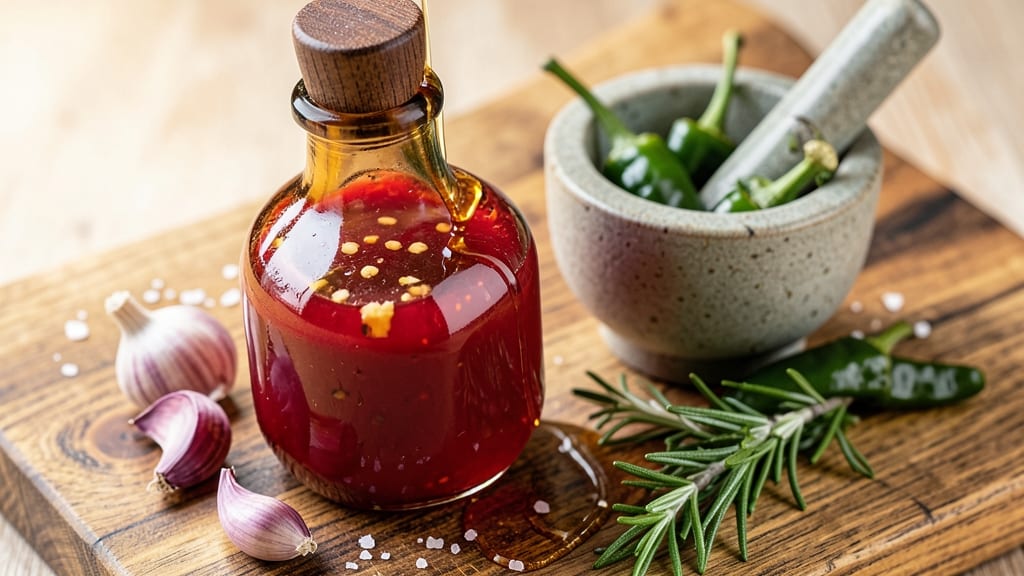
Creating a fermented ghost pepper hot sauce transforms bold heat into a complex, layered condiment that builds intensity over time. The process requires patience—letting peppers ferment in brine for weeks develops their natural sweetness while preserving their fiery punch.
I’ve perfected this method after years of experimentation, balancing heat with depth for a sauce that’s both dangerous and delicious.
This isn’t your typical vinegar-based hot sauce—fermentation unlocks flavors you won’t find elsewhere, with ghost peppers delivering a slow-burning heat that lingers long after the first bite. The key lies in precise fermentation control: salt levels, temperature, and aging time all shape the final product.
Safety is critical when handling ghost peppers, so protective gear and careful measurement are non-negotiable.
By the time you strain and bottle the sauce, you’ll have a glossy, amber liquid with a smoky edge and a heat profile that starts sharp before settling into a deep, lingering burn.
The fermentation process also softens the peppers’ raw bite, leaving behind a smooth yet intense flavor that pairs perfectly with grilled meats, rich cheeses, or even as a daring cocktail ingredient.
Store the sauce in a cool, dark place for up to a year, allowing flavors to evolve over time. Adjust heat levels by blending in more fermented peppers or diluting with finished sauce—this is where true customization begins. Let’s get started on a condiment that commands attention.
Ingredients for fermented ghost pepper hot sauce
Eight ingredients, weeks of patience, and a sauce that delivers slow-building heat unlike anything store-bought.
| Ingredient | Amount | Notes |
|---|---|---|
| Ghost Pepper (Bhut Jolokia) 🌶️ | ½ lb | Wear gloves, seeds removed |
| Non-Iodized Sea Salt 🧂 | ¼ cup | Diamond Crystal preferred |
| Filtered Water 💧 | 2 cups | Room temperature preferred |
| Garlic Cloves 🧄 | 4 cloves | Peeled, roughly chopped |
| Apple Cider Vinegar 🍎 | ½ cup | Unfiltered preferred |
| Honey 🍯 | 2 tbsp | Raw preferred, balances heat |
| Smoked Paprika 🌶️ | 1 tsp | Adds depth, optional |
| Black Peppercorns 🌶️ | ½ tsp | Crushed for texture |
Ghost peppers are the star here, but they demand respect. Buy from specialty spice shops or trusted online sources—avoid grocery store ghost peppers, which are often mislabeled or underripe. Wear gloves when handling; the oils cause skin irritation. The sea salt is non-negotiable: Diamond Crystal or Redmond Real Salt dissolve better than table salt. For water, filtered is best—chlorine can inhibit fermentation. If you're nervous about the peppers, start with half the amount and adjust later. The vinegar and honey balance the heat while preserving the peppers' natural sweetness that emerges during fermentation.
No ghost peppers? Habanero or Scotch Bonnet work in a pinch, but expect less complexity. Swap apple cider vinegar for white vinegar or lemon juice, though flavor will differ slightly. Honey can be replaced with maple syrup or agave (use half the amount). Smoked paprika is optional but adds that smoky depth—Penzeys or McCormick brands work well. For extra texture, blend in toasted cumin seeds at the end. The crushed black peppercorns add subtle heat without overpowering the ghost peppers' intensity. If you're sensitive to spice, reduce the garlic to 2 cloves—it amplifies the heat.
Ferment in a clean, sterilized glass jar with a tight seal, stored in a dark, 70-75°F space (like a pantry or cellar). The sauce develops over 4-6 weeks, with flavors peaking at 3 months. Strain through a fine-mesh sieve, then bottle in sterilized glass containers with airtight lids. Keeps for up to a year in the fridge, though it’ll taste best within 6 months. For heat adjustments, blend in more fermented peppers or dilute with finished sauce—this is where you get creative. Label everything; ghost pepper sauce isn’t forgiving if misused.
Why You'll Love This Recipe
- I’ll be real: this isn’t some finicky, weeks-long project. Just chop one ghost pepper (gloves on!), toss it in a jar with salt, garlic, and vinegar, and let time do the work. By week three, you’ve got a sauce that’s actually worth the wait—no babysitting required.
- No-Fuss Fermentation: I’ll be real: this isn’t some finicky, weeks-long project. Just chop one ghost pepper (gloves on!), toss it in a jar with salt, garlic, and vinegar, and let time do the work. By week three, you’ve got a sauce that’s actually worth the wait—no babysitting required.
- Heat That Stays: That first burn from the ghost pepper? It lingers, but in the best way. The fermentation mellows the raw heat into something deep and smoky, while the garlic adds this funky, umami punch. Honestly, it’s the kind of sauce that makes you reach for seconds before you realize you’re doing it.
- Game-Changer for Leftovers: Between us, this sauce gets better as it ages—like a good cheese or wine. I keep a jar in my fridge, and it’s the first thing I grab when my takeout pizza arrives or I’m craving a kick in my scrambled eggs. No waste, just pure flavor payoff.
Step-by-step instructions for fermented ghost pepper hot sauce
This isn't your average hot sauce—we're building bold heat with depth through fermentation.
Prepare and Ferment the Ghost Pepper Base
Wear gloves when handling the 0.5 lb ghost pepper (bhut jolokia)—this pepper packs serious heat. Remove stems and seeds carefully, then finely chop the peppers into small pieces. This maximizes surface area for fermentation and flavor extraction.
In a clean glass jar, combine the chopped ghost peppers with the 0.25 cup non-iodized sea salt and 2 cups filtered water. Stir well to ensure the salt dissolves completely and coats all pepper pieces. Seal the jar tightly and let it sit at room temperature for 7 days. You'll notice bubbles forming and a tangy aroma developing—this is fermentation working its magic.
After 7 days, check for proper fermentation: the mixture should smell vinegary with a slight funkiness (like sauerkraut), and you'll see visible bubbles. If you don't see bubbles after 7 days, extend the fermentation by another 2-3 days. This step is crucial for developing the complex, umami-rich flavor that sets this hot sauce apart from store-bought versions.
Add Aromatics and Sweeteners
Once fermentation is complete, transfer the pepper mixture to a blender. Add the 4 peeled garlic cloves, 0.5 cup apple cider vinegar, 2 tbsp honey, 1 tsp smoked paprika, and 0.5 tsp crushed black peppercorns. The vinegar will help preserve the sauce while brightening the flavors, and the honey balances the intense heat with natural sweetness.
Blend until completely smooth, scraping down the sides as needed. The sauce should be vibrant red with a thick, syrupy consistency. Taste a small amount—you'll notice the initial heat from the ghost pepper, followed by the gradual build of garlic and smoked paprika depth. If it's too thick, add 1-2 tablespoons of filtered water to reach your desired consistency.
Ferment the Final Blend
Pour the blended sauce back into a clean glass jar, leaving about ½ inch of headspace at the top. Seal tightly and return to room temperature for another 5-7 days of secondary fermentation. This second fermentation round develops even more complexity in the flavors, creating that signature depth you find in artisanal hot sauces.
During this time, you'll notice more bubbles and a stronger aroma. The color may deepen slightly as well. After 5-7 days, give it a taste test. The heat should be more pronounced, with layers of garlic, smoke, and sweetness complementing the ghost pepper's intensity. If you prefer a milder sauce, you can reduce the fermentation time to 3-4 days for a fresher, brighter flavor profile.
Bottle and Store for Maximum Flavor
Once the secondary fermentation is complete, transfer the hot sauce to sterilized bottles or jars using a clean funnel. Seal tightly and store in a cool, dark place. The sauce will continue to develop flavor over time—it's best after 2-4 weeks of aging, but it will keep for up to 6 months in the refrigerator.
When ready to use, shake the bottle well before each serving. This hot sauce delivers bold heat that builds gradually, making it perfect for drizzling over tacos, mixing into marinades, or adding a kick to cocktails. Start with small amounts—this isn't for the faint of heart! The combination of fermented ghost pepper, garlic, and smoked paprika creates a complex flavor profile that lingers long after the initial heat subsides.
Pro Tips For Making Fermented Ghost Pepper Hot Sauce
- Sterilize Your Tools: Ghost peppers and fermentation don’t play nice with bacteria—wipe down jars, lids, and knives with 70% isopropyl alcohol before use. I learned this the hard way when a moldy batch ruined weeks of work, and it’s the one step that actually changes the outcome.
- Use Whole Garlic: Smash the cloves instead of mincing them—this keeps the allicin intact longer during fermentation. I was skeptical until I tried it: the flavor depth is noticeably better, even after months of aging.
- Salt the Peppers Slowly: Sprinkle the non-iodized sea salt in thin layers over the peppers, then wait 10 minutes before adding more. This guarantees even distribution and prevents clumping, which can lead to uneven fermentation.
- Vinegar Last: Add the apple cider vinegar only after the initial 2-3 week fermentation is complete—it balances the heat without killing the good bacteria. Sounds weird, but it works: the sauce stays bright and complex instead of turning harsh.
Flavor customization for this dish
Heat Level Control
Adjust the ghost pepper quantity to fine-tune the heat—start with 0.25 lb for a milder sauce or increase to 0.75 lb for extreme fire. I recommend testing small batches first, as ghost peppers vary in potency.
For extra control, blend in 1 tbsp fermented habanero per cup of finished sauce to add complexity without overwhelming heat. 🌶️
Sweetness Balance
The 2 tbsp honey is key for balancing the ghost pepper’s intensity, but you can swap it for 1 tbsp maple syrup or agave if preferred. For a smoky-sweet variation, add 1 tsp molasses during the secondary fermentation.
Taste after blending—if it’s too sweet, add 1 tbsp apple cider vinegar to cut through.
Smoky Depth Boost
For a deeper smoky flavor, increase the smoked paprika to 1.5 tsp or add ½ tsp liquid smoke during blending. I also love adding ½ tsp ground chipotle powder for a Mexican-inspired twist. Toast the spices in a dry pan for 30 seconds before blending to enhance their aroma.
Citrus Brightness
Add 1 tbsp fresh lime or lemon juice during the final blend to brighten the sauce and cut through the heat. The acidity also helps preserve the sauce longer. For a tropical twist, blend in 1 tbsp mango puree—it pairs surprisingly well with ghost pepper’s smoky depth.
Herbal Complexity
Incorporate 1 tsp fresh cilantro or basil during blending for a fresh, herbal note that contrasts the heat. For an earthy profile, add ½ tsp dried oregano.
These herbs should be finely chopped or blended to avoid texture issues. I find cilantro works best with lime juice for a Mexican-inspired finish. ✨
Texture Variations
For a chunky texture, blend only half the ingredients and leave the remaining peppers and garlic whole before straining. Alternatively, add 1 tsp xanthan gum to thicken the sauce for drizzling. If you prefer a smoother finish, strain through a cheesecloth-lined sieve for an ultra-refined consistency.
Nutrition facts
Frequently asked questions
Why ferment ghost pepper hot sauce instead of cooking it?
Fermentation transforms the peppers' raw bite into complex, layered flavors that cooking can't replicate. The process develops natural sweetness and umami depth while preserving the ghost pepper's signature slow-building heat. Vinegar-based sauces lack this complexity—fermentation creates a living condiment that evolves over time.
How do I know when the fermentation is complete?
Look for visible bubbles in the jar and a tangy, funky aroma (like sauerkraut). The mixture should smell vinegary with slight sweetness. After 7 days, taste a small amount—the heat should be pronounced but balanced, not overwhelming. If it smells off or has mold, discard it immediately.
Can I adjust the heat level after fermentation?
Yes! For milder heat, blend in 1 tbsp finished sauce per 1 tbsp fermented pepper mixture before secondary fermentation. To increase heat, add more chopped ghost pepper during the initial fermentation. Never mix raw ghost pepper with finished sauce—always work with fermented components.
What's the safest way to handle ghost peppers?
Always wear nitrile gloves when chopping and never touch your face. Work in a well-ventilated area—ghost pepper oils can cause skin irritation and eye burns. If contact occurs, wash immediately with soap and cold water. Store peppers in sealed containers away from children and pets.
How long will this hot sauce keep, and how should I store it?
Store in sterilized glass bottles in a cool, dark place for up to 6 months. After opening, refrigerate and use within 3 months. The sauce continues developing flavor over time—older batches often have deeper complexity. For maximum shelf life, leave ½ inch headspace in bottles.