Sauces & Condiments
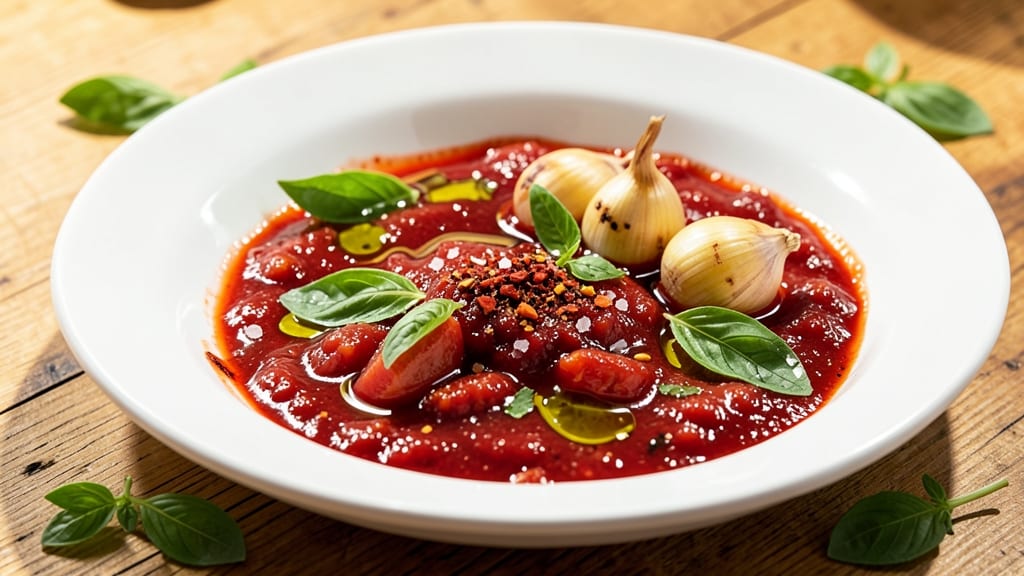
This Napolitana sauce recipe captures the soul of Naples in every spoonful, where slow-simmered tomatoes, garlic, and chili create a rich, umami-packed sauce that clings to pasta like a long-lost love. 💛 The secret lies in using high-quality San Marzano tomatoes and letting the flavors meld over time—no shortcuts, just tradition.
What makes this sauce special is its balance: sweet tomatoes, aromatic garlic, and just enough heat to linger without overpowering.
The process is straightforward but demands patience—peeling tomatoes, simmering them low and slow, and stirring in fresh basil at the end to preserve its bright flavor. This isn’t a sauce you rush; it’s one you savor, layering depth with each passing minute.
The result? A sauce so vibrant and complex, it transforms simple pasta into a dish worthy of a Neapolitan trattoria.
By the time you’re done, you’ll have a sauce that’s velvety yet bright, with a depth of flavor that comes from hours of gentle cooking. The aroma alone will have everyone at the table asking what’s for dinner.
Perfect for pairing with spaghetti, rigatoni, or even as a marinara base, this sauce is the heart of any Italian meal.
Store it in the fridge for up to a week, or freeze for months—because once you taste the real thing, you’ll never go back to store-bought again. Let’s get cooking!
Ingredients for napoletana sauce
Eight essential ingredients transform into Naples' soulful sauce—slow-simmered tomatoes and aromatic garlic create umami magic.
| Ingredient | Amount | Notes |
|---|---|---|
| San Marzano Tomatoes 🍅 | 28 oz | Whole, peeled, crushed by hand |
| Extra-Virgin Olive Oil 🫒 | ½ cup | High-quality, fruity variety |
| Garlic Cloves 🧄 | 6 cloves | Fresh, thinly sliced |
| Red Chili Flakes 🌶️ | 1 tsp | Adjust for preferred heat |
| Fresh Basil Leaves 🌿 | ½ cup | Packed, torn by hand |
| Sea Salt 🧂 | 1 ½ tsp | Fine grain preferred |
| White Wine Vinegar 🍷 | 1 tbsp | For brightness |
| Freshly Ground Black Pepper 🌶️ | ½ tsp | Freshly cracked |
San Marzano tomatoes are non-negotiable here—they’re sweeter and less acidic, giving that authentic Neapolitan sweetness. Trader Joe’s and Whole Foods carry them canned, but if you’re lucky enough to find fresh ones at a farmers market, grab them. The garlic should be fresh (not that jarred minced stuff)—it’s the backbone of the sauce’s aroma. For the olive oil, California Extra Virgin or Italian brands like Bertolli work perfectly. If you can’t find San Marzano, Roma tomatoes are your next best bet, but they won’t be as flavorful. And trust me, the basil at the end is everything—it’s what keeps the sauce bright and fresh-tasting.
No San Marzano tomatoes? High-quality crushed tomatoes in a can will work, but you’ll lose some of that authentic sweetness. Skip the vinegar if you’re sensitive to acidity, but it’s key for balancing the sauce’s richness. Red pepper flakes can be swapped for a pinch of cayenne, but go easy—this sauce is about depth, not heat. Fresh basil is ideal, but if you’re using dried, reduce to one-third the amount and add it earlier in the cooking process. The olive oil is where you can splurge—cheap oil will make the sauce taste flat. And if you’re out of white wine vinegar, a splash of lemon juice works in a pinch (though it’s not traditional).
This sauce tastes even better the next day as the flavors meld. Store it in an airtight container in the fridge for up to 1 week, or freeze for 3 months in portion-sized containers. I like to make a big batch—it’s perfect for pasta, bruschetta, or even as a pizza sauce. The key is to keep it covered with a thin layer of olive oil if storing longer than a few days. And if you’re feeling fancy, finish with a drizzle of extra-virgin olive oil and fresh basil before serving—it’s the little touches that make it feel like a trattoria.
Why You'll Love This Recipe
- 20-Minute Simplicity: I swear by this—just toss whole garlic cloves into the olive oil, let them sizzle until golden, then add the crushed San Marzano tomatoes. No peeling, no chopping, no fuss. The sauce does all the work while you drink your coffee.
- Sun-Dried Umami Bomb: That first spoonful? Chef’s kiss. The San Marzano tomatoes caramelize into something sweet and deep, while the red chili flakes add just enough heat to wake up your taste buds. Fresh basil at the end? Pure magic—I could eat this straight from the pot.
- Weeknight Superhero: This sauce is my secret weapon for lazy nights: toss it with pasta, drizzle over grilled chicken, or slather it on bruschetta. It’s the one pantry staple that turns "what’s for dinner?" into "oh, it’s Tuesday—perfect."
- Leftovers That Lie: Between us, this sauce only gets better after a day in the fridge. The flavors meld into this rich, velvety goodness that makes you forget you’re eating yesterday’s dinner. Plus, it freezes like a dream—just reheat and serve. Budget-friendly? Absolutely. Lazy-friendly? Even more so.
Step-by-step instructions for slow-simmered napoletana sauce
Here's how to build authentic Italian depth—layer by layer, with patience and precision.
🍳 Step 1: Sweat the Garlic in Olive Oil
Heat the 0.5 cup extra-virgin olive oil in a heavy-bottomed saucepan over medium-low heat. Add the 6 cloves thinly sliced garlic and cook gently for 3-4 minutes until the garlic turns pale golden—never let it brown. This slow cooking releases sweet, mellow flavors without bitterness.
I keep the heat low because garlic burns faster than you think. Watch closely—when it starts to smell nutty and fragrant, that's your cue. Remove the pan from heat for just a moment if needed, but don't walk away. This foundational step carries the entire sauce's flavor profile.
🔥 Step 2: Add Tomatoes and Chili Flakes
Return the pan to medium heat and add the 28 oz peeled, crushed San Marzano tomatoes and 1 tsp red chili flakes. Stir gently to combine, then bring to a gentle simmer. The tomatoes should bubble softly but not boil vigorously—this prevents skin formation and preserves their natural sweetness.
Here's the thing—don't stir constantly. Let the sauce find its own rhythm. The occasional stir prevents sticking, but too much agitation breaks down the tomato texture. Simmer uncovered for 15-20 minutes until the tomatoes begin to break down and the sauce thickens slightly.
🥘 Step 3: Season and Simmer Low and Slow
Add the 1.5 tsp sea salt, 1 tbsp white wine vinegar, and 0.5 tsp freshly ground black pepper. Stir once to distribute, then reduce heat to low. Let the sauce simmer for 45-60 minutes, stirring occasionally, until it reduces by about 1/3 and develops a glossy, syrupy consistency.
This long simmer concentrates the flavors and develops that signature umami depth. You'll know it's ready when the sauce coats the back of a spoon and has a velvety texture. If it reduces too quickly, add 1-2 tablespoons water to maintain balance.
🍽️ Step 4: Finish with Fresh Basil
Remove the sauce from heat and stir in the 0.5 cup packed, torn fresh basil leaves. Let it steep for 5 minutes—this infuses the sauce with bright, aromatic flavor without overpowering. Taste and adjust seasoning if needed, adding a pinch more salt or vinegar if the tomatoes were particularly mild.
The basil should be just visible in the finished sauce, adding pops of green and freshness. For best results, use the sauce immediately over al dente pasta, but it keeps well in the refrigerator for 3-4 days or can be frozen for up to 3 months. The flavors only deepen with time!
Pro Tips For Making Napoletana Sauce
- Peel Tomatoes First: San Marzano tomatoes are sweet but still have skins that cling stubbornly—especially when crushed. I learned this the hard way after scraping out stubborn bits from a pot of ruined sauce. Use a paring knife to slice a shallow X on the bottom, then drop them into boiling water for 30 seconds. The skins slide off like magic, and your sauce stays silky.
- Sauté Garlic Low: Garlic burns faster than you’d think, and once it’s bitter, there’s no fixing it. For napoletana, cook the minced cloves in olive oil over medium-low heat until just golden—about 2 minutes. If you’re impatient (like me), resist the urge to crank the heat; you’ll taste the difference.
- Crush, Don’t Blend: Blending turns napoletana into a smooth, generic marinara. Instead, crush the tomatoes by hand—no food mill, no immersion blender—just your fists (or a potato masher) until you’ve got a mix of chunky bits and broken seeds. That texture is what makes it authentic, and it’s easier than you’d guess.
- Salt the Oil: Season the olive oil before adding garlic—yes, even if it sounds weird. A pinch of flaky salt (about ¼ teaspoon) enhances the garlic’s sweetness and balances the acidity of the tomatoes. I was skeptical until I tried it; now I never skip it.
Essential equipment for this dish
Heavy-Bottomed Saucepan
Your saucepan is the unsung hero of this recipe—enamel-coated or stainless steel with a capacity of at least 8 quarts is ideal. I swear by my All-Clad 8-quart saucepan because it distributes heat evenly and prevents scorching.
If you're on a budget, a Lodge 8-quart enameled cast iron works beautifully too. Avoid nonstick pans—they can't handle the slow simmering required for authentic flavor development. 🔥
Wooden Spoon
A heat-resistant wooden spoon (like a Oxo Good Grips or Lodge wooden spoon) is essential for stirring without scratching your pan. Wood gently releases flavors into the sauce over time, adding subtle depth.
Avoid metal utensils—they can react with the acidity in tomatoes. I keep mine in the pan while cooking so it's always handy when I need to stir.
Immersion Blender
While traditionalists hand-crush tomatoes, an immersion blender (like the Ninja BN601) saves time without sacrificing quality. It creates a smooth, seedless texture that's perfect for Napoletana sauce. If you don't have one, a potato masher works too—but expect slightly chunkier tomatoes.
The key is to blend just until smooth, not puree-like, to maintain that authentic texture.
Fine-Mesh Strainer
A fine-mesh strainer (like the OXO Good Grips) comes in handy if you prefer ultra-smooth sauce. I use it to remove any remaining tomato skins or seeds after simmering. For a more rustic texture, skip this step entirely—Neapolitans often leave small tomato pieces for added body.
If straining, press gently with a spoon to extract maximum flavor from the pulp.
Digital Thermometer
While not strictly necessary, a digital instant-read thermometer (like the ThermoWorks Thermapen) helps you monitor the sauce's temperature during simmering. Ideal simmering range is 185-195°F—this ensures proper flavor development without boiling off too much liquid.
I find it particularly useful when making large batches where temperature control becomes tricky. 🌡️
Glass Storage Containers
For storing your finished sauce, glass airtight containers (like Pyrex 8-cup bowls) are non-negotiable. They preserve flavor better than plastic and won't absorb odors. I always leave 1-inch headspace when storing to prevent oxidation.
For freezing, use quart-sized freezer bags—they're more space-efficient and prevent freezer burn when laid flat. Label with dates to track freshness! ❄️
Nutrition facts
Frequently asked questions
Can I make Napoletana sauce without San Marzano tomatoes?
While San Marzano tomatoes are ideal for their sweetness and low acidity, you can substitute with Roma tomatoes or high-quality crushed tomatoes. For best results, add ½ tsp sugar and ½ tsp extra vinegar to mimic the balance. The sauce will still be delicious but may lack that authentic Neapolitan sweetness.
How do I prevent my sauce from getting too thick or burning?
Keep the heat at medium-low and stir occasionally to prevent sticking. If the sauce reduces too quickly, add 1-2 tablespoons water or broth. For even cooking, use a heavy-bottomed saucepan—it distributes heat better and reduces scorching risks. Never let it boil vigorously.
Can I add other herbs or spices to this sauce?
Traditional Napoletana sauce relies on garlic, chili, and basil, but you can experiment with oregano or thyme> for depth. Avoid strong herbs like rosemary—they can overpower the delicate tomato flavor. If adding spices, start with ½ tsp dried oregano> and adjust to taste.
Why does my sauce taste bland after simmering?
Blandness often means the tomatoes weren’t ripe enough or the sauce didn’t reduce long enough. Next time, use fully ripe tomatoes> and simmer for at least 45 minutes>. Taste as you go and adjust with salt>, vinegar>, or a pinch of sugar>. A splash of fish sauce> (½ tsp) can also add umami depth.
How long will this sauce keep, and can I freeze it?
Store in an airtight glass container> in the fridge for up to 1 week>. For freezing, portion into quart-sized bags>, leaving 1-inch headspace> to prevent freezer burn. It keeps for 3 months>—thaw overnight in the fridge for best texture. The flavor actually improves after a few days!