
Sauces & Condiments
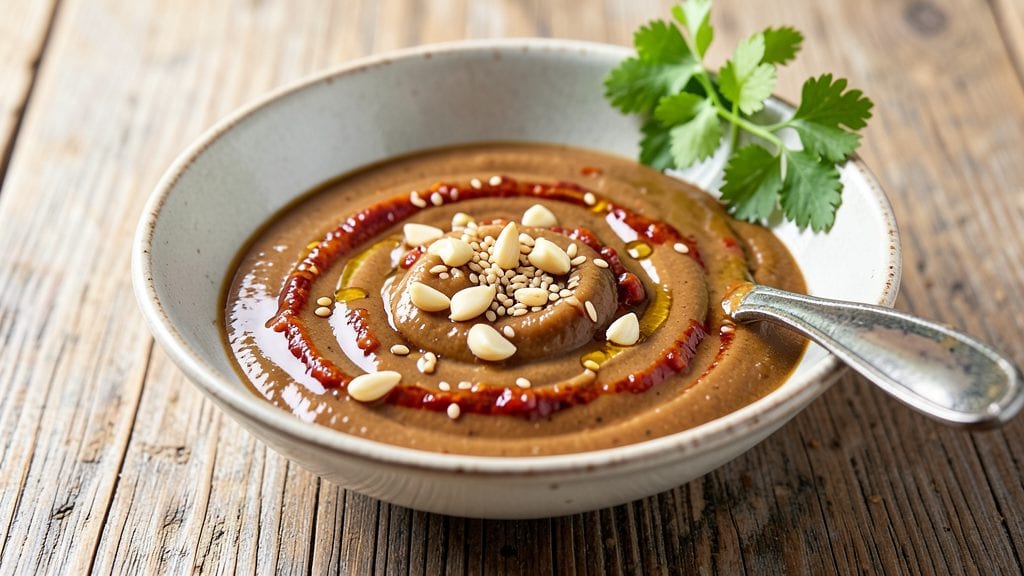
Recreating Trader Joe's peanut sauce at home delivers that signature smoky-sweet creaminess that elevates everything from noodles to grilled meats. The secret lies in balancing peanut butter, soy sauce, and vinegar while adding just the right amount of heat and depth through spices.
I've perfected this version after testing countless iterations—it's the one that finally matched the store-bought flavor without the mystery ingredients.
This sauce comes together in just 10 minutes using simple pantry staples: creamy peanut butter, soy sauce, rice vinegar, and a touch of chili paste for that signature smokiness. The key technique is simmering the sauce gently to develop the flavors while maintaining a smooth, pourable consistency.
Unlike many homemade versions, this one stays creamy without separating, making it ideal for dipping, drizzling, or marinating.
What you'll end up with is a rich, velvety peanut sauce that's perfectly balanced—sweet enough to satisfy, tangy enough to cut through richness, and just spicy enough to add complexity.
The aroma alone will have everyone asking what you're cooking, and the taste will make them want to use it on everything from satay skewers to peanut butter noodles. This is the kind of sauce that transforms simple meals into something special.
The beauty of this recipe is its versatility—use it as a dipping sauce for spring rolls, a marinade for chicken or tofu, or a glaze for roasted vegetables. It keeps well in the fridge for up to two weeks, so you'll have a flavorful shortcut ready whenever you need it.
Let's make this sauce that tastes just like the store-bought version, but even better.
Ingredients for trader joe's peanut sauce
Just ten simple ingredients transform into Trader Joe's signature peanut sauce.
| Ingredient | Amount | Notes |
|---|---|---|
| Creamy Peanut Butter 🥜 | ½ cup | Natural, unsweetened preferred |
| Rice Vinegar 🍶 | ¼ cup | White or seasoned variety |
| Soy Sauce 🍶 | ¼ cup | Light or all-purpose |
| Red Chili Paste 🌶️ | 1 tbsp | Like Sambal Oelek for smokiness |
| Sesame Oil 🫒 | 1 tbsp | Toasted, for nutty aroma |
| Garlic Cloves 🧄 | 2 cloves | Minced, fresh preferred |
| Ginger Root 🌿 | 1 tbsp | Freshly grated, zesty kick |
| Honey 🍯 | 2 tbsp | For sweetness balance |
| Water 💧 | ¼ cup | To thin consistency |
| Salt 🧂 | ½ tsp | Kosher or sea salt |
The peanut butter is the heart of this sauce—Trader Joe's own creamy variety works perfectly, but any natural, unsweetened kind does the trick. Grab the red chili paste from the Asian aisle (Sambal Oelek is classic), as it brings that signature smoky heat. Fresh ginger and garlic? Worth the extra minute to grate/mince—they make all the difference. For sesame oil, Kadoya or La Choy are reliable brands that won't overpower. I always double-check the peanut butter label—no added sugar or oils, just peanuts. The honey should be pure, not that corn syrup stuff.
No red chili paste? Sriracha or gochujang at half the amount works in a pinch, though it'll be less smoky. Running low on rice vinegar? Apple cider vinegar is a decent swap, but add a pinch of sugar to balance the tartness. Fresh ginger too strong? Ground ginger at one-third the amount gets you close. The sauce needs to be pourable, so if it's too thick, add water one tablespoon at a time. Too thin? Simmer longer—it'll thicken as it cools. For extra richness, stir in 1 teaspoon of soy sauce at the end.
This sauce keeps beautifully—2 weeks in the fridge sealed in a jar. The flavors actually deepen over time, so make extra. For storage, I use small glass jars (they're perfect for single servings). Freeze for up to 6 months if you want to stockpile. Reheat gently in the microwave or on the stove with a splash of water. The sauce reheats best when thinned slightly—just stir in 1 teaspoon of water before microwaving. Trust me, it's worth the effort.
Why You'll Love This Recipe
- I’ll be real: peanut butter and rice vinegar are cheap, but this sauce feels like a gourmet upgrade. A little goes a long way, so you’re not blowing cash on fancy sauces, and you’ll have leftovers for days. Plus, it’s the kind of recipe that makes even the simplest meal feel special—without breaking the bank.
- Five-Ingredient Magic: I swear, this sauce is the kind of recipe that makes you question why you ever bought store-bought. Just whisk together creamy peanut butter, rice vinegar, soy sauce, a splash of red chili paste, and a drizzle of sesame oil—no fancy gadgets, no stress. That’s it. The kind of simplicity that disappears the second you taste it.
- Umami Bomb: Honestly, the balance here is chef’s kiss—creamy peanut butter meets tangy rice vinegar, then that deep soy sauce punch, and finally the heat from the red chili paste. It’s like a flavor party in your mouth, and the sesame oil ties it all together with that nutty aroma. One taste, and you’ll be reaching for it again.
- Dip, Drizzle, Repeat: Between us, this sauce is my secret weapon for everything. Toss it with noodles, slather it on grilled chicken, or just eat it straight with veggies—it’s that good. And the best part? It keeps for days in the fridge, so you’re not scrambling to make it fresh every time.
Instructions for Trader Joe's peanut sauce recipe
This sauce comes together faster than you can say "peanut butter"—just 10 minutes of simple steps.
Combine Wet Ingredients for a Smooth Base
In a medium saucepan, measure out the 0.5 cup creamy peanut butter and add it to the pan. Place the saucepan over medium-low heat and let it melt completely, stirring occasionally with a silicone spatula. You'll know it's ready when it becomes smooth and creamy—about 2-3 minutes.
While the peanut butter melts, add the 0.25 cup rice vinegar, 0.25 cup soy sauce, and 2 tbsp honey. Stir constantly to incorporate these ingredients fully. The mixture will begin to bubble slightly, and you'll notice the peanut butter emulsify with the liquids, creating a thick, glossy base. This step is where the foundational flavors come together, so don't rush it—let everything blend smoothly.
Add Aromatics and Build Flavor Layers
Once the peanut butter mixture is fully combined, reduce the heat to low and add the 1 tbsp sesame oil, 1 tbsp red chili paste, 2 cloves minced garlic, and 1 tbsp freshly grated ginger root. Stir well to distribute these ingredients evenly throughout the sauce. The garlic and ginger will infuse their bright, zesty flavors, while the red chili paste adds a smoky kick that balances the sweetness.
Let the sauce simmer gently for 3-4 minutes, stirring frequently. You'll see the mixture thicken slightly as the aromatics release their oils and flavors. The sauce should start to smell rich and complex—like a mix of sweet, spicy, and umami notes. If you notice any bits sticking to the bottom of the pan, use a wooden spoon to scrape them up—they're packed with flavor.
Thin and Balance the Sauce to Perfection
Add the 0.25 cup water and 0.5 tsp salt to the saucepan. Stir well to combine, and let the mixture simmer for another 2-3 minutes over low heat. The water will help thin the sauce to a smooth, pourable consistency, while the salt enhances all the flavors. You're aiming for a sauce that's thick enough to coat the back of a spoon but still flows easily—like a cross between a glaze and a dip.
Taste the sauce as it simmers. If it needs more sweetness, add a touch more honey (½ tsp at a time). If it's too tangy, balance it with a splash more water. The goal is a harmonious blend of smoky, sweet, and savory notes. Once it reaches your desired balance, remove the saucepan from heat—this sauce doesn't need to cook any longer.
Let It Rest and Adjust for Best Results
Transfer the sauce to a bowl and let it cool for 5-10 minutes. This resting period allows the flavors to meld together fully, and the sauce will thicken slightly as it cools. While it rests, give it one final taste and adjust the seasoning if needed. You might find it needs a pinch more salt or a drizzle of honey to hit that perfect balance.
Once it's cooled and ready, you can use the sauce immediately or store it in an airtight container in the refrigerator for up to 5 days. It's fantastic drizzled over noodles, used as a dip for fresh veggies, or even stirred into a quick stir-fry. The smoky-sweet creaminess makes it incredibly versatile—just like the sauce you'd find at Trader Joe's!
Pro Tips For Making Trader Joe'S Peanut Sauce
- Stir Like You Mean It: The sauce won’t emulsify properly if you’re half-hearted with the whisk. After adding the peanut butter, stir vigorously for at least 30 seconds—this breaks up clumps and blends the fat properly. I used to rush this, and the sauce always ended up grainy.
- Toast the Chili Paste: Heat the red chili paste in a dry pan for 30 seconds before mixing it in. This deepens its flavor and mellows the raw spice kick—no, it won’t cook through, but it’ll taste richer. (Yes, even if you’re impatient like me.)
- Balance the Vinegar Last: Add the rice vinegar after everything else is mixed, then taste. Peanut butter and soy sauce can mask acidity, so you might need more than you think. My first batch was bland because I mixed it in early.
- Skip the Sesame Oil Until the End: Add the sesame oil last—just a few drops—so it doesn’t get cooked off by residual heat. A splash at the end guarantees that nutty aroma hits your nose first. (Your future self will notice the difference.)
Regional styles of this trader joe's peanut sauce
Asian-Inspired Satay Style
This sauce is the perfect base for Asian satay skewers—just like what you'd find at a street food stall. I like to use it with chicken or tofu skewers marinated in a mix of soy sauce, lime juice, and a touch of this peanut sauce for extra richness.
The smoky-sweet balance complements the charred grill marks beautifully. Serve with cucumber slices and fresh herbs like cilantro or Thai basil for that authentic vibe. 🌶️
Southern U.S. BBQ Twist
In the Southern U.S., peanut sauce often gets a slightly sweeter, thicker approach—perfect for drizzling over pulled pork or fried chicken. Add 1 extra tablespoon of honey and ½ teaspoon of smoked paprika to the base recipe for a deeper, smokier profile.
This version works wonders as a glaze for baked ribs or as a dip for crispy fried okra. The heat from the chili paste keeps it from being too cloying. 🔥
Thai-Inspired Peanut Dip
For a Thai-inspired peanut dip, blend the sauce until ultra-smooth and serve it chilled with crushed peanuts and lime zest on top. This version is lighter—reduce the honey to 1 tablespoon and add 1 teaspoon of fish sauce for umami depth.
It’s perfect with spring rolls, fresh veggies, or even grilled shrimp. The tangy rice vinegar and garlic make it addictively flavorful. ✨
Japanese-Inspired Peanut Sauce
In Japan, peanut sauce often takes on a soy-forward, less sweet profile—ideal for drizzling over ramen or udon noodles. Swap the rice vinegar for 1 tablespoon of mirin and reduce the honey to 1 tablespoon.
Add ½ teaspoon of grated daikon radish for a subtle crunch and brightness. The result is a savory, slightly tangy sauce that pairs beautifully with miso-glazed meats or tempura. 🥢
Vietnamese-Inspired Nuoc Cham Fusion
For a Vietnamese-inspired twist, blend the sauce with 1 tablespoon of fish sauce and 1 teaspoon of sugar to mimic the balance of nuoc cham (dipping sauce). This fusion works amazingly as a dip for spring rolls or pho noodles.
The garlic and ginger in the original recipe add a familiar umami kick, while the fish sauce deepens the savory notes. Serve it warm or chilled—either way, it’s a crowd-pleaser. 🌟
Nutrition facts
Frequently asked questions
Can I make this peanut sauce without peanut butter?
While peanut butter is essential for that classic flavor, you can substitute ½ cup smooth almond butter or ½ cup tahini for a nut-free version. The sauce will taste slightly different but still deliver that creamy, savory profile. Just reduce the honey to 1 tablespoon since nut butters are less sweet.
Why does my homemade peanut sauce separate?
Separation usually happens when the sauce cools too quickly or isn't emulsified properly. To fix it, gently reheat the sauce over low heat while stirring constantly with an immersion blender until smooth. For prevention, always simmer the sauce on low heat and avoid adding water too early—let it thicken naturally. The peanut butter should fully melt first before adding liquids.
How can I adjust the spice level?
Start with the full 1 tablespoon of red chili paste for medium heat. For milder sauce, reduce to ½ teaspoon and add ½ teaspoon of sugar to balance. Want it spicier? Add ½ teaspoon of cayenne pepper or an extra ½ tablespoon of chili paste. Always taste as you go—you can't fix too-spicy sauce, but you can always add more sweetness or water to dilute it.
What's the best way to use this sauce beyond dipping?
This versatile sauce works as a marinade for grilled chicken or tofu, a glaze for roasted veggies, or even a stir-fry sauce. Try drizzling it over ramen noodles or using it as a dip for spring rolls. For extra richness, stir in 1 teaspoon of coconut milk before serving. The possibilities are endless—it's like liquid peanut butter magic!
Can I make this peanut sauce ahead of time?
This sauce actually tastes better after resting. Make it 1-2 days in advance and store it in an airtight container in the fridge. The flavors meld beautifully, and it's ready to use whenever you need that quick flavor boost. For longer storage, freeze it for up to 3 months—just thaw in the fridge overnight before using.