
Sauces & Condiments
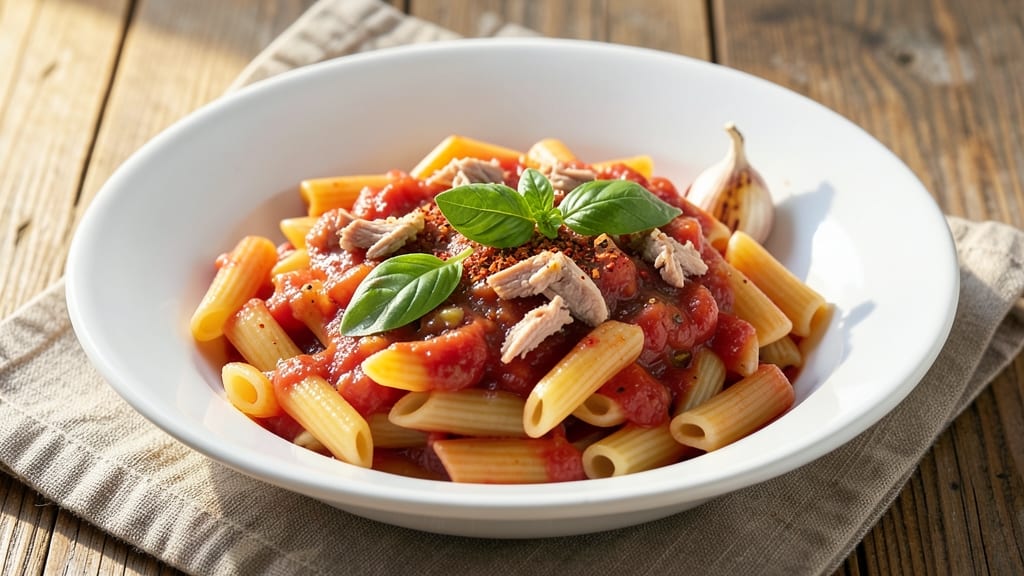
This tuna tomato sauce pasta recipe transforms simple pantry staples into a restaurant-worthy meal with just one pot and 30 minutes of hands-on time. The secret lies in balancing canned tuna's natural umami with sweet tomatoes and aromatic herbs, creating a sauce so rich it coats every noodle perfectly.
I developed this after realizing how often store-bought pasta sauces fall short—this version delivers depth without the additives.
The beauty of this dish is its adaptability—use fresh tuna for premium texture or stick with canned for convenience. The sauce simmers down to a velvety consistency that clings to al dente pasta, while a touch of garlic and red pepper flakes adds just the right kick.
For extra protein, stir in white beans or swap the tuna for chickpeas. The one-pot method means minimal cleanup and maximum flavor development as everything cooks together.
What you'll end up with is tender pasta bathed in a sauce that's both bright and savory—tomatoes caramelized just enough to deepen their sweetness, tuna flaked perfectly, and herbs fresh enough to brighten every bite.
The aroma alone will have everyone gathering at the table. This recipe proves you don't need fancy ingredients to create a meal that feels like a special occasion.
Perfect for weeknight dinners or meal prep, this dish scales easily for crowds while maintaining its restaurant-quality balance. The technique is simple but precise—no overcooking the pasta, no reducing the sauce too long—just the right amount of time to let flavors meld without losing freshness.
Let's get cooking with this umami-packed one-pot wonder.
Ingredients for tuna tomato sauce pasta
Simple pantry staples create restaurant-quality pasta with minimal effort and cleanup.
| Ingredient | Amount | Notes |
|---|---|---|
| Ditalini Pasta 🍝 | 12 oz | Al dente preferred |
| Canned Tuna in Olive Oil 🐟 | 2 cans | High-quality, drained |
| Crushed Tomatoes 🍅 | 28 oz | San Marzano preferred |
| Garlic Cloves 🧄 | 4 cloves | Minced for aroma |
| Red Pepper Flakes 🌶️ | ½ tsp | Adjust for heat |
| Fresh Basil Leaves 🌿 | ½ cup | Chopped, stems removed |
| Extra-Virgin Olive Oil 🫒 | 2 tbsp | For sautéing |
| Dried Oregano 🌿 | 1 tsp | Mediterranean variety |
| Salt 🧂 | 1 tsp | Kosher or sea salt |
| Black Pepper 🌶️ | ½ tsp | Freshly ground |
| Lemon Juice 🍋 | 1 tbsp | Freshly squeezed |
| White Wine 🍷 | ¼ cup | Dry, optional |
| Parmesan Cheese 🧀 | ¼ cup | Freshly grated |
The crushed tomatoes are the heart of this dish. San Marzano delivers the best sweetness and acidity, but any high-quality canned tomatoes work. Look for ones with minimal additives—Mueller's or Rao's are reliable brands. The tuna should be packed in olive oil, not water—it adds richness that water-packed can't match. Fresh basil is ideal, but dried oregano at half the amount works if you're short on herbs. The pasta? Ditalini holds sauce beautifully, but any short pasta shape will do.
No white wine? Substitute with extra chicken broth—just add a splash of lemon juice to brighten it up. Short on fresh basil? Dried basil at one-third the amount keeps the flavor, though it won't be as vibrant. The red pepper flakes can be adjusted to taste—start with half the amount if you're sensitive to heat. For extra protein without tuna, white beans or chickpeas work perfectly. The Parmesan should be freshly grated from a block—pre-grated has anti-caking agents that make it taste flat. If you're using canned tuna, opt for wild-caught if possible for better flavor.
This sauce reheats beautifully—just add a splash of water or broth to loosen it up. Keeps in the fridge for 4-5 days sealed in an airtight container. For meal prep, cook the pasta al dente, then toss with sauce and refrigerate. Reheat with a splash of water to prevent drying. Freezes well for up to 3 months—portion into single servings before freezing. The pasta absorbs flavors better when reheated, so don't skip this step if making ahead.
Why You'll Love This Recipe
- Let’s be real: $3 for a can of tuna, a handful of pasta, and a can of tomatoes? That’s a meal for four for under $8. I make this when I’m pinching pennies, and it never feels like I’m sacrificing. The olive oil in the tuna adds richness without needing extra fat, and the garlic makes it taste like I spent hours. Not the prettiest, but the taste makes up for it—every single time.
- Pantry Magic: I swear by this when my fridge is bare but I need dinner. Ditalini, canned tuna (the olive oil kind—don’t skip this), and crushed tomatoes? That’s it. No fancy prep, no last-minute grocery runs. The garlic sizzles in the same pan, the red pepper flakes add a whisper of heat, and suddenly you’ve got a meal that feels intentional.
- Umami Bomb: Between us, the tuna in olive oil changes everything. It’s not just fish—it’s that briny, rich depth that makes the sauce sing. Pair that with the crushed tomatoes (no seeds, please, they water it down) and a proper char on the garlic? Honestly, it’s the kind of flavor that makes you pause mid-bite. The red pepper flakes aren’t just for spice; they cut through the richness like a bright note in a song.
- Lunchbox Hero: This is my secret weapon for meal prep. Cook a big batch on Sunday, and you’ve got lunch sorted for the week. Pack it cold or reheat it—it’s just as good the next day. My kids actually ask for it, and I’ve even brought it to potlucks (no one suspects how little effort it took). The ditalini holds up perfectly, and the tuna stays flaky, not rubbery.
Step-by-step instructions for tuna tomato sauce pasta
Here's how to create a rich, umami-packed one-pot dish with minimal cleanup.
Sauté Aromatics in Olive Oil
Heat the 2 tablespoons extra-virgin olive oil in a large pot over medium heat. Add the 4 minced garlic cloves and cook for 30 seconds until fragrant—you'll smell that sweet garlic aroma. Immediately add the 0.5 teaspoon red pepper flakes and stir for 10 seconds to toast them lightly. This step builds the flavor foundation without burning the garlic.
Watch the pan carefully—garlic burns quickly. If it starts to brown too fast, reduce heat to medium-low. The red pepper flakes will add subtle heat that balances the richness of the tuna and tomatoes. Keep the heat steady to prevent scorching while developing these aromatics.
Add Tomatoes, Wine, and Seasonings
Pour in the 28 ounces crushed tomatoes and 0.25 cup white wine, stirring to combine. Add the 1 teaspoon dried oregano, 1 teaspoon salt, and 0.5 teaspoon black pepper. Bring the mixture to a gentle simmer over medium heat, then reduce heat to low and let it cook uncovered for 15 minutes. This allows the tomatoes to break down and develop their natural sweetness.
Stir occasionally to prevent sticking. You're looking for a slightly thickened sauce that coats the back of a spoon. The wine will add brightness while the oregano deepens the Mediterranean flavor profile. If the sauce reduces too quickly, add 2-3 tablespoons water to maintain consistency.
Incorporate Tuna and Lemon Juice
Open the 2 cans tuna in olive oil and drain them thoroughly, reserving 2 tablespoons of the olive oil from the cans. Add the drained tuna to the simmering tomato sauce along with the reserved olive oil and 1 tablespoon lemon juice. Stir gently to distribute the tuna evenly without breaking it apart.
The lemon juice brightens the dish and cuts through the richness of the tuna and tomatoes. Cook for 5 minutes on low heat—just long enough to warm through. Avoid overcooking the tuna, which can make it rubbery. The sauce should now have a vibrant pink color from the tuna and a rich, umami depth from the tomatoes.
Cook the Pasta Directly in the Sauce
Add the 12 ounces ditalini pasta to the pot and stir to coat it completely with the sauce. Add 4 cups water (about 2 cups per pound of pasta) and bring to a rolling boil over high heat. Once boiling, reduce heat to medium-high and cook uncovered for 10-12 minutes, stirring occasionally, until the pasta is al dente—when it's tender but still has a slight bite.
Check the pasta 2 minutes before the package suggests for al dente cooking. The one-pot method ensures the pasta absorbs the flavorful sauce rather than plain water. If the sauce becomes too thick during cooking, add 2-3 tablespoons pasta water to loosen it slightly. The pasta should be tender but still hold its shape when bitten.
Finish with Basil and Parmesan
Remove the pot from heat and stir in the 0.5 cup chopped fresh basil leaves and 0.25 cup freshly grated Parmesan cheese. Let the pasta sit off heat for 2 minutes to allow the basil to soften slightly and the Parmesan to melt into the sauce. Taste and adjust seasoning with additional salt or black pepper if needed.
The basil adds freshness and a pop of color, while the Parmesan contributes a salty, nutty depth. Serve immediately while the pasta is hot, with extra Parmesan on top if desired. The sauce should cling beautifully to each strand of pasta, creating a cohesive, flavorful bite in every mouthful.
Pro Tips For Making Tuna Tomato Sauce Pasta
- Cook the Garlic Low: I learned this the hard way—crispy garlic in this sauce is a disaster. Sauté those cloves over the lowest heat you can stand, stirring constantly, until they’re just softening, not browning. The sauce will still taste rich and aromatic, but you’ll avoid that bitter, burnt edge that ruins everything.
- Drain Pasta Al Dente: Tuna pasta sauce needs pasta that’s actually al dente—firm enough to hold up to the sauce without turning mushy. Test a piece, drain it, and toss it back in the pot with the sauce immediately (yes, even if it’s still in the pot). The residual starch will help the sauce cling better than any sauce you’ll add later.
- Flake the Tuna Roughly: Skip the fork and your hands—use a sturdy spoon to break the tuna into big, uneven chunks. It might look messy, but those larger pieces stay intact longer in the sauce, giving you actual texture instead of a fine, grainy mush. (And no, you don’t need to rinse it—just drain the oil.)
- Simmer the Sauce Covered: After adding the crushed tomatoes, let the sauce bubble for 3–4 minutes uncovered to evaporate some liquid, then cover and turn the heat to the lowest setting. This keeps the sauce from splitting or turning watery while you finish the pasta—no need to babysit it.
Regional styles of tuna tomato sauce pasta
Italian Coastal Simplicity
In coastal Italian towns like Naples and Sicily, this dish evolves into Pasta al Tonno e Pomodoro—a humble yet elegant meal born from fishermen's catches. The key difference? Freshly caught tuna replaces canned, often seared in olive oil first for extra texture.
I like to add 1 tablespoon capers and 2 anchovy fillets to the tomato base for that authentic umami punch. Serve with a sprinkle of fresh parsley instead of basil for a more traditional touch. 🌊
Provençal Twist
Southern France takes this dish to Pâtes au Thon et Tomates, where white wine becomes essential and herbes de Provence replace Italian seasonings. I swap the red pepper flakes for 1 teaspoon dried thyme and add 1 bay leaf to the tomato simmer.
The French version often includes 1 small shallot finely diced with the garlic. Finish with a drizzle of high-quality Dijon mustard instead of lemon juice for a tangy contrast. 🍷
Spanish Tuna Pasta
Spain's Pasta con Atún y Tomate leans into bold flavors with smoked paprika and chorizo (though I omit it for pescatarian needs). The Spanish version typically uses 1 teaspoon smoked paprika in the tomato base and finishes with 1 tablespoon sherry vinegar instead of lemon.
I also add 1 diced roasted red bell pepper for natural sweetness. The dish pairs perfectly with garlic aioli for dipping. 🌶️
Greek-Inspired Version
In Greece, this becomes Pasta me Tonato kai Domates, where the focus shifts to bright, fresh flavors. I replace white wine with ½ cup tomato juice and add 1 teaspoon dried oregano plus 1 teaspoon dried dill.
The Greek version often includes 1 diced cucumber tossed in at the end for a refreshing crunch. Top with feta cheese crumbles instead of Parmesan for a Mediterranean touch. 🌿
American Italian Fusion
American home cooks often boost this dish with 1 cup marinara sauce mixed into the tomatoes and add ½ cup frozen peas at the end for color. I like to finish with 1 tablespoon grated Pecorino Romano instead of Parmesan.
The American version frequently includes Italian sausage (which I omit), but you could add white beans for extra protein. This version pairs well with garlic bread on the side. 🍝
Mediterranean White Bean Upgrade
For a heartier version, add 1 can white beans (drained) with the tuna and simmer for 3 minutes to warm through. This works beautifully in Spanish and Italian adaptations.
I also add 1 teaspoon harissa paste for heat in North African-inspired versions. The beans add fiber and substance while keeping the dish pescatarian-friendly. 💛
Nutrition facts
Frequently asked questions
Can I use fresh tuna instead of canned in this recipe?
Fresh tuna works beautifully—just sear it in olive oil for 2-3 minutes per side until medium-rare (130°F internal temp) before adding to the sauce. For 12 oz pasta, use about 1 lb fresh tuna (2 fillets). The texture will be richer, but canned tuna offers convenience and consistent flavor.
How do I prevent the sauce from becoming too thick when cooking pasta in one pot?
Start with 4 cups water and add 2-3 tablespoons pasta water as needed while cooking. The sauce should coat the back of a spoon but remain loose enough to cling to the pasta. If it thickens too quickly, reduce heat to medium-low and let it simmer uncovered. Stir occasionally to prevent sticking.
What's the best pasta shape for this tomato-tuna sauce?
Ditalini (tiny tubes) or penne work best—their shapes trap sauce beautifully. For a rustic touch, try farfalle or fusilli. Avoid long pasta like spaghetti unless you plan to cut it after cooking, as it can get tangled in the sauce. The goal is maximum surface area for flavor absorption!
Can I make this dish ahead of time?
Yes! Cook the pasta al dente, then toss with sauce and refrigerate for up to 3 days. Reheat gently with 2-3 tablespoons water to loosen the sauce. For freezing, portion into single servings and freeze for up to 3 months. Thaw overnight in the fridge before reheating. The flavors actually deepen when reheated properly.
How can I make this vegan?
Swap the tuna for 1 can white beans or chickpeas (drained), use vegan Parmesan, and ensure your wine is alcohol-free. For umami depth, add 1 tablespoon soy sauce or nutritional yeast to the tomato base. The texture will be heartier but still delicious.