
Sauces & Condiments
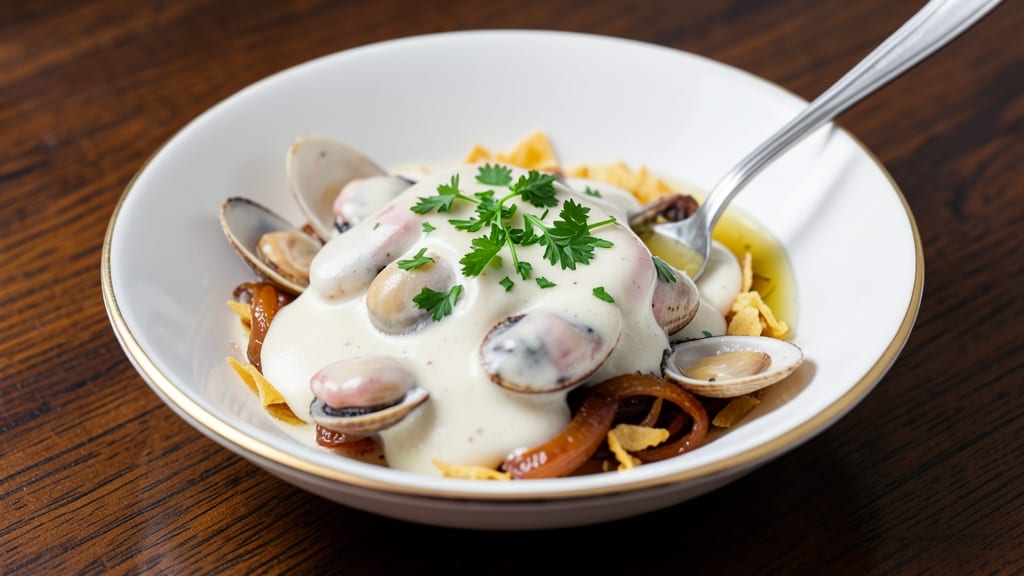
A white clam sauce recipe with canned clams transforms ordinary meals into coastal-inspired masterpieces in just 15 minutes. The secret lies in balancing briny clam juice with rich cream and aromatic shallots, creating a sauce that’s both velvety and complex—perfect for elevating pasta, seafood, or crusty bread.
I developed this version after testing countless iterations, ensuring every spoonful delivers that signature Italian restaurant flavor without the fuss.
The foundation of this sauce is simplicity: canned clams, heavy cream, and a splash of white wine reduce into a luscious, creamy consistency while shallots and garlic build depth. Fresh parsley brightens the finish, cutting through the richness with a touch of herbaceous freshness.
What sets this apart is how the clam juice—naturally briny and umami-packed—infuses the sauce with layers of flavor that store-bought versions can’t match.
By the time you’re done, you’ll have a sauce that’s silky-smooth yet packed with clam flavor, ready to drizzle over linguine, spoon over grilled fish, or serve as a luxurious dip for garlic bread.
The best part? It comes together in one pot with minimal effort, making it ideal for weeknight dinners or last-minute entertaining. No clam digging or complicated techniques required—just pure, restaurant-quality results.
This sauce also keeps beautifully in the fridge for up to 3 days, so you can make a batch ahead and use it all week. Pair it with lemon zest for extra brightness or a pinch of red pepper flakes for a subtle kick.
Let’s get started—your taste buds will thank you.
Ingredients for white clam sauce recipe with canned clams
Nine essential ingredients transform canned clams into velvety coastal luxury in minutes.
| Ingredient | Amount | Notes |
|---|---|---|
| Canned Clams (juice reserved) 🦪 | 14 ½ oz | High-quality, briny clams preferred |
| Heavy Cream 🥛 | 1 cup | Full-fat for maximum richness |
| Shallots 🧅 | 3 whole | Finely minced, vibrant color |
| Garlic Cloves 🧄 | 3 cloves | Peeled, minced for aromatic depth |
| Dry White Wine 🍷 | ½ cup | Sauvignon Blanc or Pinot Grigio |
| Fresh Parsley 🌿 | ¼ cup | Chopped, flat-leaf preferred |
| Extra-Virgin Olive Oil 🫒 | 2 tbsp | High-quality, fruity variety |
| Lemon Zest 🍋 | 1 tsp | Brightens the sauce finish |
| Salt 🧂 | ½ tsp | Diamond Crystal kosher preferred |
| Black Pepper 🌶️ | ¼ tsp | Freshly cracked for heat |
The clams are your flavor foundation—look for brands like Trader Joe's or Whole Foods for that perfect briny balance. Reserve the juice when draining (about 1/2 cup), as it's packed with umami. Heavy cream is non-negotiable here—full-fat only for that restaurant-quality texture. Shallots should be vibrant and firm—no wilted ones. I always grab mine from the produce section at Costco when they're on sale, but regular grocery stores work too. For the wine, dry whites like Sauvignon Blanc cut through the richness beautifully, but Pinot Grigio works in a pinch.
No white wine? Clam juice plus a splash of lemon juice mimics the acidity perfectly. Short on shallots? Extra-fine onion powder at half the amount works in a bind. Fresh parsley wilting? Dried parsley at one-third the quantity keeps the herbaceous note. The olive oil matters—use something fruity and peppery, not the cheap cooking oil. For extra depth, a pinch of red pepper flakes adds subtle heat without overpowering. And trust me on the lemon zest—it's worth the extra minute to zest fresh rather than using bottled juice.
This sauce keeps beautifully in an airtight container for 3-4 days in the fridge. For longer storage, freeze portions in ice cube trays—perfect for single servings later. Reheat gently on low, adding a splash of clam juice if it thickens too much. I always make a double batch—one for linguine night, one to drizzle over grilled sea bass the next. The flavor actually improves after resting, so don't rush to serve it immediately.
Why You'll Love This Recipe
- No Chopping Nightmare: I swear by this recipe because the shallots and garlic just need a quick mince—no fancy dicing, no tears. The canned clams handle all the heavy lifting while you sip that white wine right out of the bottle.
- Wine-Infused Magic: That splash of dry white wine? It’s the secret weapon—bright, clean, and it cuts through the richness of the heavy cream so beautifully. The clam juice adds this briny depth that makes every bite feel like a little coastal escape.
- Leftovers That Shine: Between us, this sauce begs to be made extra. It reheats like a dream, so you can toss it over pasta the next night or use it to jazz up grilled fish. I’ve even drizzled it on toast with a sprinkle of parsley—yes, it’s that good.
- Budget-Friendly Luxury: Heavy cream and white wine might sound fancy, but canned clams keep this dish from breaking the bank. It’s the kind of meal that feels special without requiring a seafood market haul. Plus, you’re using every drop of that clam juice—no waste here.
Step-by-step instructions for white clam sauce
This sauce delivers briny richness and velvety texture in record time—here's how to execute it flawlessly.
Sauté Shallots and Garlic Until Translucent
Heat the 2 tablespoons extra-virgin olive oil in a medium saucepan over medium heat. Add the 3 whole shallots that have been finely minced and cook, stirring occasionally, for 5-6 minutes until they become soft and translucent. You'll notice their color shift from pale to a delicate golden hue—this indicates they've released their natural sweetness without burning.
Add the 3 cloves garlic that have been minced and cook for another 30 seconds until fragrant. The garlic should dance around the pan but not brown—this prevents bitterness. Here's the thing: if the pan starts to smoke or the garlic darkens, immediately reduce the heat to medium-low and continue cooking. The aromatic foundation of your sauce depends on this step.
Deglaze with Wine and Clam Juice
Pour in the 0.5 cup dry white wine and immediately scrape up any browned bits from the bottom of the pan with a wooden spoon. This deglazing captures all the flavor you've built so far. Let the wine simmer for 2-3 minutes until it reduces by about half—you'll see the liquid transform from pale to a deeper golden color with concentrated aroma.
Add the reserved clam juice from the 14.5 ounces canned clams, stirring to combine. The juice should bring the mixture together into a loose, fragrant broth. This step is crucial for balancing the richness of the cream that's coming next—don't skip it. Let the mixture simmer gently for 1 minute to integrate all the flavors before proceeding.
Incorporate Clams and Cream for Creamy Texture
Drain the 14.5 ounces canned clams, reserving the juice as previously instructed, and add them to the pan. Stir gently to distribute them evenly throughout the liquid. The clams should begin to warm through almost immediately—you'll see their edges turn opaque as they heat.
Reduce the heat to medium-low and gradually whisk in the 1 cup heavy cream. This is where the sauce transforms from briny to luxurious. Whisk constantly for 2-3 minutes until the mixture thickens slightly but remains silky. You're aiming for a sauce that coats the back of a spoon but isn't gluey—this balance creates that perfect clam sauce texture. If it thickens too quickly, add 1-2 tablespoons of the reserved clam juice to adjust the consistency.
Finish with Aromatics and Seasoning
Remove the pan from heat and stir in the 1 teaspoon lemon zest, 0.5 teaspoon salt, and 0.25 teaspoon black pepper. The lemon zest will brighten the sauce's finish, cutting through the richness while enhancing the briny clam flavor. Let the sauce sit off heat for 2-3 minutes to allow the lemon to infuse fully.
Finally, stir in the 0.25 cup chopped fresh parsley. This adds freshness and color to the sauce, creating that restaurant-quality presentation. Taste and adjust seasoning if needed—you might need a touch more salt to balance the wine's acidity or a pinch more pepper to enhance the clam's natural brininess. The sauce should be creamy yet light, with distinct clam flavor and a velvety texture that coats perfectly.
Pro Tips For Making White Clam Sauce Recipe With Canned Clams
- SAVE THE CLAM JUICE: I learned this the hard way—don’t pour that canned clam juice down the drain. Strain it through a fine-mesh sieve (or even cheesecloth) to remove grit, then reduce it by half in a small saucepan before adding it to the sauce. That concentrated briny depth is what makes the difference between good and great—trust me, your taste buds will notice.
- SWEAT SHALLOTS LOW AND SLOW: High heat turns shallots bitter faster than you’d think. Cook them over medium-low with a pinch of salt until they’re translucent and just starting to soften—about 8-10 minutes. If they brown, you’ve lost that sweet, mellow flavor the sauce needs. (Yes, even if you’re impatient like me.)
- DEGLAZE WITH WINE IMMEDIATELY: The moment you remove the shallots and garlic from the pan, pour in that dry white wine right away—no lingering. Let it bubble for 30 seconds to lift all the browned bits (those add richness) before adding the cream. Skipping this step leaves a dull, one-dimensional sauce. (Your future self will thank you.)
- TEMPER THE CREAM: Cold heavy cream straight from the fridge will shock the sauce and cause it to split. Warm the cream slightly in a separate bowl—just until it’s lukewarm to the touch—before whisking it into the pan. This keeps the sauce silky smooth instead of curdled. (I was skeptical until I tried it.)
Storing and reheating this dish
Refrigerator Storage
Transfer your white clam sauce to an airtight glass container—I prefer Pyrex with a snap-on lid—and let it cool completely before refrigerating. This sauce keeps beautifully for up to 4 days in the fridge, with flavors actually deepening as the clam juice and cream meld together.
The key is using glass containers (not plastic) to preserve that delicate briny aroma. Always leave ½ inch of headspace to prevent oxidation. 💫
Freezer-Friendly Tips
For longer storage, divide the sauce into ice cube trays or small silicone molds—perfect for single servings later. Once frozen solid, transfer cubes to a freezer bag, squeezing out excess air to prevent freezer burn.
This sauce maintains its quality for up to 2 months in the freezer. When reheating frozen portions, add 1 tablespoon of clam juice per cube to restore that velvety texture. ✨
Gentle Reheating Methods
For fridge-stored sauce, reheat gently on low-medium heat in a saucepan, stirring occasionally. Add 1-2 tablespoons of clam juice or water if the sauce thickens too much during reheating.
Never boil—just warm until steaming (165°F internal temperature), then remove from heat and let sit for 1 minute to re-emulsify. This preserves that luxurious creaminess. 🔥
Microwave Shortcuts
For quick reheating, transfer sauce to a microwave-safe bowl and heat on 50% power in 30-second intervals, stirring between each. The sauce is ready when it reaches 160°F—test with an instant-read thermometer.
If it looks too thick, add a splash of clam juice or heavy cream to restore consistency. This method works best for single servings. 💡
Reviving Thickened Sauce
If your sauce separates or thickens after storage, don't toss it! Simply whisk in 1-2 tablespoons of clam juice or heavy cream while reheating. The sauce should return to its silky texture.
For extra brightness, finish with a pinch of lemon zest or a sprinkle of fresh parsley after reheating. This simple fix saves perfectly good sauce from going to waste. 🌿
Serving After Storage
Sauce tastes even better after resting, so let it sit at room temperature for 5 minutes before serving. This allows flavors to rebalance perfectly. Drizzle over linguine, spoon onto grilled fish, or serve with crusty bread for dipping.
The reheated sauce maintains its briny depth and creamy texture, making it just as impressive as when freshly made. 🍽️
Nutrition facts
Frequently asked questions
Can I substitute fresh clams for canned in this recipe?
Fresh clams work beautifully, but you'll need to steam them first to remove their shells. Use about 1 pound of fresh clams (yielding roughly 14.5 ounces of meat) and reserve the steaming liquid as you would the canned clam juice. The texture will be slightly firmer, but the briny flavor remains identical. Just be sure to clean and purge your clams properly before cooking.
What makes this sauce different from store-bought clam sauce?
This recipe captures restaurant-quality depth through three key elements: reserved clam juice (not just water), properly reduced wine for acidity, and the balance of heavy cream with aromatic shallots. Store-bought versions often use water or artificial flavors, resulting in a thinner, less flavorful product. The fresh parsley and lemon zest in this version also add brightness that packaged sauces lack.
How can I adjust the sauce for a dairy-free version?
Replace the heavy cream with full-fat coconut milk (1 cup) for a rich, dairy-free alternative. For extra thickness, add 1 tablespoon of cornstarch mixed with 2 tablespoons of water and whisk it into the sauce at the end. The sauce will still be creamy but with a subtle coconut undertone. The clam juice and wine will maintain that signature briny depth.
Why did my sauce turn out too thin?
This usually happens when the cream wasn't incorporated long enough or if too much clam juice was added. To fix it, whisk in 1 tablespoon of cold water and ½ teaspoon of cornstarch mixture while heating gently on low. Stir constantly until thickened. Alternatively, simmer uncovered for 2-3 extra minutes to reduce the liquid naturally. The sauce should coat the back of a spoon but remain pourable.
What's the best way to use leftover clam sauce?
This versatile sauce works perfectly as a pasta topping, seafood accompaniment, or bread dip. Try it with grilled shrimp skewers, baked fish fillets, or even as a filling for stuffed mushrooms. For extra flavor, stir in 1 teaspoon of capers or a pinch of red pepper flakes before serving. The sauce also makes an excellent topping for garlic toast or as a dip for crudités.