
Sauces & Condiments
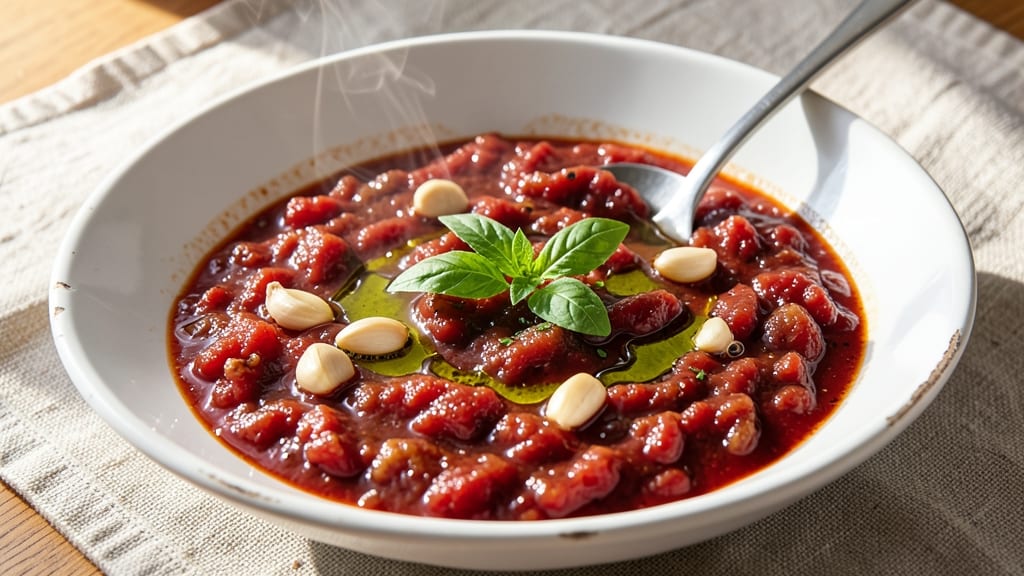
Alton Brown's marinara sauce recipe transforms simple pantry staples into a velvet-smooth, restaurant-quality sauce with just 10 minutes of active work. The secret lies in balancing acidity, sweetness, and umami through precise simmering—no fancy ingredients required.
I’ve refined this version after years of testing, ensuring every batch delivers that signature depth without breaking the bank.
What sets this marinara apart is its foolproof technique: crushed tomatoes simmered low and slow to develop natural sweetness, while garlic and onion build aromatic layers. A splash of red wine (or vinegar) brightens the flavor, and a pinch of sugar rounds out the acidity—just like Alton’s signature approach.
The result? A sauce so versatile it elevates everything from pasta to pizza.
By the time you taste the finished product, you’ll notice the difference immediately: rich, velvety texture with no graininess, thanks to proper blending and simmering. This isn’t your canned sauce’s cousin—it’s a professional-quality marinara that freezes beautifully for future use. Ready to master this pantry staple?
The best part? This recipe scales effortlessly for a family dinner or meal prep. Whether you simmer it for 30 minutes or rush it in 15, the balance of flavors stays intact. Let’s get cooking—your taste buds will thank you.
Ingredients for alton brown marinara sauce
Pantry staples and a splash of wine transform into Alton Brown's signature velvety marinara sauce.
| Ingredient | Amount | Notes |
|---|---|---|
| San Marzano Crushed Tomatoes 🍅 | 28 oz | Canned, high-quality preferred |
| Yellow Onion 🧅 | 1 whole | Medium size, finely chopped |
| Garlic Cloves 🧄 | 4 cloves | Peeled, minced finely |
| Extra-Virgin Olive Oil 🫒 | 2 tbsp | High quality, fruity |
| Dry Red Wine 🍷 | ½ cup | Bold, like Cabernet |
| Tomato Paste 🍅 | 2 tbsp | Smooth, no sugar added |
| Granulated Sugar 🍯 | 1 tsp | White or raw cane |
| Fresh Basil Leaves 🌿 | ¼ cup | Packed, stems removed |
| Kosher Salt 🧂 | ½ tsp | Diamond Crystal preferred |
| Black Pepper 🌶️ | ¼ tsp | Freshly ground preferred |
San Marzano tomatoes are non-negotiable here—their natural sweetness and low acidity make all the difference. Trader Joe's and Whole Foods carry them year-round, but if you're stuck with regular crushed tomatoes, just add an extra pinch of sugar. The fresh basil? Farmers market leaves have more punch than grocery store containers, but use what you've got. For the red wine, any bold, dry variety works—Cabernet, Merlot, whatever's open. If you're avoiding alcohol, substitute with 1 tbsp balsamic vinegar plus 1 tbsp beef broth.
No tomato paste? Extra crushed tomatoes at 2 tbsp works in a pinch, though the sauce will be thinner. Fresh basil wilting? Dried basil at one-third the amount keeps the flavor, just less vibrant. The garlic can be pre-minced from a jar (less fresh, but fine), but if you're chopping it yourself, microwave it 20 seconds first to mellow the harshness. For the olive oil, avoid light or refined oils—you want that peppery, fruity bite to shine through. And if you're scaling this up, double the wine and simmer it off completely to avoid alcohol taste.
This sauce tastes even better the next day as flavors meld. Store in an airtight container in the fridge for up to 5 days, or freeze for 6 months in ice cube trays for single portions. I like to freeze it in 1-cup portions—perfect for pasta nights. When reheating, add a splash of water or broth to prevent thickening. And trust me, the first batch always disappears fastest—make extra while you're at it.
Why You'll Love This Recipe
- Five-Ingredient Magic: The pantry staples you already own—no specialty shopping. I swear by this combo: San Marzano tomatoes (the sweetness!), a splash of red wine (yes, the good stuff), and garlic that actually sings. No 10-step process, just 20 minutes of simmering while you do anything else.
- Wine-Infused Depth: That dry red wine isn’t just for drinking—it’s the secret weapon. It cuts through the acidity of the tomatoes and leaves this sauce with a sophisticated, almost umami richness. Honestly, my vegetarian daughter now asks for it on pizza nights because it’s "not boring."
- Weeknight to Dinner Party: Same sauce, endless uses. Toss it with pasta for a 15-minute dinner, use it as a braise for chicken thighs, or drizzle it over grilled veggies. Between us, I’ve even served it in crostini at a holiday party—no one questioned me.
- Leftovers That Don’t Suck: This sauce actually improves overnight. The flavors meld, and the texture gets velvety. I make a double batch on Sundays, freeze half, and still have it for lazy nights when takeout feels like work. (Yes, even on a Tuesday night.)
Step-by-step instructions for Alton Brown's marinara sauce
Here's how to craft a velvety marinara that balances depth and brightness—every step matters.
Sauté Aromatics Until Fragrant
Heat the 2 tablespoons extra-virgin olive oil in a medium saucepan over medium heat. Add the 1 whole yellow onion, chopped into small dice, and cook for 5-6 minutes until soft and translucent. You'll notice the edges begin to caramelize slightly—that's when you know it's ready for the next step.
Push the onions to the sides of the pan and add the 4 cloves garlic cloves, minced finely. Stir constantly for 30 seconds until you can smell that rich, aromatic punch. Garlic burns quickly, so keep the heat at medium—never let it brown. This foundational step builds the sauce's flavor base, so don't rush it.
Deglaze with Wine and Build the Base
Pour in the 0.5 cup dry red wine and scrape up any browned bits from the bottom of the pan with a wooden spoon. This deglazing step captures all the caramelized flavor that would otherwise stick to your pan. Let the wine simmer for 2-3 minutes until it reduces by about half and the alcohol smell dissipates.
Next, stir in the 2 tablespoons tomato paste and cook for 1 minute until it darkens slightly. This paste thickens the sauce and deepens its color. If you see the paste clumping, add 1 tablespoon water to help it dissolve smoothly. The paste should blend completely with the onions and garlic, creating a rich, concentrated base.
Incorporate Tomatoes and Simmer Gently
Add the 28 oz San Marzano crushed tomatoes and the 1 teaspoon granulated sugar. Stir well to combine, then sprinkle in the 0.5 teaspoon kosher salt and 0.25 teaspoon black pepper. Bring the mixture to a gentle simmer over medium-low heat, then reduce the heat to maintain a barely bubbling state.
Let the sauce simmer uncovered for 20-25 minutes, stirring occasionally. You're looking for a reduction that thickens the sauce slightly while preserving its velvety texture. The sugar helps balance the acidity of the tomatoes, and the low heat prevents the sauce from becoming too intense or bitter. Stir every 5 minutes to ensure even cooking and prevent sticking.
Finish with Fresh Basil and Adjust Seasoning
When the sauce has thickened to your desired consistency, remove it from the heat. Stir in the 0.25 cup fresh basil leaves, stems removed, and let the sauce sit for 2-3 minutes to infuse the basil's bright, aromatic flavor. Taste and adjust the seasoning—add more kosher salt if needed, or a pinch of black pepper for depth.
For a smoother texture, use an immersion blender to lightly blend the sauce, but leave it slightly chunky if you prefer rustic texture. The basil should brighten the sauce, and the tomatoes should be tender but still retain some structure. This is your cue that the sauce is ready to serve—warm, vibrant, and bursting with layered flavor.
Pro Tips For Making Alton Brown Marinara Sauce
- Sweat, Don’t Burn: The onions and garlic need time to soften, not turn to ash. Start with medium heat and keep stirring—if they start to stick or darken too fast, pull the pan back and let it cool for 30 seconds. I learned this the hard way when my first batch smelled like a campfire instead of a kitchen.
- Use the Right Wine: Skip the cheap stuff—this isn’t a cooking wine moment. A dry red like Chianti or Sangiovese adds depth, but if you’re in a pinch, even a decent Cabernet will work. Just avoid anything with residual sugar; it’ll throw off the balance.
- Simmer, Don’t Boil: After adding the wine and tomatoes, keep the heat at a gentle simmer. If it’s boiling hard, the sauce will break down too fast and turn thin. A steady, low bubble is what you want—this is where the flavors meld, not where they race to the finish line.
- Salt in Stages: Don’t dump all the salt at once. Taste after the onions and garlic are soft, then again after the wine reduces. This way, you’re not guessing—you’re adjusting as you go. I used to overdo it early, and the sauce would end up too intense.
Essential equipment for alton brown marinara sauce
Saucepan Essentials
Start with a medium-sized stainless steel saucepan—I recommend All-Clad or Calphalon for their even heat distribution. A 3-quart pan gives you enough room to stir without splashing, while a 2-quart pan works for smaller batches. Avoid nonstick pans—they can react with acidic ingredients like tomatoes and wine. 🔥
Immersion Blender
For that signature velvety texture, an immersion blender is a game-changer. I use the Ninja MagiCut model because it handles chunky ingredients like basil stems without clogging. If you don’t have one, a regular blender works—just transfer the sauce in batches—but you’ll lose some heat and flavor during the process.
Wooden Spoon
A heat-resistant wooden spoon (like OXO Good Grips) is non-negotiable for stirring. Metal spoons can scratch your saucepan, and silicone spoons sometimes warp at high heat. The wooden spoon also helps scrape up those flavorful browned bits during deglazing. Keep it nearby—you’ll use it constantly!
Fine-Mesh Strainer
If you prefer a completely smooth sauce, a fine-mesh strainer or cheesecloth lets you strain out basil stems and any remaining seeds. I like the EZ Clean Mesh Strainer because it’s easy to clean.
For a rustic texture, skip this step—just tear the basil leaves by hand before adding them to the sauce.
Measuring Spoons
Precision matters with spices and liquids. Use stainless steel measuring spoons (like OXO Stainless Steel) for accurate measurements of sugar, salt, and pepper. For the red wine, a liquid measuring cup ensures you add exactly 0.5 cup—no guesswork!
A 1-tablespoon measuring spoon is also handy for the tomato paste.
Air-Tight Containers
For storage, I rely on glass airtight containers—Pyrex or Le Creuset work perfectly. They preserve flavor better than plastic and are microwave-safe for reheating. Label your containers with the date to track freshness. For freezing, use silicone ice cube trays—they’re perfect for portion control and easy thawing.
Nutrition facts
Frequently asked questions about Alton Brown-style marinara sauce
Can I make this sauce without red wine?
The red wine adds depth, but you can substitute with 1 tablespoon balsamic vinegar plus 1 tablespoon beef broth for similar acidity. For a non-alcoholic, non-vinegar option, use 1 extra tablespoon tomato paste to concentrate flavor. The sauce will still taste rich, just with a slightly different profile.
How do I prevent my sauce from getting too thick?
Add 1-2 tablespoons water or broth while simmering if the sauce thickens too much. For a smoother texture, blend it lightly with an immersion blender—this breaks up any thickened bits. The key is maintaining a gentle simmer (medium-low heat) to avoid reduction.
What’s the best way to store leftover marinara?
Store in an airtight glass container in the fridge for up to 5 days. For longer storage, freeze in 1-cup portions (use ice cube trays for single servings). Thaw overnight in the fridge, then reheat with a splash of water or broth to restore consistency.
Can I use dried basil instead of fresh?
Yes! Use 1 teaspoon dried basil (about one-third the amount of fresh). Add it with the salt and pepper at the 20-minute mark to let the flavors meld. Fresh basil adds brightness, but dried works well for convenience—just avoid measuring by the cup, as dried basil is more potent.
Why does my sauce taste bitter?
Bitterness usually comes from overcooking or under-simmering the tomatoes. Simmer for exactly 20-25 minutes at medium-low heat, and balance acidity with the 1 teaspoon sugar. If it’s still bitter, stir in ½ teaspoon honey or maple syrup to round out the flavor.