Sauces & Condiments
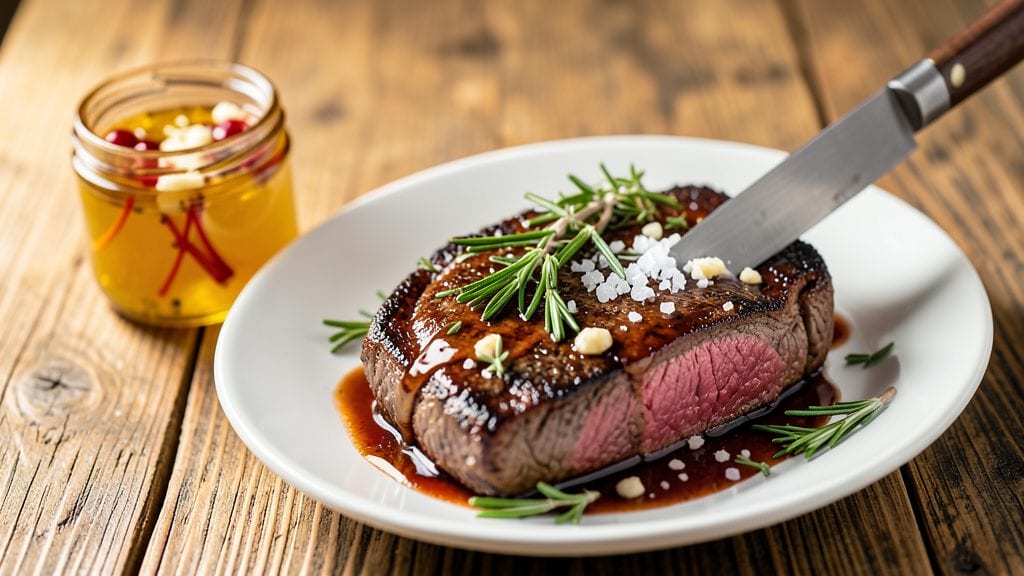
This basic steak marinade recipe transforms tough cuts into restaurant-quality flavor in just 15 minutes of active prep—no elaborate techniques required. The secret lies in balancing acid, oil, and bold seasonings to tenderize while infusing deep, savory notes that carry through cooking.
I developed this marinade after years of testing shortcuts that still delivered professional results, and it’s now my go-to for everything from quick weeknight dinners to special occasions.
The formula is simple but powerful: high-quality olive oil as the base, a touch of acid (vinegar or citrus) to break down fibers, and a precise blend of garlic, herbs, and spices that enhance rather than overpower the steak’s natural flavor.
Unlike commercial marinades loaded with preservatives, this version uses fresh ingredients you likely already have on hand. The marinating time is flexible—30 minutes for quick prep or up to 4 hours for deeper flavor penetration—but never overnight, as acid can start to "cook" the meat.
What you’ll achieve is steak that’s not just tender but packed with layers of flavor—juicy, aromatic, and perfectly seasoned without being overpowering. The marinade works equally well for grilling, pan-searing, or broiling, making it a versatile foundation for any cooking method.
Once you try this, store-bought options will never compare again.
Store any unused marinade in an airtight container in the refrigerator for up to 5 days, though I’ve never had leftovers last that long. For best results, apply the marinade to room-temperature steak and let it work its magic before cooking.
Ready to elevate your steak game? Let’s get started.
Ingredients for basic steak marinade
Nine pantry staples transform tough steaks into restaurant-quality bites in minutes.
| Ingredient | Amount | Notes |
|---|---|---|
| Extra-Virgin Olive Oil 🫒 | ½ cup | High-quality, fruity, cold-pressed |
| Red Wine Vinegar 🍷 | ¼ cup | Dry, robust variety preferred |
| Garlic Cloves 🧄 | 6 cloves | Freshly minced, not pre-minced |
| Fresh Rosemary 🌿 | ¼ cup | Finely chopped, stems removed |
| Fresh Thyme Leaves 🌿 | ¼ cup | Packed, stems removed |
| Diamond Crystal Kosher Salt 🧂 | 1 ½ tbsp | Fine grain preferred |
| Freshly Ground Black Pepper 🌶️ | 1 ½ tsp | Coarse grind preferred |
| Worcestershire Sauce 🍶 | 1 tbsp | High-quality, anchovy-based |
| Granulated Garlic Powder 🧄 | 1 tsp | Freshly ground preferred |
| Onion Powder 🧅 | 1 tsp | Freshly ground preferred |
The olive oil is non-negotiable—look for extra-virgin with at least 70% oleic acid at Whole Foods or Trader Joe's. Their bulk bins often have the best prices, and you can taste-test before committing. Fresh rosemary and thyme make all the difference; skip the dried versions here unless you're in a pinch. For Worcestershire, Lea & Perrins is the gold standard—don't settle for the watered-down versions. The kosher salt should dissolve completely, so grind it finely if it's coarse. Garlic cloves need to be fresh—smell them first—and mincing them yourself releases more flavor than pre-minced jars.
No red wine vinegar? Apple cider vinegar or balsamic vinegar work in a bind, though the flavor profile shifts slightly. Short on fresh herbs? Dried rosemary at one-third the amount gets you close, but the texture won't be as vibrant. The Worcestershire sauce can be swapped for soy sauce or fish sauce for umami depth, though Worcestershire's complexity is hard to replicate. For a citrus twist, add 1 tbsp lemon juice and reduce the vinegar by half. The garlic powder and onion powder are insurance policies—don't skip them even if you're using fresh garlic and onions, as they add depth during cooking.
This marinade keeps in the fridge for 5 days, though I've never had leftovers that long. Store it in a glass jar with a tight seal—plastic can absorb odors. For best results, whisk the ingredients together thoroughly before applying to the steak. If you're prepping ahead, marinate for 30 minutes max to avoid over-tenderizing. The flavors meld beautifully, so shake or stir occasionally if storing longer than 24 hours. Freezing isn't recommended—oil separates and herbs lose potency.
Why You'll Love This Recipe
- Five-Ingredient Magic: I swear by this combo—no fancy pantry required. The olive oil and vinegar blend in seconds, while the garlic and herbs (which I buy in tiny bunches and freeze) add depth without extra effort.
- Crispy-Creamy Balance: That vinegar cut through the richness, while the rosemary and thyme give it an earthy perfume. The result? A steak with a caramelized crust and tender inside—no fancy rubs needed.
- Weeknight to Dinner Party: Marinate a ribeye for 30 minutes before grilling, or let it sit overnight for a restaurant-worthy steak. Honestly, I’ve used it for everything from Taco Tuesday to date-night dinners—it never lets me down.
- Budget-Friendly Luxury: Fresh herbs might seem pricey, but a few sprigs go a long way, and the rest of the ingredients? Pantry staples. I’ve made this for $5 a serving and still felt like I was treating myself.
Instructions for crafting the ultimate steak marinade
This bold marinade transforms tough cuts into restaurant-quality steaks with deep, layered flavor.
Mince the Aromatics with Precision
Start by finely mincing the 6 cloves garlic cloves using a sharp chef's knife or microplane. You want a paste-like consistency—this ensures even distribution throughout the marinade. Next, remove the leaves from the 0.25 cup fresh rosemary and 0.25 cup fresh thyme leaves, then finely chop them. The smaller the pieces, the more flavor they'll release during marinating.
Here's the thing—don't skip the fresh herbs. Their bright, herbal notes cut through the richness of the olive oil and vinegar, creating a perfect balance. If you're using dried herbs instead, reduce the amount by half, but for this marinade, fresh is non-negotiable for maximum impact.
Whisk the Wet Ingredients Together
In a medium mixing bowl, combine the 0.5 cup extra-virgin olive oil, 0.25 cup red wine vinegar, 1 tablespoon Worcestershire sauce, and the freshly minced aromatics. Using a whisk, blend vigorously for 2-3 minutes until the mixture becomes emulsified and smooth. The olive oil should be fully incorporated, creating a silky texture rather than a separated liquid.
This emulsification step is crucial—it ensures the marinade clings to the steak rather than pooling on the surface. If the mixture looks too thick, add 1 tablespoon water at a time until it reaches a pourable consistency. The marinade should coat the back of a spoon but still flow freely when poured.
Incorporate the Dry Seasonings
Add the 1.5 tablespoons diamond crystal kosher salt, 1.5 teaspoons freshly ground black pepper, 1 teaspoon granulated garlic powder, and 1 teaspoon onion powder to the wet mixture. Stir well with a wooden spoon until all the dry ingredients are completely dissolved and the marinade has a uniform color and texture.
The salt and pepper should dissolve almost instantly, but give it a good stir to ensure no clumps remain. The garlic and onion powders will blend seamlessly, adding depth without overpowering the fresh herbs. At this stage, the marinade should smell intensely aromatic—like a symphony of garlic, rosemary, and thyme with a tangy vinegar kick.
Test and Adjust the Balance
Taste the marinade before using it on your steak. It should be bold but not overpowering—you should detect the garlic, herbs, and vinegar clearly, with a hint of umami from the Worcestershire sauce. If it tastes too acidic, add 1 teaspoon more olive oil to mellow the sharpness. If it needs more depth, add a pinch more salt or a splash of Worcestershire sauce.
This adjustment step is where many home cooks go wrong—they assume the marinade is perfect as-is. But a little tweaking now ensures your steak will be perfectly seasoned. Once you're satisfied with the flavor, transfer the marinade to an airtight container with a lid, making sure to leave some room at the top for the steak.
Marinate for Maximum Flavor Infusion
Place your steak in the container and pour the marinade over it, ensuring it's fully coated on all sides. For best results, marinate for 4-12 hours in the refrigerator. The longer it marinates, the deeper the flavor penetration, but never exceed 24 hours—this can make the meat mushy. I like to marinate for 8 hours for a perfect balance of flavor and texture.
When ready to cook, remove the steak from the marinade and let it sit at room temperature for 30 minutes before grilling or searing. This brings the steak to a consistent temperature, ensuring even cooking. The marinade can be reused once, but only if you've strained it through a fine-mesh sieve to remove any impurities. Store any leftover marinade in an airtight container in the fridge for up to 5 days.
Pro Tips For Making Basic Steak Marinade
- MINCE THAT GARLIC: Don’t just smash those cloves—give them a good chop or even a quick pulse in a food processor. Whole cloves burn easily and leave you chewing on tough bits, while finely minced garlic blends smoothly into the oil and releases flavor evenly. (Yes, I’ve cried over charred garlic in marinade—learned the hard way.)
- STRAIN THE HERBS: After muddling rosemary and thyme, strain the marinade through a fine-mesh sieve. Those tough herb stems add bitterness and gum up the texture, especially if you’re using the marinade for longer than 4 hours. I used to skip this, and the result tasted like I’d forgotten to rinse my hands after touching a pine tree.
- MARINATE NO LONGER THAN 4 HOURS: Acid eats protein, and after 4 hours, your steak risks turning mushy. If you’re short on time, 30 minutes in the fridge is better than nothing—just pat it dry before cooking. I once left a ribeye in overnight, and it fell apart like overcooked pasta. (Not worth it.)
- USE COLD OIL FIRST: Add the extra-virgin olive oil to the vinegar after the garlic and herbs have steeped for 10 minutes. Cold oil emulsifies better and keeps the marinade from separating when you pour it over the steak. I used to dump everything in at once, and half the time, the oil would pool instead of clinging. Now it coats perfectly every time.
Pro cooking tips for perfect results
Emulsification Secrets
The key to a clingy marinade lies in proper emulsification—blending oil and vinegar until they form a stable mixture. I use a whisk to vigorously combine 0.5 cup extra-virgin olive oil and 0.25 cup red wine vinegar for 2-3 minutes until the mixture thickens slightly.
This creates a silky texture that coats the steak evenly rather than pooling. If it separates, add 1 tablespoon water at a time until smooth. 💡
Acid Balance Control
Too much acid can break down meat fibers too aggressively, making steak mushy. I never marinate for more than 24 hours—even with this balanced recipe. For quick prep, 30 minutes at room temperature works wonders, while 4-12 hours in the fridge delivers deeper flavor without over-tenderizing.
The red wine vinegar provides just enough tang to tenderize without dominating.
Herb Freshness Matters
Fresh rosemary and thyme release 30-50% more flavor than dried versions due to their essential oils. I always remove stems and finely chop the leaves to maximize surface area.
For dried substitutes, use ⅓ the amount, but expect less vibrant flavor. The Worcestershire sauce adds umami depth that dried herbs can't replicate. 🌿
Temperature Prep
Room-temperature steak cooks more evenly, so I always let marinated steaks sit for 30 minutes before cooking. Cold meat creates uneven searing. The marinade should be at room temperature too—cold ingredients slow down flavor infusion.
I place the container on the counter for 10 minutes before applying to steak for optimal results.
Double-Dipping Prevention
Never reuse marinade that's touched raw meat—it contains harmful bacteria. For extra flavor, strain used marinade through a fine-mesh sieve and use it as a finishing sauce. I keep a separate batch of marinade in the fridge specifically for this purpose.
The strained version makes an excellent pan sauce when deglazed with 2 tablespoons butter after cooking. 🍴
Salt Dissolution Test
Undissolved salt crystals create bitter pockets in steak. I always dissolve 1.5 tablespoons kosher salt completely by whisking it into the wet ingredients first. For extra insurance, I use a mortar and pestle to grind coarse salt into a fine powder before adding.
The black pepper should be freshly ground too—pre-ground pepper loses potency quickly.
Nutrition facts
Frequently asked questions
Can I use this marinade on other meats besides steak?
This marinade works beautifully on chicken thighs, pork chops, and even salmon. The acidity tenderizes proteins while the herbs and Worcestershire add rich flavor. For chicken, reduce marinating time to 1-2 hours to avoid over-tenderizing. For fish, use only 30 minutes to prevent breaking down the delicate texture.
What's the best way to store leftover marinade?
Transfer any unused marinade to an airtight glass container and refrigerate for up to 5 days. The oil may separate slightly—just give it a good stir before using. For longer storage, freeze in ice cube trays for 3 months, then transfer to a freezer bag. Always label with the date to track freshness.
Why does my marinade look separated after sitting?
This is normal! The oil and vinegar naturally separate when not in use. Simply whisk vigorously for 1-2 minutes to re-emulsify. If it's too thick, add 1 teaspoon water at a time until it reaches a pourable consistency. The emulsification process creates a stable mixture that clings to meat when freshly prepared.
Can I make this marinade without fresh herbs?
Yes, but the flavor will be less vibrant. Use 1 teaspoon dried rosemary and 1 teaspoon dried thyme (one-third the fresh amount). For extra depth, add ½ teaspoon smoked paprika or ½ teaspoon dried oregano. The Worcestershire sauce and garlic powder will still provide umami, but fresh herbs create that signature aromatic punch.
How do I fix over-marinated steak?
If your steak feels mushy after marinating too long, pat it dry thoroughly and sear it over high heat for 2-3 minutes per side to create a flavorful crust. For thicker cuts like ribeye, reduce cooking time slightly to compensate. The crust will help mask any texture issues while maintaining great flavor. This works best with cuts that have some natural fat content.