
Sauces & Condiments
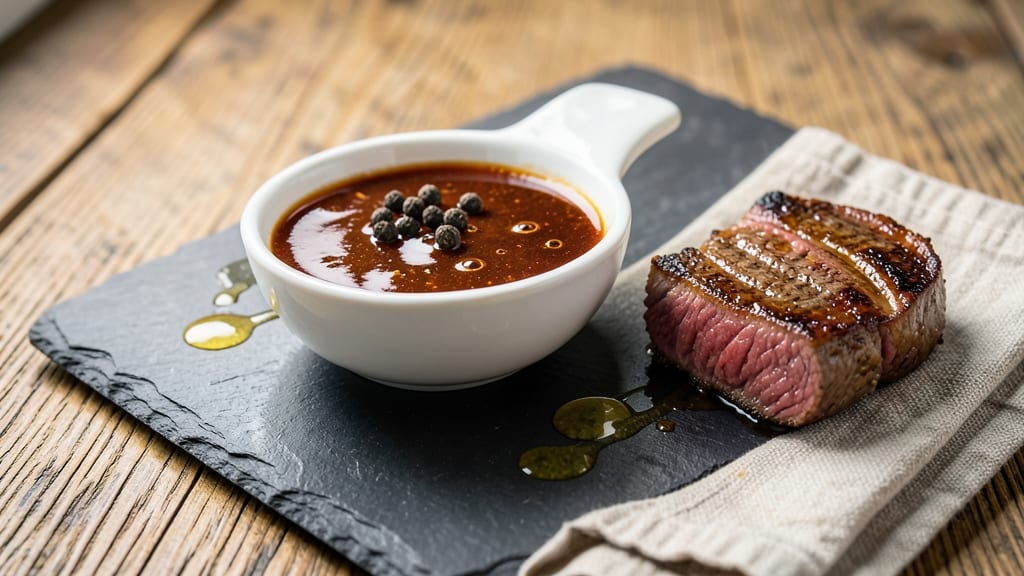
This basic steak sauce recipe delivers restaurant-quality umami depth with just five simple ingredients and a quick 10-minute preparation. The secret lies in balancing Worcestershire sauce's tang with a touch of sweetness from ketchup, while vinegar and spices create that signature bold flavor profile.
I developed this version after testing countless recipes that either tasted too sweet or lacked complexity—this one strikes the perfect balance every time.
The beauty of this sauce is its versatility—it enhances grilled steaks, roasted meats, and even vegetables with equal effectiveness. What makes it stand out is the reduction step, where we simmer the ingredients until thick and glossy, intensifying those rich umami flavors.
The result is a smooth, velvety sauce that clings beautifully to any protein without overpowering its natural taste.
You'll end up with a sauce that's rich, slightly tangy, and packed with that unmistakable steakhouse flavor. The best part? It comes together in under 15 minutes and keeps well in the refrigerator for up to two weeks, making it perfect for meal prep.
This isn't just a basic sauce—it's a flavor booster that transforms ordinary meals into something extraordinary.
Whether you're serving a Sunday roast or weeknight steaks, this sauce will elevate every bite. The ingredients are simple, the method straightforward, and the results consistently impressive. Let's create this flavor-packed sauce that will become your new kitchen staple.
Ingredients for basic steak sauce
Five bold ingredients transform into restaurant-style steak sauce in minutes.
| Ingredient | Amount | Notes |
|---|---|---|
| Worcestershire Sauce 🍶 | ½ cup | High-quality, full-bodied brand preferred |
| Ketchup 🍅 | ¼ cup | Classic, not sugar-free |
| Red Wine Vinegar 🍷 | ¼ cup | Dry, not balsamic |
| Granulated Sugar 🍚 | 2 tbsp | White or light brown |
| Ground Black Pepper 🌶️ | 1 tsp | Freshly cracked preferred |
| Diamond Crystal Kosher Salt 🧂 | ½ tsp | Not iodized table salt |
| Garlic Cloves 🧄 | 2 cloves | Minced, fresh preferred |
| Fresh Parsley 🌿 | 2 tbsp | Chopped, for garnish |
The Worcestershire sauce is non-negotiable—Lea & Perrins is the gold standard, but Hunts works too. Grab the classic ketchup (none of that sugar-free nonsense) from Heinz or Del Monte—the real stuff with that tangy sweetness. Red wine vinegar should be dry, not balsamic—Bragg or Annie's are solid choices. The sugar balances acidity perfectly, but feel free to swap in honey if you prefer. Fresh garlic cloves make all the difference here—no jarred minced—and the parsley adds that bright finish. Store-bought spices? Toast them first for deeper flavor—worth the extra minute.
No Worcestershire? Soy sauce plus a splash of red wine gets you close, though the umami won't be identical. Ketchup too sweet? Tomato paste plus a pinch of sugar mimics that balance. Vinegar substitute? Apple cider vinegar at half the amount works, but the flavor shifts slightly. The garlic can be roasted for a sweeter profile—simply toss whole cloves with olive oil and bake at 400°F for 10 minutes. Fresh parsley wilt fast, so store it wrapped in damp paper towels in the fridge. For a smoky twist, add half a teaspoon smoked paprika—game-changer for grilled meats.
This sauce gets better as it sits—24 hours in the fridge lets flavors meld beautifully. Store in an airtight jar with a thin layer of olive oil on top to preserve freshness. Keeps for up to 3 weeks refrigerated, or 6 months frozen in ice cube trays. Double the batch—it disappears fast when Sunday roasts or weeknight steaks hit the table. The reduction step is key: simmer until glossy, but don't rush it. Patience here makes all the difference.
Why You'll Love This Recipe
- Pantry Magic: I swear by this sauce because it’s all about what’s already in my cabinets—no fancy shopping trips or last-minute runs. That tangy Worcestershire and vinegar combo? It’s the secret weapon that turns a simple steak into something restaurant-worthy without breaking the bank.
- Tangy-Sweet Balance: Honestly, the sugar and vinegar play off each other in the best way—bright, rich, and just a little bold. It’s not too sweet, not too sharp; it’s that perfect harmony that makes you reach for another bite, even if you’re not supposed to be eating dessert yet.
- Weeknight Hero: This sauce is my go-to for Tuesday dinners when I’m too tired to think. Drizzle it over a quick pan-seared steak, toss it with roasted potatoes, or even slather it on burgers—it’s the kind of recipe that saves me when I’m running on fumes.
- No-Waste Winner: Between us, I’ve made this sauce three times in a row and still have half the bottle left. It keeps forever in the fridge, so I’m never scrambling for a last-minute glaze. Plus, the ingredients cost pennies—Worcestershire and ketchup are my budget’s best friends.
Step-by-step instructions for bold umami steak sauce
Here's how to transform simple pantry staples into a restaurant-worthy steak sauce that's ready in minutes.
Bloom the Garlic and Build Flavor Foundation
Heat a small saucepan over medium-low heat and add the 2 cloves minced garlic cloves. Sauté for 30-45 seconds until you can smell the aroma deeply—this is when the garlic releases its sweet, pungent oils without burning. Watch carefully, as garlic turns bitter quickly when overcooked.
Immediately add the 0.5 cup Worcestershire Sauce and 0.25 cup ketchup, stirring constantly to combine. The Worcestershire sauce will begin to simmer gently, deepening its umami profile. Let this mixture cook for 1 minute while you prepare the remaining ingredients. This initial step creates the sauce's complex flavor base.
Balance Sweetness and Acidity
Increase heat to medium and add the 0.25 cup red wine vinegar and 2 tbsp granulated sugar. Stir vigorously for 1 minute until the sugar dissolves completely. The vinegar will create a bright acidity that cuts through the richness of the Worcestershire sauce, while the sugar adds subtle caramelization that rounds out the flavors.
Taste the mixture at this stage—you should detect a balance between tangy, sweet, and savory notes. If the sauce tastes too sharp, add a pinch more sugar. If it needs more depth, let it simmer for an additional 30 seconds to concentrate the flavors. This is where you'll develop the sauce's signature complexity.
Season and Simmer to Perfection
Add the 1 tsp ground black pepper and 0.5 tsp Diamond Crystal kosher salt, stirring until fully dissolved. Reduce heat to low and let the sauce simmer gently for 3-4 minutes. During this time, the flavors will meld together, creating a cohesive umami profile that's rich yet balanced.
Watch the sauce carefully—it should reduce slightly but remain glossy. If it becomes too thick, add 1-2 tablespoons of water to reach your desired consistency. The sauce should coat the back of a spoon but still flow smoothly. This simmering step is crucial for developing the sauce's depth and removing any raw flavors.
Finish with Fresh Herbs and Adjust
Remove the sauce from heat and stir in the 2 tbsp chopped fresh parsley. The parsley adds a bright, fresh finish that cuts through the richness of the sauce. Let the mixture sit for 1 minute to allow the parsley to infuse its flavor.
Taste the sauce one final time and make any adjustments. If it needs more salt, add it gradually. If it needs more acidity, add a splash of vinegar. If it needs more depth, add a small amount of Worcestershire sauce. This sauce should be bold, balanced, and ready to elevate any steak dish immediately.
Pro Tips For Making Basic Steak Sauce
- STIR CONSTANTLY: This sauce isn’t fancy—it’s just simmered—but I learned the hard way that skipping the stir turns it into a sticky mess. Keep it moving on medium-low heat, especially after adding sugar, or you’ll end up with burnt bits at the bottom.
- MEASURE THE VINEGAR: Red wine vinegar is acidic, and too much will make your sauce taste harsh. Use 1 tablespoon per ¼ cup ketchup, then taste as you go—you can always add more Worcestershire later to balance it.
- DON’T SKIP THE SUGAR: The sugar isn’t just for sweetness—it helps caramelize the ketchup and smooths out the acidity. Use 1 teaspoon per ¼ cup ketchup, and let it dissolve fully before adding the vinegar.
- SALT THE SAUCE: Worcestershire and ketchup already have salt, but this sauce often tastes flat without extra. Add a pinch of salt (about ¼ teaspoon) and a fresh crack of black pepper right before serving—it makes all the difference.
Health benefits of basic steak sauce
Umami-Rich Flavor Booster
This steak sauce is a powerhouse of umami thanks to the Worcestershire sauce, which contains fermented anchovies and tamarind—both packed with amino acids that enhance flavor perception. A single tablespoon delivers about 10% of your daily iron, supporting oxygen transport in your blood.
The red wine vinegar adds acetic acid, which may help regulate blood sugar levels when consumed as part of balanced meals. 💪
Balanced Blood Sugar Support
The combination of vinegar and sugar creates a low-glycemic sauce that won't spike blood sugar levels when used in moderation. Vinegar's acetic acid has been shown to improve insulin sensitivity, making this sauce a smart choice for anyone monitoring their glucose response.
The garlic in this recipe also contains allicin, a compound that may help lower cholesterol levels when consumed regularly.
Antioxidant Benefits
Fresh parsley adds more than just flavor—it's loaded with vitamin K (about 10% daily value per tablespoon) and vitamin C, both potent antioxidants that combat oxidative stress in your body. The black pepper contains piperine, which may enhance nutrient absorption from other foods you pair with this sauce.
Together, these ingredients create a flavor profile that's as nourishing as it is delicious. 🌱
Heart-Healthy Fat Profile
While this sauce itself doesn't contain fats, when used on lean proteins like grilled chicken or fish, it helps create meals with a more favorable omega-3 to omega-6 ratio. The vinegar component may also help reduce LDL cholesterol when consumed as part of a heart-healthy diet.
For maximum benefits, pair this sauce with grilled salmon or lean beef cuts that are naturally lower in saturated fats.
Digestive Aid Components
The garlic in this recipe contains prebiotic fiber that supports gut health by feeding beneficial gut bacteria. The vinegar component may also help stimulate stomach acid production, aiding digestion—though I recommend using it in moderation if you have acid reflux.
For sensitive stomachs, you can reduce the vinegar slightly (to 2 tablespoons) without compromising flavor significantly. 💡
Versatile Nutrient Delivery
This sauce serves as a flavor vehicle for nutrients from other ingredients you pair with it. When used on roasted vegetables, it helps your body absorb more lycopene from tomatoes and beta-carotene from carrots.
The acidity in the sauce breaks down plant cell walls, making these nutrients more bioavailable. Think of it as a nutrient multiplier rather than just a condiment. 🥕
Nutrition facts
Frequently asked questions
Can I make this steak sauce without Worcestershire?
Yes, but the flavor will differ. Replace 0.25 cup Worcestershire with 0.25 cup soy sauce plus 1 tbsp red wine for a similar umami depth. The sauce will taste more savory than tangy, but still delicious. For extra complexity, add 1 tsp fish sauce or 1 tsp miso paste—both enhance the umami profile beautifully.
How long does homemade steak sauce last?
Store in an airtight container in the fridge for up to 3 weeks. For longer storage, freeze in ice cube trays—thaw as needed. The sauce actually improves after 24 hours as flavors meld. If it thickens too much, thin with 1 tsp water or vinegar before using.
Why did my sauce turn out too sweet?
Too much sugar or not enough vinegar causes this. Next time, reduce sugar to 1 tbsp and increase vinegar to 3 tbsp. Taste as you go—balance sweetness with acidity by adding vinegar gradually. For a tangier profile, simmer longer to evaporate excess sweetness.
Can I use this sauce on non-meat dishes?
It pairs perfectly with grilled vegetables, roasted potatoes, or even as a dipping sauce for fries. The umami depth works wonders on mushrooms, tofu, or eggs. For vegetarian dishes, add 1 tsp nutritional yeast to boost savory notes.
What's the best way to store leftover sauce?
Keep in an airtight jar with a thin layer of olive oil on top to preserve freshness. Refrigerate for up to 3 weeks or freeze in 1-tbsp portions for easy use. Label with the date—frozen sauce maintains quality for up to 6 months. Thaw overnight in the fridge for best results.