
Sauces & Condiments
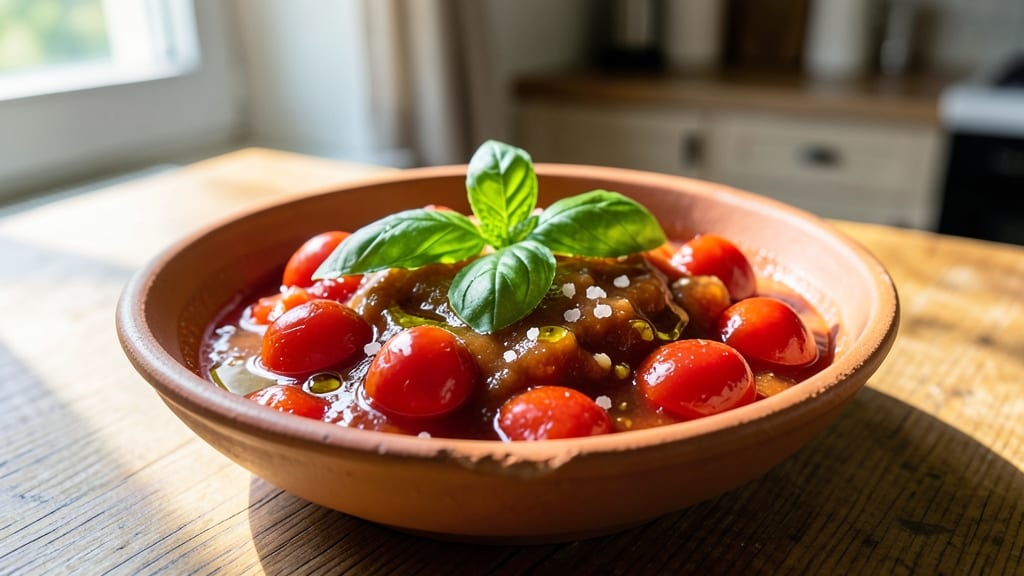
Transforming canned cherry tomatoes into a pantry-friendly umami bomb is one of those kitchen revelations that changes how you approach sauces. This 20-minute sauce delivers restaurant-quality depth using just five ingredients—no fresh tomatoes or complicated techniques required.
The secret lies in balancing the natural acidity of the tomatoes with just enough sweetness and herbs to create a versatile sauce that elevates everything from pasta to pizza.
What sets this sauce apart is its simplicity without compromise. By simmering the tomatoes with garlic, vinegar, and a touch of sugar, you unlock layers of flavor that develop as you cook. The vinegar brightens the sauce, the sugar mellows the acidity, and the herbs add aromatic complexity.
Unlike store-bought versions, this sauce stays fresh in the fridge for up to a week, ready to transform any meal with minimal effort.
The result is a smooth, velvety sauce with a concentrated tomato flavor that’s both tangy and sweet—perfect for tossing with al dente pasta, drizzling over grilled meats, or using as a base for hearty stews.
The umami richness comes from the tomatoes themselves, amplified by the simmering process, making it a game-changer for home cooks who want depth without the fuss.
Whether you're prepping for a weeknight dinner or stocking your pantry for quick meals, this sauce is your secret weapon. It’s the kind of recipe that proves great flavor doesn’t require complicated steps—just the right balance of ingredients and a little patience. Let’s make it.
Ingredients for canned cherry tomato sauce
Five pantry staples transform canned tomatoes into restaurant-quality sauce in minutes.
| Ingredient | Amount | Notes |
|---|---|---|
| Canned Cherry Tomatoes 🍅 | 28 oz | San Marzano preferred, crushed by hand |
| Extra-Virgin Olive Oil 🫒 | ¼ cup | High-quality, fruity variety |
| Garlic Cloves 🧄 | 4 cloves | Fresh, minced for aromatic depth |
| Red Wine Vinegar 🍷 | 2 tbsp | Balsamic works too for sweetness |
| Granulated Sugar 🍚 | 1 tbsp | Balances acidity, adjust to taste |
| Fresh Basil Leaves 🌿 | ¼ cup | Packed, stems removed for freshness |
| Salt 🧂 | ½ tsp | Diamond Crystal preferred |
| Black Pepper 🌶️ | ¼ tsp | Freshly cracked for subtle heat |
The cherry tomatoes make all the difference—San Marzano is the gold standard, but any high-quality canned variety works. Look for vibrant red color and minimal liquid in the can, which means more concentrated flavor. I usually grab Muir Glen from Costco—they're consistent and affordable. Fresh basil is ideal, but if you're using dried, reduce to one-third the amount since it's more potent. The garlic should be freshly minced, not pre-minced from a jar. For extra depth, toast the garlic in olive oil for 30 seconds before adding it to the sauce.
No red wine vinegar? Apple cider vinegar or white wine vinegar work just as well—they'll just have slightly different flavor profiles. Running short on basil? Dried oregano or thyme can substitute, but you'll need less. The sugar is key for balancing the acidity, but if you prefer a tangier sauce, reduce it to 1 teaspoon. For a smoky twist, add 1/2 teaspoon smoked paprika at the end. The olive oil matters too—use something you'd drizzle on bread, not the cheap cooking oil. If you're making this for a crowd, double the batch and store it in glass jars for easy reheating.
This sauce keeps beautifully in the fridge for up to 1 week in an airtight container. For longer storage, freeze it in ice cube trays—perfect for single portions. Reheat gently on the stove or microwave until warm. It thickens as it cools, so add a splash of water if it gets too stiff. I always make extra because it's so versatile—toss with pasta, drizzle over grilled chicken, or use as a base for stews. The flavor actually improves after a day or two as everything melds together.
Why You'll Love This Recipe
- Five-Ingredient Magic: I swear by this—just tomatoes, olive oil, garlic, vinegar, and sugar. That’s it. No fancy prep, no peeling, no chopping beyond crushing garlic. The canned tomatoes handle all the work while you sip your coffee.
- Sweet-Tart Balance: Honestly, the red wine vinegar and sugar combo changes everything. One minute you’re thinking “tomato sauce,” the next it’s this bright, tangy-sweet punch that sticks with you. The garlic? It’s the cherry on top—literally.
- Pantry Staple Power: This sauce is my secret weapon for lazy nights, potlucks, or when I’m too tired to think. Drizzle it over pasta, toss it with roasted veggies, or even slather it on grilled cheese. It turns “meh” meals into “wow, where’d that come from?”
- No-Waste, Budget Win: Between us, canned tomatoes are my go-to for stretching meals without breaking the bank. A single can makes enough for two meals, and the leftovers? Even better the next day. Plus, it’s one of those recipes where you’ll use every last drop.
Step-by-step instructions for canned cherry tomato sauce
Here's how to transform pantry staples into a rich, vibrant sauce that rivals fresh tomato versions.
Prepare the Tomatoes for Maximum Flavor Extraction
Open the 28 oz canned cherry tomatoes and transfer them to a medium saucepan. I always use a slotted spoon to drain the tomatoes, reserving the juices in the pan. This preserves the natural sweetness and acidity that would otherwise be lost. Give the tomatoes a gentle crush with your hands or a wooden spoon to break them down—this releases their juices and helps build body in the sauce.
Return the crushed tomatoes to the pan with their juices. The liquid should measure about 2 cups—this is your flavor base. If you're using San Marzano tomatoes, you'll notice they're naturally sweeter and more uniform in size, which makes this step even easier. Bring everything to a gentle simmer over medium heat, then reduce to the lowest setting to maintain a slow, steady cook.
Infuse with Aromatics and Balance Flavors
Add the 0.25 cup extra-virgin olive oil, 4 minced garlic cloves, 2 tablespoons red wine vinegar, and 1 tablespoon granulated sugar to the simmering tomatoes. The olive oil should coat the tomatoes completely, creating a silky texture as it cooks. Stir well to distribute the garlic evenly—this is where the sauce builds its depth of flavor. I like to let everything mingle for 5 minutes before stirring again, allowing the garlic to soften and infuse without burning.
Here's the thing—this is where the magic happens. The sugar balances the acidity of the vinegar and tomatoes, while the vinegar brightens the sauce and cuts through the richness of the olive oil. Taste after 10 minutes of simmering. You should notice a harmonious blend of sweet, tart, and umami notes. If it's too acidic, add a pinch more sugar; if it's too flat, a splash of vinegar will wake it up.
Simmer to Develop Rich, Concentrated Flavor
Continue simmering the sauce uncovered for 15-20 minutes, stirring occasionally. This slow reduction allows the flavors to meld and intensifies the natural sweetness of the tomatoes. You'll see the sauce thicken noticeably as moisture evaporates—this is when it transforms from a simple tomato mixture into a luscious, velvety sauce. The goal is to reduce it until it coats the back of a spoon but still flows smoothly.
Watch for the sauce to develop a glossy sheen and deepen in color to a rich, ruby red. If it starts to stick to the bottom of the pan, add 1-2 tablespoons of water to loosen it, but avoid over-diluting. The sauce should be thick enough to cling to pasta or coat meats beautifully. This step is all about patience—rushing it will leave you with a thin, watery sauce instead of the rich, concentrated umami bomb you're after.
Finish with Fresh Herbs and Season to Perfection
Remove the pan from heat and stir in the 0.25 cup fresh basil leaves and 0.5 teaspoon salt. The basil should be packed and stems removed—this ensures you get the maximum flavor without any bitterness. Let the sauce sit for 2-3 minutes to allow the basil to soften slightly and release its aromatic oils. Then, give it one final taste and adjust the seasoning with 0.25 teaspoon black pepper if needed.
For the best results, I recommend letting the sauce rest for 10 minutes before serving. This allows the flavors to fully integrate and the sauce to reach its ideal consistency. The basil will continue to infuse, adding a bright, fresh note that cuts through the richness. Serve immediately over pasta, drizzled over grilled meats, or spooned alongside crusty bread for a simple yet sophisticated meal.
Pro Tips For Making Canned Cherry Tomato Sauce
- Crush Those Tomatoes: DESCRIPTION: Drain the canned cherry tomatoes first, then give them a quick rough mash with your hands or a wooden spoon—just enough to break up the biggest chunks. This keeps the sauce silky without turning it into puree, and it releases more juice for a richer base. (Yes, even if you’re impatient like me.)
- Sweat the Garlic: DESCRIPTION: Cook the minced garlic in olive oil over low heat until it’s golden, not brown—about 3-4 minutes. Burning it turns the sauce bitter, and you’ll taste every charred bit. If you’re nervous, pull the pan off the heat for the last minute and let it sit.
- Vinegar First: DESCRIPTION: Add the red wine vinegar before the sugar, and let it simmer for 2-3 minutes to mellow its sharpness. Then stir in the sugar. This balances the acidity better than dumping both in at once—trust me, I’ve done it the other way.
- Simmer, Don’t Boil: DESCRIPTION: Keep the sauce at a gentle bubble, not a rolling boil, or the tomatoes will split open and turn the sauce grainy. If it’s too thick, add a splash of water or broth—just enough to loosen it up, not dilute it to soup consistency.
Best sauces and condiments for this dish
Pasta Perfection
This sauce is a game-changer for pasta dishes, especially with al dente varieties like spaghetti or linguine. Toss 8 oz cooked pasta with 1-1.5 cups sauce, reserving some to drizzle on top.
For extra richness, finish with 2 tablespoons grated Parmesan cheese and a sprinkle of freshly cracked black pepper. The sauce’s natural sweetness pairs beautifully with brown butter for a restaurant-worthy twist. 🍝
Pizza Base Magic
Use this sauce as a flavorful alternative to marinara on homemade pizza. Spread ½ cup sauce evenly over your dough before adding cheese and toppings. The concentrated flavor shines through even with bold toppings like pepperoni or grilled vegetables.
For a gourmet touch, top with burrata and a drizzle of extra-virgin olive oil after baking. The acidity cuts through the richness perfectly. 🍕
Meat Glaze
Reduce the sauce by an extra 5 minutes to create a sticky, caramelized glaze for grilled meats. Brush onto chicken breasts or pork chops during the last 3-4 minutes of cooking for a glossy finish.
The vinegar and sugar combo creates a sweet-savory crust that’s irresistible. Pair with garlic butter for double the flavor impact. 🍗
Stew Thickener
Add 1 cup sauce to hearty stews like beef bourguignon or lentil stews to deepen the flavor without thinning the broth. Simmer for 10 minutes to let the tomatoes meld with other ingredients. The sauce’s natural acidity helps tenderize tougher cuts of meat while adding bright, umami depth. 🥘
Dipping Sauce
Thin the sauce with 2 tablespoons water and a pinch of salt to create a versatile dipping sauce. It’s perfect for crudités, garlic bread, or even fried calamari.
For extra zing, stir in 1 teaspoon hot sauce or chopped jalapeños. The balance of sweet, tangy, and herby flavors makes it addictive. 🍅
Bread Drizzle
Warm the sauce slightly and drizzle over toasted baguette slices or focaccia for an instant appetizer. Top with shaved Parmesan and a sprinkle of flaky sea salt for a sophisticated starter. The sauce’s richness pairs beautifully with whipped ricotta or goat cheese for a creamy contrast. 🥖
Nutrition facts
Frequently asked questions
Can I use regular canned tomatoes instead of cherry tomatoes?
Regular canned tomatoes will work, but the texture and flavor will differ. Cherry tomatoes create a smoother, more concentrated sauce with natural sweetness. If using regular tomatoes, crush them thoroughly and simmer longer (up to 30 minutes) to achieve similar thickness. For extra depth, add 1 teaspoon tomato paste to compensate for the difference.
How do I adjust the sauce if I don’t have red wine vinegar?
Apple cider vinegar or white wine vinegar work perfectly as substitutes. For a sweeter profile, use balsamic vinegar (reduce to 1 tablespoon). If you're avoiding vinegar entirely, add 1 extra teaspoon of sugar and ½ teaspoon lemon juice to balance the acidity. The key is maintaining that bright, tangy contrast to the tomatoes.
Why did my sauce turn out too thin?
This usually happens if you didn’t simmer long enough or used tomatoes with excess liquid. To fix it, continue simmering uncovered for 10-15 more minutes, stirring occasionally. For immediate thickening, mix 1 teaspoon cornstarch with 1 tablespoon water, stir into the sauce, and cook for 2-3 minutes until it gels. Avoid adding flour directly—it can create lumps.
Can I make this sauce without fresh basil?
Use 1 teaspoon dried basil or ½ teaspoon dried oregano instead. For a different twist, try ½ teaspoon dried thyme or 1 bay leaf (remove before serving). Fresh herbs add brightness, but dried spices still deliver great flavor—just adjust quantities since they’re more concentrated.
How long will this sauce keep in the fridge?
The sauce stays fresh for up to 1 week when stored in an airtight container. For longer storage, freeze it in ice cube trays or small jars—thaw overnight in the fridge before using. The flavor actually improves after 2-3 days as the ingredients meld together. If it thickens too much when cold, stir in 1 tablespoon water before reheating.