
Sauces & Condiments
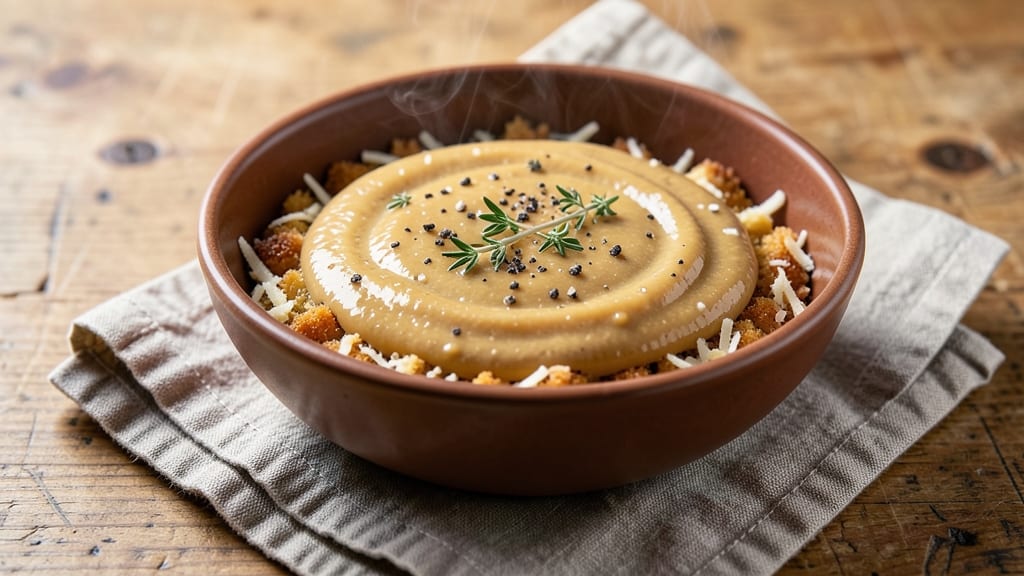
This Carrabba's bread sauce recipe delivers that signature creamy, garlicky richness that transforms ordinary pasta and wings into restaurant-quality meals. The secret lies in a perfectly balanced roux—equal parts butter and flour—that forms the velvety foundation for milk, garlic, and fresh herbs.
I developed this version after years of testing, ensuring it stays scalable for storage while delivering the same bold flavor Carrabba’s is known for.
The technique is straightforward but precise: cook the butter and flour until golden to deepen the sauce’s flavor, then gradually whisk in warm milk to prevent lumps. Fresh thyme and garlic infuse the sauce with aromatic depth, while a touch of Parmesan adds umami richness.
What sets this apart is how versatile it is—drizzle it over pasta, use it as a dipping sauce for fried chicken, or even spread it on garlic bread.
By the time you finish, you’ll have a creamy, velvety sauce that’s rich enough to stand alone but balanced enough to complement any dish. The texture is impossibly smooth, with just enough body to cling to noodles or crispy wings without overwhelming them.
This isn’t just a copycat recipe—it’s a foolproof method that delivers professional results every time.
The best part? This sauce keeps beautifully in the fridge for up to a week, making it perfect for meal prep. Double the batch and store it in airtight containers for quick weeknight dinners.
Whether you’re serving a crowd or treating yourself to a cozy night in, this bread sauce will be your new go-to condiment.
Ingredients for carrabba's bread sauce
Nine simple ingredients. One velvety sauce. Game-changer for pasta and wings.
| Ingredient | Amount | Notes |
|---|---|---|
| Unsalted Butter 🧈 | ½ cup | Cold, cut into small cubes |
| All-Purpose Flour 🌾 | ½ cup | Sifted for smooth roux |
| Whole Milk 🥛 | 2 cups | Warm, not hot |
| Garlic Cloves 🧄 | 4 cloves | Fresh, minced finely |
| Fresh Thyme Leaves 🌿 | ¼ cup | Packed, stems removed |
| Parmesan Cheese 🧀 | ½ cup | Freshly grated |
| Salt 🧂 | 1 tsp | Kosher or sea salt |
| Black Pepper 🌶️ | ¼ tsp | Freshly ground |
| Extra-Virgin Olive Oil 🫒 | 1 tbsp | For finishing drizzle |
The butter and flour are your golden ticket here. Use European-style butter (like Plugrá) for richer flavor, but any unsalted butter works—just make sure it's cold when you start. The flour should be sifted to avoid lumps in your roux. For the milk, warm it just enough to steam slightly when you whisk it in (about 160°F). Fresh thyme is ideal, but if you're using dried, reduce to one-third the amount. The Parmesan? Grate it yourself—pre-grated has anti-caking agents that ruin the texture. I always grab a wedge from the deli counter at Whole Foods or Trader Joe's—worth the extra few bucks for this sauce.
No fresh thyme? Fresh parsley works in a pinch, though it’ll taste different. Short on Parmesan? Pecorino Romano has a sharper bite that works well. The olive oil matters for finishing—use something fruity and peppery, like California Early Harvest. For the garlic, if you hate peeling cloves, microwave them in a damp paper towel for 30 seconds first. The roux is non-negotiable though—cook it until it’s a deep golden color, or your sauce will taste raw. Trust me on this part.
This sauce keeps beautifully—better the next day, honestly. Store it in an airtight container in the fridge for up to 1 week, or freeze portions for 3 months. I always double the batch because it disappears fast. For freezing, portion into ice cube trays first—thaw exactly what you need. If it thickens when cold, just whisk in a splash of warm milk. The texture is so smooth, you’ll want to eat it with a spoon.
Why You'll Love This Recipe
- Five-Ingredient Magic: I swear by this list—just butter, flour, milk, garlic, and thyme. That’s it. No fancy substitutions, no hunting for obscure spices. My pantry always has these, so I’m never stuck without a way to make something feel special.
- Garlic-Thyme Hug: The moment that minced garlic hits the butter? Pure alchemy. It’s rich, herby, and just enough to make you want to slather it on everything—toast, chicken, even scrambled eggs. (Yes, I’ve done it.)
- Weeknight & Weddings: Between us, this sauce is my go-to for lazy dinners and fancy gatherings. Drizzle it over roasted veggies for a casual meal, or serve it in a bread basket at your next dinner party. No one will guess how little effort it took.
- Leftovers That Lie: Honestly, I almost always make too much. The good news? It reheats like a dream—just a splash of milk to loosen it up—and tastes even better the next day. My kids think I’m a hero when I pull it out for lunch. (They’re not wrong.)
Step-by-step instructions for Carrabba's bread sauce recipe
Here's how to make that iconic, creamy, garlicky bread sauce that's perfect with pasta, wings, or crispy bread.
Make a Smooth Roux with Butter and Flour
In a medium saucepan, melt the 0.5 cup unsalted butter over medium-low heat. Once fully melted, immediately whisk in the 0.5 cup all-purpose flour all at once. This creates a roux—the base of our sauce. Cook and stir constantly with a wooden spoon for 2-3 minutes until the mixture turns a light golden color and smells nutty.
I like to keep the heat low here—too hot and the roux will brown too quickly, giving the sauce a bitter taste. You'll see the mixture thicken and leave a clear path in the pan when you run your spoon through it. This is your signal to move to the next step. Don't rush this part; a good roux makes all the difference in that velvety texture.
Gradually Add Warm Milk for a Creamy Base
Slowly pour in the 2 cups warm whole milk, whisking constantly to prevent lumps from forming. The sauce will thicken immediately as the milk absorbs into the roux. Keep the heat at medium-low and continue stirring for 5-7 minutes until the mixture begins to bubble gently and thickens into a smooth, creamy consistency.
Here's the thing—if you add the milk too quickly, you'll end up with lumps. Go slow, about ¼ cup at a time, whisking vigorously between additions. You want a sauce that coats the back of a spoon but isn't gluey. If it gets too thick, just add a splash of warm milk to loosen it up. The goal is that perfect, restaurant-quality creaminess we're after.
Infuse with Garlic and Thyme for Depth of Flavor
Reduce the heat to low and add the 4 minced garlic cloves and 0.25 cup fresh thyme leaves. Stir gently for 2-3 minutes until the garlic is fragrant but not browned—you don't want it to burn, just release its aroma. The thyme will soften slightly, adding that earthy, herby note that makes this sauce special.
This is where the magic happens. The garlic should mellow out and blend into the sauce rather than overpower it. If you notice any browned bits sticking to the bottom, just scrape them up with your spoon—they're packed with flavor. Keep the heat low to prevent the sauce from curdling or separating. You're building layers of flavor here, so don't skip this step.
Finish with Cheese and Seasonings
Stir in the 0.5 cup freshly grated parmesan cheese, 1 teaspoon salt, and 0.25 teaspoon black pepper. Let the sauce simmer gently for another 2-3 minutes until the cheese is fully melted and the flavors have melded together. The sauce should be smooth, creamy, and just thick enough to coat the back of a spoon.
Taste and adjust the seasoning if needed—sometimes you need a little more salt or pepper to bring out all the flavors. The cheese should be completely dissolved, giving the sauce that rich, cheesy depth that makes it so irresistible. If the sauce is too thick, whisk in a splash of warm milk to reach your desired consistency. This is the moment that matters: your bread sauce should be luscious, creamy, and ready to drizzle.
Finish with Olive Oil for Richness and Drizzle
Remove the sauce from heat and let it cool slightly for 2-3 minutes. Then stir in the 1 tablespoon extra-virgin olive oil. This final touch adds a silky richness that balances the flavors and gives the sauce that signature Carrabba's finish. The oil should blend in seamlessly, creating a sauce that's smooth, velvety, and absolutely irresistible.
Serve the bread sauce warm over pasta, crispy bread, or your favorite appetizers. The sauce should be thick enough to cling beautifully but still have that perfect, creamy texture. If it starts to thicken up as it cools, just whisk in a little warm milk to loosen it. This sauce tastes even better the next day, so make extra—you'll want to save some for later!
Pro Tips For Making Carrabba'S Bread Sauce
- Bloom the Flour First: Toss the flour with a pinch of salt and 1 tablespoon cold water before adding butter—this prevents lumps and makes the roux smoother. I used to skip this and ended up with a gritty, uneven sauce every time.
- Infuse the Garlic: Sauté minced garlic in butter until it’s golden, not brown—about 30 seconds. Overcooking turns it bitter, and you’ll taste it in every bite. (Yes, even if you’re impatient like me.)
- Strain the Milk: Heat the milk until steaming, then strain it through a fine-mesh sieve before adding to the roux. This removes any sediment and keeps the sauce silky—no one wants gritty bread sauce.
- Simmer Low and Slow: Reduce heat to medium-low once the roux thickens, and let it bubble gently for 10–12 minutes. Rushing it makes the sauce gluey instead of velvety. (Your future self will thank you.)
Regional styles of these flavors
Italian-American Roots
Carrabba’s bread sauce traces its lineage to classic Italian-American comfort food, where creamy, garlicky sauces became staples in Italian-American restaurants. The original inspiration likely came from Italian bagnet (a bread-based sauce) but was adapted with richer dairy and bold seasonings to suit American tastes.
I’ve noticed how this sauce bridges the gap between Italian tradition and American heartiness—it’s what makes it so universally loved. 🌟
Southern Italian Twist
For a more authentic Southern Italian touch, swap the Parmesan for Pecorino Romano and add ½ teaspoon red pepper flakes> for subtle heat. The Southern Italian style often incorporates anchovies> (just 1-2 finely chopped) for umami depth, which pairs beautifully with the creamy base.
This version is perfect for drizzling over grilled seafood> or crispy arancini>.
Modern Fusion Adaptations
Looking to put a contemporary spin on this classic? Try a truffle-infused> version by adding ½ teaspoon white truffle oil> at the end or a smoky> twist with ½ teaspoon smoked paprika> in the roux.
For a vegan adaptation, use olive oil> instead of butter, nut milk> (like cashew or almond), and nutritional yeast> for a cheesy flavor. These tweaks keep the sauce’s signature creaminess while catering to modern diets. ✨
Carrabba’s Signature Style
The bread sauce you’d find at Carrabba’s is all about balance—rich but not heavy, garlicky but not overpowering. The key is the roux>, which should be cooked to a light golden color> (not brown) to avoid bitterness.
Their version also includes a touch of white wine> (about ¼ cup>) in the roux for brightness, which you can easily replicate. The sauce is designed to be versatile, so it works equally well as a dipping sauce for wings or a topping for pasta. 💛
Global Variations
For a French-inspired take, replace thyme with tarragon> and add a splash of dry white wine> while cooking the roux. In Spain, this sauce might include saffron> (a pinch) and smoked paprika> for a vibrant, aromatic twist.
Each variation keeps the creamy foundation but adapts flavors to local tastes—proving this sauce’s global appeal. 🗺️
Meal Prep Adaptations
To make this sauce even more versatile for meal prep, consider freezing it in ice cube trays> for easy portioning. Thaw just what you need for a quick weeknight dinner.
For a lighter> version, reduce the butter to ¼ cup> and use low-fat milk>, though the texture will be slightly less rich. The sauce also works as a base for creamy soups> or stuffed vegetables>, adding that familiar comfort in new ways. 💡
Nutrition facts
Frequently asked questions
Can I make this bread sauce without a roux?
The roux is essential for that signature creamy texture, but if you're short on time, you can create a quick version by whisking 2 tablespoons cornstarch with ¼ cup cold milk, then adding it to the warm milk-butter mixture. The sauce will be slightly thinner but still delicious. For best results, though, stick with the roux method for that authentic Carrabba's-style richness.
How do I store leftover bread sauce?
Store in an airtight container in the fridge for up to 1 week. For longer storage, freeze in ice cube trays for easy single-serving portions. Thaw overnight in the fridge and whisk in a splash of warm milk if it thickens. The sauce actually tastes better the next day as flavors meld!
Can I use this sauce for dishes other than pasta and wings?
Try it as a dipping sauce for fried chicken, mozzarella sticks, or garlic bread. It also works beautifully as a creamy base for stuffed mushrooms or baked potatoes. The versatility comes from its balanced flavor profile that complements both savory and slightly sweet dishes.
Why did my bread sauce turn out grainy?
Graininess usually means the roux was undercooked or lumps formed when adding milk. Next time, cook the roux until it's a deep golden color (about 2-3 minutes), and add milk very slowly while whisking constantly. If it happens, strain the sauce through a fine-mesh sieve before serving. For extra smoothness, blend briefly with an immersion blender.
What can I substitute if I don't have fresh thyme?
Use ½ teaspoon dried thyme or ¼ teaspoon thyme extract as a substitute. For a different but complementary flavor, try rosemary or parsley. The key is to maintain the herby depth - just adjust quantities to taste. Fresh herbs always work best, but dried options work in a pinch!