
Sauces & Condiments
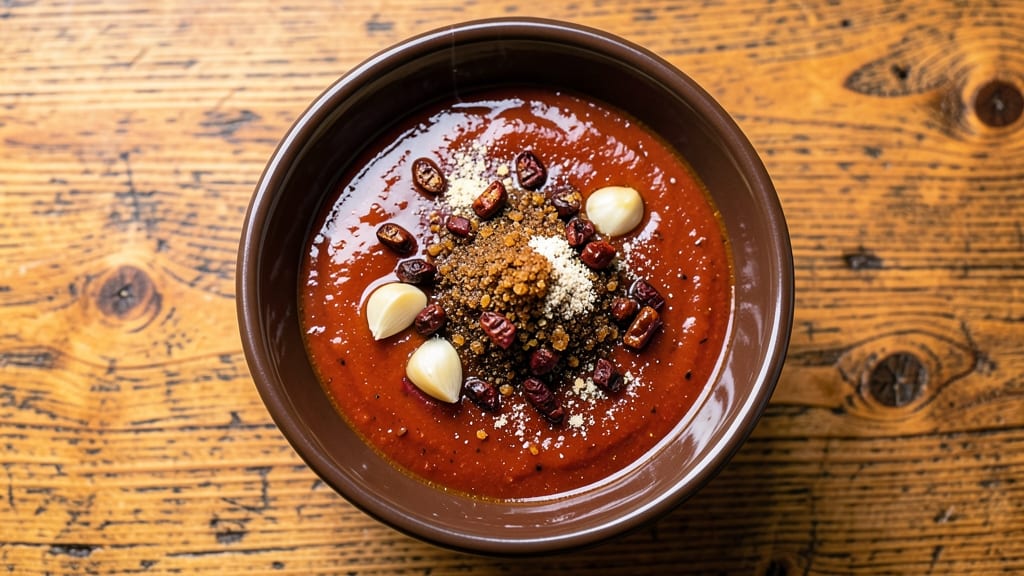
Creating a copycat BBQ sauce recipe that captures the smoky chipotle depth of your favorite brand starts with the right balance of sweetness, tang, and heat.
The day I realized French technique could elevate my rubs also taught me how to build complex sauces layer by layer—this sauce is no exception. With just 10 ingredients and 30 minutes of active time, you'll achieve a sauce so rich and versatile it'll transform any dish.
This recipe delivers restaurant-quality results by simmering tomato paste, vinegar, and spices until the flavors meld into a velvety, glossy sauce. The secret lies in the slow reduction, which intensifies the smoky chipotle flavor while maintaining a perfect balance of sweetness from brown sugar.
Unlike store-bought versions, this sauce stays fresh for weeks in the fridge, ready to elevate pulled pork, grilled chicken, or even baked beans.
What makes this sauce truly special is its adaptability—adjust the sugar for a tangier profile or add extra chipotle for more heat. The consistency is thick enough to cling to meats but still pours smoothly, making it ideal for glazing or dipping.
Once you taste the depth of flavor, you'll never reach for a bottle again. Let's get started on this game-changing sauce.
The sauce's rich, smoky character comes from carefully toasted spices and chipotle peppers, while the vinegar provides the necessary tang to cut through the sweetness. This method ensures every batch delivers that perfect balance, whether you're using it for competition-style ribs or a quick weeknight meal.
Trust me—this sauce will become your new kitchen staple.
Ingredients for copycat bbq sauce
Ten simple ingredients transform into a smoky, velvety sauce that rivals any bottle.
| Ingredient | Amount | Notes |
|---|---|---|
| Tomato Paste 🍅 | ½ cup | Smooth, no sugar added |
| Apple Cider Vinegar 🍏 | ½ cup | For tangy brightness |
| Brown Sugar 🍚 | ½ cup | Light or dark preferred |
| Chipotle Peppers in Adobo 🌶️ | 2 whole | Mild or hot, chopped finely |
| Garlic Cloves 🧄 | 3 cloves | Fresh, minced for depth |
| Onion Powder 🧅 | 1 tbsp | For subtle sweetness |
| Ground Cumin 🌿 | 1 tbsp | Toasted for warmth |
| Smoked Paprika 🌶️ | 1 tbsp | For smoky richness |
| Black Pepper 🌶️ | ½ tsp | Freshly ground preferred |
| Salt 🧂 | 1 tsp | Kosher or sea salt |
The chipotle peppers are the heart of this sauce—pick mild or hot based on your heat preference. I grab mine from the Latin market section at Trader Joe's or Whole Foods where they're freshest. Toast the spices (cumin and paprika) in a dry pan for 30 seconds first—that smoky aroma is non-negotiable. The tomato paste? Use the canned kind, not the powder. It's worth the extra 90 seconds to stir it into a smooth paste before adding to the pot. For the vinegar, apple cider gives the best balance, but white vinegar works in a pinch.
No chipotle peppers? Substitute 1 tbsp smoked paprika plus 1 tsp liquid smoke—it's not identical, but close. Running low on brown sugar? White sugar plus 1/4 tsp cinnamon mimics the molasses notes. The garlic and onion powder can be swapped for 1/4 cup finely chopped yellow onion if you prefer fresh. For a sweeter profile, add 1 tbsp molasses. Want more tang? Increase vinegar by 1 tbsp. The sauce thickens as it cools, so add 1 tbsp water if it's too stiff.
This sauce keeps beautifully—3-4 weeks in the fridge sealed in a jar. For longer storage, freeze portions in ice cube trays. Thaw overnight in the fridge and stir before using. The flavor actually improves after 24 hours as the spices meld. I make double batches because it disappears fast—perfect for meal prep. If it gets too thick, just add a splash of water or vinegar to thin it out.
Why You'll Love This Recipe
- Pantry Magic: I swear by this one—no specialty stores, no fancy gadgets. Just tomato paste, vinegar, and a can of chipotles from the shelf. That’s it. The brown sugar and garlic are probably already in your cupboard, so you’re basically making it with stuff you’d toss out anyway.
- Smoky Sweet Fix: The chipotles in adobo give it that just-right heat without overpowering, while the brown sugar caramelizes into something dangerously addictive. Slather it on ribs or drizzle it over baked beans—every bite tastes like a Sunday cookout, even on a Tuesday.
- Weeknight Workhorse: This sauce doubles as marinade, glaze, or dipping sauce. Toss chicken in it for 30 minutes before grilling, or simmer it down to coat meatloaf. I’ve even used it to deglaze my skillet after searing steak—versatile enough to handle anything.
- Budget-Friendly Staple: A single batch costs me pennies but stretches across three meals. Freeze extras in ice cube trays for quick flavor boosts later. Honestly, it’s the kind of recipe that makes me feel like I’m hosting a feast without breaking the bank.
Step-by-step instructions for copycat BBQ sauce recipe
Here's how to create a smoky, chipotle-infused sauce that rivals store-bought favorites.
Prepare the Chipotle and Garlic Base
Remove the seeds and membranes from the 2 whole chipotle peppers in adobo and finely chop them. I like to use a sharp knife for this—it gives you better control than a food processor. In a small bowl, combine the chopped chipotles with the 3 cloves minced garlic cloves. Let this mixture sit for 5 minutes to allow the flavors to meld together.
This step is what gives your sauce that authentic smoky depth. The adobo sauce already carries some heat, but by removing the seeds, you control the spice level. If you prefer milder sauce, you can remove even more of the white pith before chopping.
Sauté the Aromatics and Spices
In a medium saucepan, combine the 0.5 cup tomato paste with the chipotle-garlic mixture. Add the 1 tablespoon onion powder, 1 tablespoon ground cumin, 1 tablespoon smoked paprika, 0.5 teaspoon black pepper, and 1 teaspoon salt. Stir well to create a smooth paste—this ensures even distribution of all flavors throughout your sauce.
Place the saucepan over medium heat and cook for 3-4 minutes, stirring constantly. You'll see the mixture darken slightly as the spices toast—this releases their aromatic oils. Don't walk away; the tomato paste can burn quickly if left unattended. Here's where the magic happens: the spices bloom and create that deep, complex flavor foundation.
Add Liquid and Simmer
Pour in the 0.5 cup apple cider vinegar and 0.5 cup brown sugar. Stir to combine everything thoroughly. Bring the mixture to a gentle boil, then immediately reduce the heat to low. Let it simmer uncovered for 15-20 minutes, stirring occasionally. You're looking for a sauce that thickens slightly but remains smooth and glossy.
The vinegar adds that tangy brightness that cuts through the richness of the sauce, while the brown sugar balances the acidity. If you notice the sauce getting too thick before the 15 minutes are up, add 1-2 tablespoons of water to maintain the right consistency. The sauce should coat the back of a spoon but still be pourable.
Blend for Silky Smoothness
Once the sauce has thickened to your liking, use an immersion blender to blend it until completely smooth. If you don't have an immersion blender, carefully transfer the sauce to a countertop blender and blend until silky. This step ensures there are no lumps from the tomato paste or spices, giving you that restaurant-quality texture.
After blending, return the sauce to the saucepan and let it simmer for another 5 minutes to allow the flavors to meld together. Taste and adjust the seasoning if needed—you might want to add a pinch more salt or a splash of vinegar to perfect the balance. The sauce should be tangy, slightly sweet, and deeply smoky with just the right amount of heat.
Cool and Store Properly
Remove the sauce from heat and let it cool to room temperature. Transfer it to a clean, airtight container. This sauce will keep in the refrigerator for up to 2 weeks or can be frozen for up to 3 months. When you're ready to use it, give it a quick stir—it might thicken slightly as it cools, but you can thin it with a splash of water or apple cider vinegar if needed.
The longer this sauce sits, the better the flavors develop. I like to make a big batch and use it on everything from ribs to baked beans. The smoky chipotle notes really shine when you let the sauce rest for at least 24 hours before using it for the first time. Trust me, your taste buds will thank you for the patience!
Pro Tips For Making Copycat Bbq Sauce
- Bloom the Spices: Toss minced garlic and chipotle peppers in adobo into the pot before adding liquids. Let them sizzle for 30 seconds—this releases their oils and deepens the flavor. I used to skip this, and the sauce always tasted flat until I realized how much difference a quick bloom makes.
- Deglaze Aggressively: After browning your garlic, pour in the apple cider vinegar immediately and let it bubble for 2 minutes. The acid cuts through any stuck bits and adds brightness. Sounds like overkill, but it prevents that dull, one-note taste that ruins so many homemade sauces.
- Whisk the Sugar: Stir the brown sugar into the simmering sauce gradually, a tablespoon at a time, while whisking constantly. This prevents clumping and ensures it dissolves smoothly. I learned this the hard way after scraping out a lumpy mess from my first batch—now I just whisk like my life depends on it.
- Simmer Low and Slow: Reduce the heat to a gentle simmer after everything’s combined, and let it cook uncovered for 20-25 minutes. Skipping this step leaves the sauce thin and underdeveloped. The longer it simmers, the richer and more cohesive the flavors become—no shortcut here.
Common mistakes when making great copycat bbq sauce
Over-Simmering the Sauce
I’ve seen many cooks let this sauce bubble away too long, thinking more time equals deeper flavor. But after 25 minutes of simmering, the vinegar’s acidity starts to evaporate, and the sugar can burn, leaving a bitter aftertaste.
The goal is a 15-20 minute simmer—just enough to meld flavors without losing that bright tang. If your sauce reduces too much before then, add 1 tbsp water or vinegar to maintain balance. 🌡️
Skipping the Spice Toast
That 3-4 minute toast of spices in the tomato paste isn’t just for show—it’s where the magic happens. Toasting cumin and paprika releases their essential oils, giving the sauce that deep, smoky aroma. I once made a batch without toasting and ended up with a flat, one-dimensional flavor.
Trust me, 3 minutes over medium heat makes all the difference. The pan should smell like a campfire when you’re done.
Using Powdered Tomato Paste
This is a rookie mistake that changes everything. Powdered tomato paste lacks the body and richness of canned paste, leading to a thin, watery sauce. The canned version has 20% more solids, which thickens beautifully during simmering.
If you’re out of canned, mix powdered paste with 2 tbsp water per 2 tbsp powder to mimic the texture—but it won’t be the same. For this recipe, always use the canned kind.
Ignoring the Blending Step
Some cooks rush through the blending, leaving tiny bits of tomato paste or unbroken spices. These lumps disrupt the sauce’s silky texture, making it feel uneven in your mouth.
An immersion blender is ideal, but if you’re using a countertop blender, cover the jar with a towel—the sauce can splatter when hot. The result? A glossy, professional finish that clings perfectly to ribs or chicken. Don’t skip this step unless you want a rustic, chunky sauce. 💡
Not Adjusting Seasoning After Cooling
Sauces always taste different after cooling—often needing more salt or vinegar. I’ve caught myself tasting the sauce hot and thinking it’s perfect, only to find it bland or too sweet after it sits.
Let it cool 10 minutes, then taste again. Adjust with pinches of salt or splashes of vinegar until it’s balanced. This is where the sauce truly comes together.
Using Old or Rancid Ingredients
Stale spices or old vinegar can turn your sauce into a flavor disaster. Check your spices for freshness—ground cumin and smoked paprika should smell aromatic, not dull. Vinegar should have a sharp, clean tang.
If your chipotles in adobo smell fermented or sour, toss them. Fresh ingredients make all the difference in a sauce this delicate. I keep my spices in the freezer to preserve their potency. ❄️
Nutrition facts
Frequently asked questions
Can I make this sauce without chipotle peppers?
For a milder version, substitute 1 tablespoon smoked paprika plus 1 teaspoon liquid smoke. For extra heat, add ½ teaspoon cayenne pepper. The smoky depth will be slightly different but still delicious. Just remember to toast the spices for 3 minutes to maximize flavor.
How do I adjust the sweetness or tanginess?
For a sweeter sauce, add 1 tablespoon molasses or increase brown sugar to ⅔ cup. For more tang, add 1 extra tablespoon vinegar. Always taste after simmering and adjust gradually—you can always add more, but you can't remove excess sweetness or acidity.
Can I use this sauce on non-meat dishes?
This versatile sauce works beautifully on grilled vegetables, baked potatoes, or even as a marinade for tofu! For vegetarian dishes, reduce the chipotle slightly (1 pepper) to avoid overpowering the meal. The smoky-sweet profile pairs especially well with roasted Brussels sprouts or portobello mushrooms.
Why does my sauce get too thick when cooling?
Sauces naturally thicken as they cool—this is normal! If it's too stiff, thin it with 1-2 teaspoons water or vinegar while warm. For future batches, simmer slightly less (15 minutes instead of 20) or add 1 extra tablespoon vinegar at the start. The consistency should be like honey when cooled.
How can I make this sauce spicier?
For extra heat, add ½ teaspoon cayenne pepper during the spice toast or include 1 extra chipotle pepper (seeds in). If you want smoky heat without spice, increase smoked paprika to 1½ tablespoons. Always taste first—you can reduce heat by adding more vinegar to balance.