
Sauces & Condiments
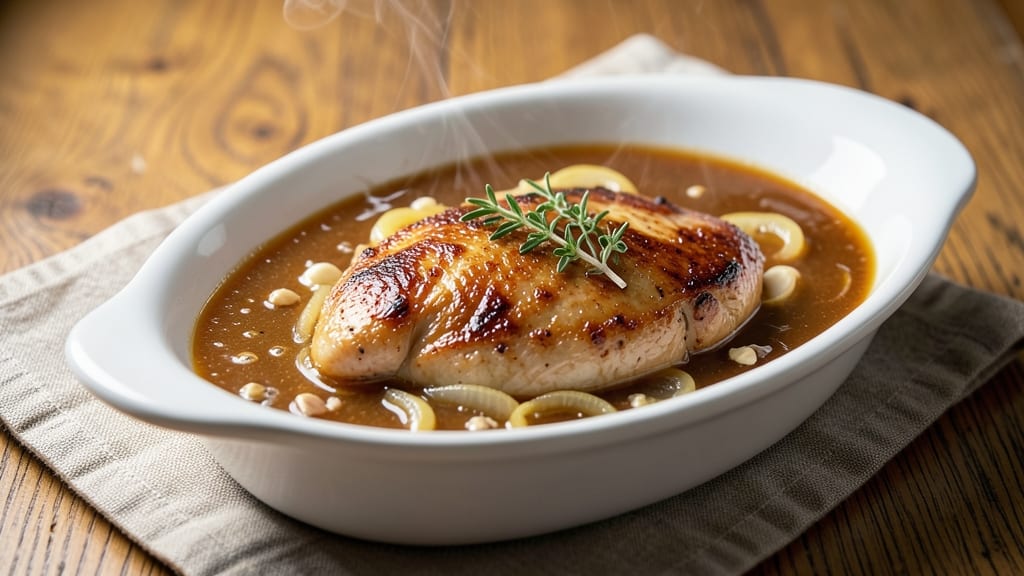
Creating a Marie sauce recipe transforms ordinary meals into steakhouse-worthy experiences with its velvety onion-infused richness. This classic sauce starts with a simple roux and builds to a velvety finish that elevates chicken, veal, or even beef.
The secret lies in patience—allowing the sauce to reduce slowly while developing deep, aromatic flavors.
What makes Marie sauce truly special is its balance of simplicity and sophistication. A well-made roux forms the foundation, while deglazing the pan captures flavorful browned bits that become the sauce’s soul.
Finishing with butter adds that signature glossy sheen and luxurious texture. It’s the kind of sauce that turns a weeknight dinner into something memorable.
Perfect for finishing roasted meats, this sauce delivers a silky, aromatic finish that clings beautifully to chicken or veal. The process is straightforward but requires attention to detail—reducing the sauce just enough to thicken it without losing its velvety body.
The result? A restaurant-quality sauce you’ll want to make again and again.
Whether you’re serving it over roasted chicken or drizzling it over a perfectly cooked veal cutlet, Marie sauce adds an element of elegance to any dish. Let’s get started on creating this timeless classic that brings steakhouse flair to your kitchen.
Ingredients for marie sauce
Eight pantry staples transform into restaurant-worthy Marie sauce with velvety depth.
| Ingredient | Amount | Notes |
|---|---|---|
| Unsalted Butter 🧈 | ½ cup | Cold, cubed for roux |
| All-Purpose Flour 🌾 | ½ cup | Sifted for smooth roux |
| Yellow Onions 🧅 | 1 whole | Thinly sliced, even thickness |
| Fresh Thyme Leaves 🌿 | ¼ cup | Stems removed, loosely packed |
| Garlic Cloves 🧄 | 2 cloves | Minced for aromatic depth |
| Vegetable Stock 💧 | 1 cup | Homemade or quality store-bought |
| Dry White Wine 🍷 | ½ cup | Chilled, dry variety preferred |
| Salt 🧂 | ½ tsp | Diamond Crystal kosher preferred |
| Black Pepper 🌶️ | ¼ tsp | Freshly cracked for brightness |
| Heavy Cream 🥛 | ¼ cup | Full-fat for velvety texture |
The butter and flour form the sauce’s backbone—don’t rush the roux. European-style butter like Plugrá or Land O’Lakes adds richness, but any good-quality unsalted works. For the onions, yellow or pearl varieties caramelize beautifully. I grab mine from Whole Foods when they’re on sale, but regular grocery store onions work fine. Fresh thyme is ideal, but if you’re using dried, reduce to one-third the amount—it’s potent stuff. The garlic? Roasted for 10 minutes at 375°F before mincing adds a subtle sweetness that elevates everything.
No white wine? Dry vermouth or extra chicken stock works in a pinch. The vegetable stock should be low-sodium—seasoning is adjusted at the end. Heavy cream is non-negotiable for that signature velvety finish, but if you’re avoiding dairy, coconut cream at half the amount gives a similar texture. For extra depth, deglaze the pan with a splash of red wine vinegar after cooking the onions—trust me, it’s worth the extra minute. And if you’re making a big batch, double the wine and stock, but keep the cream at the same ratio to avoid thinning the sauce.
This sauce keeps beautifully—3 days in the fridge sealed in a jar, or 3 months in the freezer in ice cube trays. To reheat, warm gently on the stove with a splash of stock or cream. I always make extra—it freezes perfectly and turns a quick weeknight dinner into something special. The roux stage is where flavor develops, so don’t walk away. Patience here makes all the difference between good and extraordinary.
Why You'll Love This Recipe
- No-Fuss Technique: I swear by this one—just melt butter, toss in flour, and let it cook until it’s golden. No whisking, no stress, just a smooth, velvety sauce that takes less time than waiting for a pot of water to boil.
- Garlic-Thyme Magic: That slow caramelized onion and fresh thyme? It’s what turns this into something special. The garlic hits just right—not overpowering, but deep and savory, like a warm hug in sauce form.
- Weeknight Workhorse: I use it for pasta, chicken, even mashed potatoes. Honestly, it’s my secret weapon when I’m too tired to think of anything fancy but still want something that tastes like it took hours.
- Budget-Friendly Luxury: Butter and flour are pantry staples, and onions/garlic/thyme stretch far. I make a big batch and freeze half—no wasted ingredients, no last-minute grocery runs, just reliable flavor whenever I need it.
Step-by-step instructions for Marie sauce recipe
Here's how to craft this luxurious onion-infused sauce with restaurant-quality depth.
Create the Perfect Roux
Melt the 0.5 cup unsalted butter in a heavy-bottomed saucepan over medium-low heat. Once fully melted and foaming subsides, immediately whisk in the 0.5 cup all-purpose flour all at once. This creates a smooth paste that forms the sauce's foundation.
Cook the roux for 3-4 minutes, stirring constantly with a wooden spoon, until it turns a rich, golden nutmeg color. You'll notice it smells toasty and nutty—this is your cue it's ready. If it darkens too quickly, reduce the heat slightly. The roux should coat the back of a spoon but still be pourable, not grainy.
Sauté the Onions and Aromatics
Add the 1 whole yellow onion, sliced into even strips, to the roux. Cook for 8-10 minutes over medium heat, stirring frequently, until the onions become translucent and begin to caramelize at the edges. This slow cooking develops their natural sweetness.
Stir in the 2 cloves garlic cloves and 0.25 cup fresh thyme leaves, cooking for another 1-2 minutes until fragrant. The garlic should soften but not brown—just enough to release its aromatic oils. Here's the thing—don't rush this step. Properly caramelized onions form the soul of Marie sauce.
Deglaze with Wine and Stock
Pour in the 0.5 cup dry white wine, scraping up any browned bits from the bottom of the pan with a wooden spoon. Let it simmer for 2-3 minutes until reduced by half. You'll smell the alcohol evaporating, leaving behind concentrated onion and wine flavors.
Gradually whisk in the 1 cup vegetable stock, bringing the mixture to a gentle simmer. Continue cooking for 10-12 minutes, stirring occasionally, until the sauce thickens enough to coat the back of a spoon. This reduction process builds the sauce's velvety body and rich flavor.
Finish with Cream and Season
Reduce the heat to low and stir in the 0.25 cup heavy cream. Let the sauce simmer gently for 3-4 minutes, stirring constantly, until it reaches your desired consistency. It should be thick enough to coat the back of a spoon but still flow smoothly.
Season with the 0.5 tsp salt and 0.25 tsp black pepper, tasting as you go. The sauce should be perfectly balanced—rich from the butter and cream, with bright acidity from the wine and sweetness from the caramelized onions. If it's too thick, whisk in a splash of warm water or stock to reach the ideal consistency.
Strain and Serve
For a silky-smooth finish, strain the sauce through a fine-mesh sieve into a clean saucepan. This removes any onion bits, leaving you with an elegant, velvety sauce. Return it to low heat and keep warm until ready to serve.
Marie sauce shines drizzled over steak, chicken, or even mashed potatoes. The key is serving it immediately—this sauce doesn't reheat well. If you need to hold it briefly, cover with a lid and keep over warm water. Each spoonful should deliver layers of caramelized onion, wine brightness, and creamy richness that makes it worth the effort.
Pro Tips For Making Marie Sauce
- Sweat the Onions Slow: I used to rush this step and end up with bitter, waterlogged onions—don’t. Cut them into even ¼-inch slices and cook them over medium-low heat for at least 10 minutes, stirring occasionally, until they’re translucent and all the moisture has evaporated. That’s when they’ll actually caramelize properly when the butter comes in.
- Whisk Like You Mean It: When you add flour to the butter, don’t just stir—whisk vigorously for 2-3 minutes to fully cook out the raw flour taste. This isn’t the time to be lazy; you’re building the base of the sauce, and a proper roux makes all the difference in the final texture.
- Toast the Thyme Leaves: Skip throwing whole sprigs into the sauce—they’ll just float there looking pretty. Instead, strip the leaves from the stems and fry them in the butter for 30 seconds before adding anything else. This releases their essential oils and gives the sauce a depth that just sprinkling them in can’t match.
- Finish with a Splash: After adding the garlic, don’t let the sauce boil—just simmer gently. Right at the end, when it’s thickened, take it off the heat and stir in a tablespoon of cold butter (or a splash of heavy cream if you’re feeling fancy). This cools the sauce slightly and gives it that silky, restaurant-quality finish.
Dietary considerations for these flavors
Gluten-Free Adaptation
Marie sauce traditionally contains flour, but you can easily adapt it for gluten-free diets using a 1:1 gluten-free flour blend like Bob’s Red Mill or King Arthur. Replace the all-purpose flour with the same measurement, but cook the roux over medium-low heat—gluten-free flours can burn faster.
For extra richness, whisk in 1 tbsp cornstarch with the flour to help stabilize the sauce. 🌾
Dairy-Free Version
Skip the butter in the roux and use olive oil instead—about 0.25 cup for the same richness. Replace heavy cream with coconut cream (reduce to 0.125 cup) or cashew cream (blend 0.5 cup soaked cashews with 0.25 cup water).
The sauce will still be velvety but with a subtly nutty undertone. For depth, add 1 tsp nutritional yeast when seasoning.
Low-Calorie Lightening
Cut calories by using low-fat chicken broth instead of vegetable stock and replacing heavy cream with Greek yogurt (whisk in 0.125 cup at the end). Reduce butter to 0.25 cup and use whole-wheat flour for the roux.
The sauce will still coat beautifully but with about half the calories of the original. Taste as you go—you may need extra salt to balance the reduced fat.
Vegetarian Option
Replace the wine with vegetable broth (reduce by half first) and use mushroom stock instead of vegetable stock for umami depth. For richness, stir in 1 tbsp miso paste with the cream.
The sauce will have a deeper, earthier flavor that still pairs well with roasted vegetables or tofu. Garnish with fresh parsley to brighten the dish.
Allergy-Friendly Notes
For nut allergies, avoid cashew cream and stick to coconut cream (if tolerated). If you’re sensitive to onions, replace them with shallots (they’re milder) or leeks (white parts only).
Always check labels on flour blends—some contain traces of dairy or nuts. When in doubt, use certified gluten-free, dairy-free ingredients to ensure safety. 💡
Keto-Friendly Adjustments
Transform Marie sauce into a keto-friendly version by eliminating flour entirely. Melt 0.5 cup butter in the pan, then whisk in 2 tbsp xanthan gum (or 1 tbsp psyllium husk) to thicken the sauce.
Deglaze with wine and stock as usual, then finish with 0.25 cup heavy cream. The texture will be slightly different but still luxurious. Add 1 tbsp arrowroot powder if extra thickening is needed.
Nutrition facts
Frequently asked questions
What's the secret to making Marie sauce extra velvety?
Straining the sauce through a fine-mesh sieve is key—it removes any onion bits for that signature silky texture. Also, finish with a generous pat of cold butter while whisking constantly. This emulsifies the sauce, giving it that luxurious sheen and glossy finish.
Can I make Marie sauce ahead of time?
This sauce actually tastes better the next day as the flavors meld. Store it in an airtight container in the fridge for up to 3 days, or freeze it for 3 months in ice cube trays. Just reheat gently with a splash of stock or water to restore its velvety consistency.
What's the best way to deglaze the pan?
Use a wooden spoon to scrape up all the browned bits from the pan's bottom before adding the wine. This captures all the meaty, caramelized flavors that become the sauce's soul. Let the wine reduce by half before adding stock—this concentrates the flavors even more.
Why did my Marie sauce turn grainy?
Graininess usually means the roux was overcooked or the sauce wasn't stirred enough while reducing. For a smooth finish, whisk constantly during cooking and strain the sauce before serving. If it's already grainy, whisk in a small amount of warm water or stock to emulsify it back to smoothness.
What's the ideal temperature for serving Marie sauce?
Serve it warm but not boiling—around 160-170°F. This maintains its velvety texture while keeping all the aromatic flavors intact. If you need to hold it, keep it covered over warm water to prevent skin formation. The sauce should coat the back of a spoon but still flow smoothly.