
Sauces & Condiments
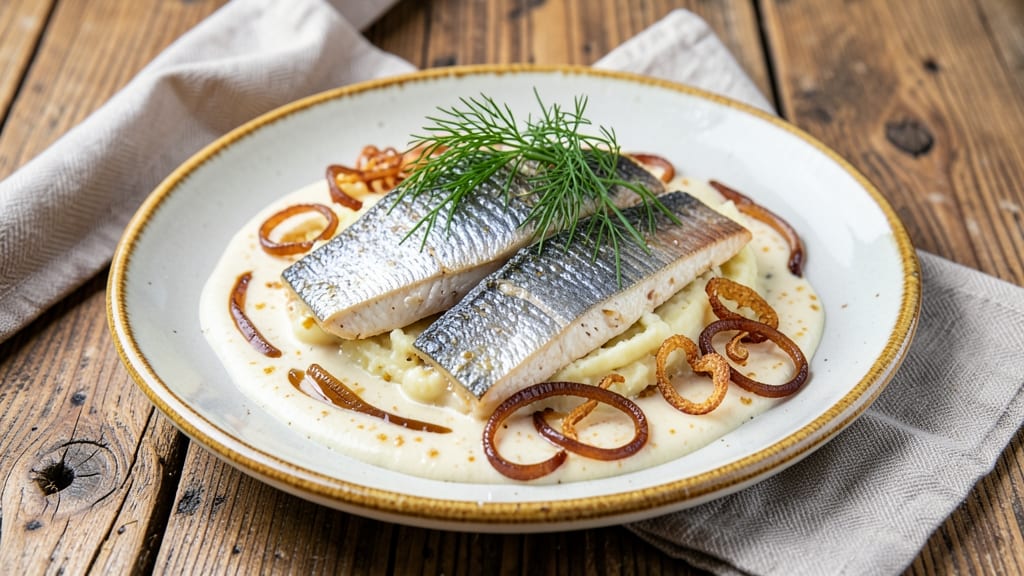
This Nordic-style pickled herring in cream sauce delivers the kind of rich, velvety texture that makes bistro dining feel like home. The secret lies in balancing the tangy herring with a crispy onion topping and a velvety cream sauce that coats every bite.
I developed this recipe after years of experimenting with Scandinavian flavors, and it never fails to impress—whether served with potatoes, rye bread, or fresh greens.
The process starts with properly pickling the herring (or using pre-pickled fillets) to ensure the right balance of acidity and flavor. The cream sauce is where the magic happens—it’s silky, slightly sweet, and perfectly seasoned to complement the herring’s briny depth.
What sets this dish apart is the crispy fried onions that add a satisfying crunch, transforming a simple meal into something truly special.
By the time you plate this dish, you’ll have a harmonious blend of textures: tender herring, creamy sauce, and crispy onions that contrast beautifully. The aroma alone will draw everyone to the table, and the first bite delivers that perfect balance of tangy, rich, and satisfying.
This is comfort food at its finest, with just the right amount of effort to feel like a true Nordic bistro experience.
Serve it with buttered potatoes, crusty rye bread, or a side of steamed greens for a complete meal. The sauce is also versatile—use it as a spread, a topping, or even a dip.
Here’s how to make it from start to finish, with tips to ensure every element comes together perfectly.
Ingredients for pickled herring in cream sauce
Nordic flavors meet bistro comfort with these 13 essential ingredients for creamy, tangy herring perfection.
| Ingredient | Amount | Notes |
|---|---|---|
| Pickled Herring Fillets 🐟 | 4 whole | Pre-pickled or homemade marinade |
| Heavy Cream 🥛 | 1 ½ cups | Full-fat for richness |
| Yellow Onions 🧅 | 2 whole | Thinly sliced for frying |
| All-Purpose Flour 🌾 | ¼ cup | For thickening sauce |
| Unsalted Butter 🧈 | 4 tbsp | Cold for frying onions |
| Granulated Sugar 🍚 | 1 tbsp | Balances acidity |
| Fresh Dill 🌿 | ¼ cup | Chopped, for garnish |
| Dijon Mustard 🍯 | 1 tbsp | For sauce depth |
| Lemon Juice 🍋 | 1 tbsp | Freshly squeezed |
| Salt 🧂 | ½ tsp | Kosher or sea salt |
| White Pepper 🌶️ | ¼ tsp | Freshly ground preferred |
| Vegetable Oil 🫒 | 1 cup | For frying onions |
| Rye Bread 🍞 | 4 slices | For serving |
The herring is the heart of this dish, so quality matters. Look for pre-pickled fillets at Scandinavian markets or well-stocked grocery stores like Whole Foods—they often carry Nordic specialty items. If making your own marinade, use equal parts vinegar and water with sugar, salt, and dill. The onions should be yellow or red for best flavor, and fresh dill (not dried) gives that authentic Nordic brightness. For the cream sauce, heavy cream is non-negotiable—light cream won't give the same velvety texture. The butter should be cold and cubed for frying the onions to crispy perfection.
No pickled herring? Smoked herring works in a pinch, but adjust the marinade time to 24 hours. Running low on fresh dill? Dried dill at one-third the amount keeps the flavor, though it's not the same. The Dijon mustard can be swapped for whole-grain mustard, but it'll be slightly grainier. For the onions, shallots work beautifully—just double the amount since they're smaller. If you're avoiding gluten, use cornstarch instead of flour to thicken the sauce. The vegetable oil for frying can be swapped for butter or lard, but oil gives the cleanest crisp. And if you don't have rye bread, sourdough or pumpernickel are great alternatives.
This dish reheats beautifully—just warm the sauce gently on the stove and crisp the onions again in a pan. The herring keeps well in its marinade for up to 3 days in the fridge, while the sauce can be made ahead and stored for 2 days. For the crispy onions, fry them fresh before serving—they lose their crunch if reheated. Portion the sauce into containers with a layer of oil on top to preserve freshness. The rye bread stays crispy for 2 days if wrapped in foil, but it's best served fresh for that satisfying crunch.
Why You'll Love This Recipe
- Five-Ingredient Magic: I swear by this recipe because it’s that simple—just herring, cream, onions, flour, and butter. No fancy prep, no last-minute grocery runs. The pickled herring’s tang cuts through the richness of the cream sauce like a knife, and the onions caramelize in minutes while you melt butter. Honestly, it’s the kind of dish that makes me feel like I’ve earned my dinner.
- Creamy Tang Explosion: That first bite? Chef’s kiss. The pickled herring brings this bright, briny punch that dances with the velvety cream sauce—like a fancy bistro dish but with zero pretension. The flour-thickened butter base adds just enough body to hold the flavors together, and the onions? They’re sweet, almost jammy, which balances the acidity perfectly. It’s the kind of flavor combo that sticks with you.
- Potluck Star Player: This recipe is my go-to for gatherings because it’s always a crowd-pleaser. Serve it cold on crackers for a snacky appetizer or warm it through for a hearty main—either way, people will ask for the recipe. Between us, it’s also the one dish I bring to holiday parties that doesn’t get buried under casseroles. Versatile? Absolutely. Reliable? Even more so.
- Leftovers That Don’t Suck: I make a double batch on purpose because the leftovers are almost as good as the first serving. The cream sauce thickens beautifully when reheated, and the herring’s flavor only deepens. Pack it for lunches, freeze portions for lazy nights, or even toss it into scrambled eggs the next morning. No sad, watery leftovers here—just pure, satisfying seconds.
Step-by-step instructions for pickled herring in cream sauce
Here's the method for achieving Nordic bistro-style perfection with tender herring and crispy fried onions.
Fry the Onions Until Golden Brown
Cut the 2 whole yellow onions into thin slices and separate the rings. In a large skillet, heat the 1 cup vegetable oil over medium-high heat until it reaches 350°F on a thermometer. Fry the onions in batches for 3-4 minutes until they turn a deep golden brown color.
Here's the thing—you want them crispy but not burnt. Drain them immediately on paper towels and sprinkle with ½ teaspoon salt while still hot. Set aside, keeping them warm for serving. If the onions darken too quickly, reduce the heat slightly next time. The goal is that satisfying crunch that contrasts perfectly with the creamy sauce.
Create the Cream Sauce Base
In the same skillet (no need to clean it—the fond adds flavor), melt the 4 tablespoons unsalted butter over medium heat. Add the 0.25 cup all-purpose flour and whisk constantly for 1-2 minutes until it forms a smooth paste. This roux will thicken your sauce beautifully.
Slowly pour in the 1.5 cups heavy cream while continuing to whisk. Add the 1 tablespoon Dijon mustard and 1 tablespoon lemon juice, then stir in the 1 tablespoon granulated sugar. Bring the mixture to a gentle simmer and cook for 5-7 minutes until it thickens enough to coat the back of a spoon. Taste and adjust seasoning with ¼ teaspoon white pepper if needed. The sauce should be velvety smooth with just a hint of tang from the lemon.
Prepare and Warm the Herring
Rinse the 4 whole pickled herring fillets under cold water to remove excess brine, then pat them dry with paper towels. In a separate skillet, heat 1 tablespoon of the rendered onion oil over medium heat. Add the herring fillets and cook for 1-2 minutes per side until they're warmed through but not broken apart.
Here's where precision matters: the herring should be heated just enough to take the chill off but not so much that it falls apart. You're looking for fillets that are warm through the center but still hold their shape. Remove them from the pan and set aside on a plate, keeping them warm.
Combine and Finish the Dish
Return the herring fillets to the sauce and gently stir to coat them evenly. The sauce should cling to the herring, creating a luxurious coating. Add the 0.25 cup chopped fresh dill and let it steep in the sauce for 1-2 minutes to infuse its bright flavor.
Taste and make any final adjustments—perhaps a touch more lemon juice for brightness or a pinch more salt for depth. The herring should be perfectly warmed through with a glossy, creamy sauce clinging to it. Serve immediately over the 4 slices rye bread with the crispy fried onions sprinkled on top for that essential crunch contrast.
Serve with Crispy Onions
Plate each serving with a slice of rye bread topped with a herring fillet and its creamy sauce. Scatter the golden brown fried onions generously over the top—this is what delivers that satisfying crunch against the creamy sauce. Garnish with additional chopped fresh dill if desired.
This dish works best served immediately while the onions are crispy and the sauce is at its peak temperature. The combination of tender herring, rich cream sauce, and crispy onions creates a perfect balance of textures and flavors that's quintessentially Nordic bistro style. Don't be tempted to make this ahead—the crispy onions lose their crunch when reheated.
Pro Tips For Making Pickled Herring In Cream Sauce
- Drain and Rinse the Herring: Pickled herring comes packed in brine that’ll turn your sauce watery if you don’t handle it. Drain the fillets well, then give them a quick cold water rinse—this cuts the excess acidity and keeps the cream from curdling later. (Yes, even if the fillets look dry afterward, they’ll plump up in the sauce.)
- Sweat, Don’t Sear, the Onions: Low and slow is the way here—medium heat, lid on, and let those onions melt into sweetness over 8–10 minutes. I learned the hard way that rushing this step with high heat burns the onions and makes the sauce taste bitter. Patience pays off.
- Whisk the Cream Slowly: When you’re adding the cold heavy cream to the butter-flour roux, pour it in a very thin stream while whisking constantly. If you dump it in too fast, you’ll end up with scrambled cream instead of a silky sauce. Go slow—your future self will notice the difference.
- Skip the Pre-Cooked Herring: The fillets are already cooked from pickling, so resist the urge to warm them separately in the sauce. Add them raw to the finished sauce just to heat through—this keeps them tender and prevents them from turning rubbery. (I know, it feels counterintuitive, but trust me.)
Pro cooking tips for perfect results
Perfect Onion Crispiness
Frying the onions is where this dish gets its signature crunch, so precision matters. Heat your 1 cup vegetable oil to exactly 350°F—any hotter and they'll burn before crisping. I use a thermometer because stovetop heat varies wildly.
Fry in 3-4 minute batches until deep golden brown, then drain immediately on paper towels. The key is working in batches—overcrowding lowers oil temperature and makes them soggy. 🔥
Roux Mastery
The sauce starts with a proper roux, and this isn't the place for shortcuts. Melt 4 tbsp unsalted butter over medium heat, then whisk in ¼ cup flour constantly for 1-2 minutes until it's a smooth paste with no floury taste.
This is your flavor foundation—if you rush, you'll get a grainy sauce. I like to use a whisk for even distribution, but a silicone spatula works too. The moment it smells nutty, you're ready for the cream.
Sauce Thickening Secrets
When adding the 1.5 cups heavy cream, go slow—about ¼ cup at a time—while whisking vigorously. This prevents lumps and ensures a silky texture. The sauce should simmer gently for 5-7 minutes until it coats the back of a spoon.
If it's too thin, add 1 tsp cornstarch slurry (mix with water) and cook another minute. Taste before finishing—you might need more lemon juice or sugar to balance the tang.
Herring Handling
Rinsing the herring removes excess brine, but don't overdo it—you want to preserve some of that Nordic tang. Pat them very dry with paper towels before cooking. The 1-2 minutes per side in the pan is critical—any longer and they'll fall apart.
I like to use a nonstick skillet to prevent sticking, but cast iron works too if you're gentle. Keep them warm in a 200°F oven while you finish the sauce.
Dill Infusion
The fresh dill isn't just garnish—it needs to steep in the sauce for 1-2 minutes to release its bright, herby flavor. I chop it very finely so it distributes evenly. If you're using dried dill, reduce to 1 tsp and add it at the very end.
The dill should make the sauce smell amazing—if it doesn't, you might need more. This is where the dish gets its authentic Nordic brightness.
Plating Like a Pro
Serve the herring immediately over toasted rye bread with the crispy onions scattered on top. The sauce should be glossy and cling to the herring, while the onions provide that essential crunch. For extra drama, drizzle a little extra sauce around the plate.
I like to add a lemon wedge on the side so guests can adjust the tang to their taste. The contrast of textures—creamy, crispy, and tender—is what makes this dish unforgettable. ✨
Nutrition facts
Frequently asked questions
Can I use fresh herring instead of pickled herring?
Fresh herring works but requires a 24-hour pickle marinade first. Combine 1 cup vinegar, 1 cup water, 1 tbsp sugar, 1 tsp salt, and 1 tbsp dill for each fillet. The marinade transforms the texture and flavor to match the recipe's Nordic profile. Fresh herring has a milder taste, so you may need to add extra lemon juice to the sauce for brightness.
How do I make the sauce thicker or thinner?
For a thicker sauce, stir in 1 tsp cornstarch mixed with 1 tbsp water and simmer for 1-2 minutes. For a thinner sauce, whisk in 1-2 tbsp warm heavy cream gradually. The ideal consistency should coat the back of a spoon but still be pourable. Taste as you go—adding lemon juice can also help balance thickness if the sauce feels too heavy.
Can I prepare this dish ahead of time?
You can prep the sauce and herring up to 2 days ahead, but fry the onions fresh before serving—they lose crispiness when reheated. Store the sauce in an airtight container with a layer of oil on top to preserve freshness. Reheat gently on the stove, adding a splash of cream if needed. The herring stays best in its marinade for 3 days, but warm it thoroughly before serving.
What's the best bread to serve with this?
Rye bread is ideal for its hearty texture, but sourdough, pumpernickel, or even crusty baguette work beautifully. Toast the bread lightly before serving to prevent sogginess from the creamy sauce. For extra flair, try dark rye with caraway seeds—it complements the herring's Nordic roots perfectly. Avoid soft breads like white or brioche, as they'll absorb too much sauce.
Why did my onions turn dark brown instead of golden?
Overheating or overcrowding causes onions to burn. Maintain oil at 350°F and fry in small batches for 3-4 minutes. If they darken too quickly, reduce heat slightly next time. For extra insurance, use a thermometer—dark brown means they're past crispy. The goal is a deep golden color, not blackened edges.