Sauces & Condiments
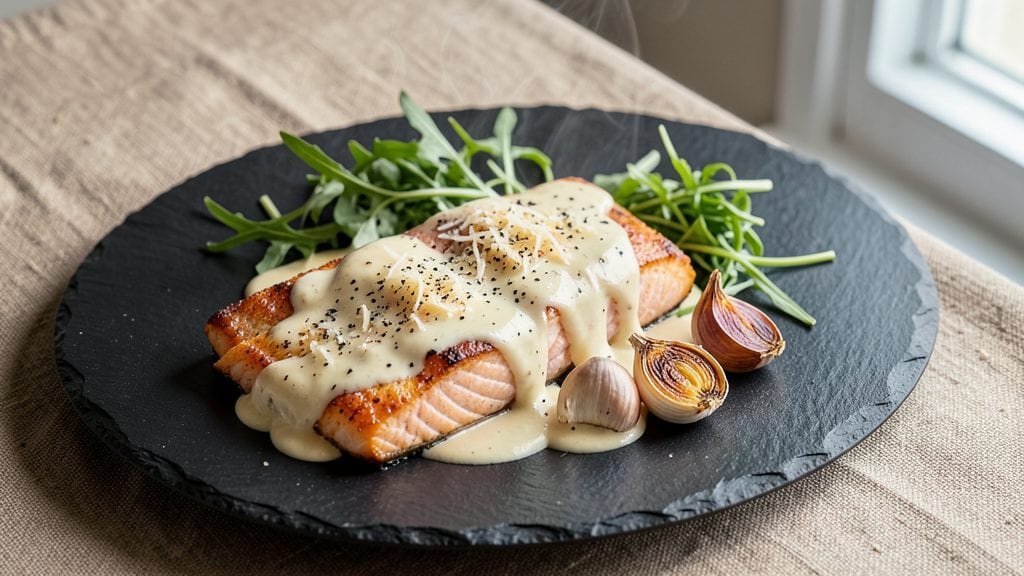
This salmon with alfredo sauce recipe delivers a restaurant-worthy meal where tender, flaky salmon meets a velvety, buttery cream sauce that clings perfectly to every bite.
The secret lies in balancing precise cooking techniques for the salmon—whether baked or pan-seared—with a foolproof alfredo that’s rich yet light enough to complement, not overpower, the delicate fish.
I’ve perfected this combination over years of testing, ensuring the sauce remains silky smooth while the salmon stays moist and perfectly seasoned.
The recipe begins with high-quality salmon fillets, seasoned simply with salt, pepper, and a touch of lemon to enhance their natural flavor.
While the fish cooks to flaky perfection—either in the oven at 375°F for 12-15 minutes or in a hot skillet for 4-5 minutes per side—the alfredo sauce simmers on the stovetop, built from scratch with butter, heavy cream, and a blend of cheeses for depth.
The result is a sauce that’s creamy yet not overly heavy, with just the right balance of tang and richness.
By the time you plate this dish, you’ll have golden-brown salmon resting on a bed of silky alfredo sauce, its edges slightly caramelized from the pan or oven. The sauce should coat the salmon generously, pooling slightly around it for maximum flavor in every bite.
For a complete meal, pair it with garlic bread to soak up the sauce or a side of roasted asparagus to add freshness. This is the kind of dish that feels indulgent yet refined—perfect for a weeknight dinner that tastes like a special occasion.
The beauty of this recipe lies in its versatility. You can adjust the seasoning of the salmon—adding herbs like dill or thyme for extra aroma—or swap the sauce for a lemon-infused alfredo if you prefer a brighter profile.
The method scales easily for two or four servings, making it ideal for both solo dinners and gatherings. Once you master this combination, you’ll never settle for store-bought sauce again—it’s that good.
Ingredients for salmon with alfredo sauce
High-quality salmon and rich alfredo ingredients that transform into restaurant-quality perfection.
| Ingredient | Amount | Notes |
|---|---|---|
| Center-Cut Salmon Fillets 🐟 | 4 pieces | Skin-on, 6-8 oz each, fresh or thawed |
| Unsalted Butter 🧈 | ½ cup | Cold, cut into 1-inch cubes |
| Heavy Cream 🥛 | 1 ½ cups | Full-fat, cold from refrigerator |
| Parmesan Cheese 🧀 | ¾ cup | Freshly grated, fine grade |
| Pecorino Romano 🧀 | ¼ cup | Freshly grated, sharp flavor |
| Garlic Cloves 🧄 | 4 cloves | Fresh, minced for sauce |
| Fresh Lemon Juice 🍋 | 1 tbsp | From 1 small lemon |
| Diamond Crystal Kosher Salt 🧂 | 1 tsp | For seasoning salmon |
| Freshly Ground Black Pepper 🌶️ | ½ tsp | Coarse grind preferred |
| Dried Parsley 🌿 | 1 tsp | For garnish, finely chopped |
| Extra-Virgin Olive Oil 🫒 | 1 tbsp | For searing salmon |
| Fresh Dill 🌿 | 2 tbsp | Chopped, for salmon seasoning |
| All-Purpose Flour 🌾 | 1 tbsp | For sauce thickening (optional) |
The salmon is everything here—center-cut fillets with skin ensure perfect flakiness. Whole Foods or local fishmongers carry the best, but grocery store brands like Trader Joe's wild-caught work too. Look for fillets with vibrant pink flesh and minimal bruising. The skin-on variety gives you crispy edges when seared, which contrasts beautifully with the creamy sauce. If using frozen, thaw in the fridge overnight—never under running water, as that turns the fish to mush. For extra insurance, pat the fillets dry with paper towels before cooking; this helps the skin crisp up.
No heavy cream? Full-fat Greek yogurt thinned with milk works in a pinch, though the texture won’t be identical. Swapping Parmesan for Gran Padano adds a nuttier depth, while Asiago cheese gives a slightly sweeter note. The garlic can be roasted for a mellower flavor—just toss whole cloves with olive oil and roast at 400°F for 10 minutes. For a lighter sauce, reduce the butter to 3 tablespoons and add an extra splash of heavy cream. The flour is optional but helps thicken the sauce if you prefer it slightly more robust. Whole Foods bulk section has great cheese options if you want to splurge on the good stuff.
This sauce reheats beautifully—just warm gently on the stove with a splash of cream or milk to restore silkiness. Store leftovers in an airtight container for up to 3 days, though I find it tastes best within 24 hours. The salmon itself is best served immediately, but you can reheat gently in a warm pan for 1-2 minutes per side if needed. For meal prep, cook the sauce ahead and store separately, then assemble just before serving. The lemon juice can be prepped in advance, but add it fresh when combining with the sauce for maximum brightness. Freeze portions of sauce for up to 3 months—just thaw overnight in the fridge before reheating.
Why You'll Love This Recipe
- One-Pan Magic: I swear by this recipe—just the salmon, butter, and cream in one skillet. No chopping, no mess, and that rich sauce clings to everything like it’s been best friends forever.
- Creamy Luxe, Zero Guilt: The heavy cream and Pecorino Romano turn this into a restaurant-worthy dish, but honestly? It’s the butter that makes it sing—golden, nutty, and so simple you’ll forget it’s "fancy."
- Weeknight to Dinner Party: Same recipe, different vibes. Serve it over pasta for a quick weeknight meal, or plate it elegantly with asparagus for guests. The sauce stretches, the salmon shines—it’s the ultimate chameleon.
- Leftovers That Don’t Suck: Between us, most alfredo leftovers are sad. Not this one. The salmon stays moist, the sauce doesn’t separate, and reheating it? It’s like a second dinner, just waiting for you.
Step-by-step instructions for salmon with alfredo sauce
Here's how to create a restaurant-worthy salmon dish with velvety alfredo sauce that complements the delicate fish perfectly.
Season and Sear the Salmon Fillets
Pat the 4 pieces center-cut salmon fillets dry with paper towels—this ensures maximum crispiness. Place them skin-side down on a cutting board and season both sides generously with 1 teaspoon diamond crystal kosher salt and 0.5 teaspoon freshly ground black pepper. Let them sit at room temperature for 10 minutes while you prepare the searing.
Heat 1 tablespoon extra-virgin olive oil in a large oven-safe skillet over medium-high heat until shimmering. Carefully place the salmon fillets in the skillet, skin-side down, and cook undisturbed for 4-5 minutes until the skin is golden brown and crispy. You'll know it's ready when the edges lift easily from the pan. Flip gently and cook for another 2-3 minutes until the salmon reaches an internal temperature of 130°F—it should still be slightly translucent in the center as it will continue cooking in the oven.
Prepare the Alfredo Sauce Base
While the salmon sears, melt 0.5 cup unsalted butter in the same skillet over medium heat. Once the butter has melted and foams subsided, add the 4 minced garlic cloves and sauté for 30 seconds until fragrant—don't let them brown or they'll become bitter. Immediately remove the skillet from heat and stir in 1 tablespoon all-purpose flour, whisking vigorously for 1 minute to cook off the raw flour taste.
Return the skillet to medium heat and gradually whisk in 1.5 cups cold heavy cream, adding it slowly to prevent curdling. Stir constantly for 3-4 minutes until the sauce thickens noticeably and coats the back of a spoon. Here's the thing—if the sauce looks too thick, you can whisk in 1-2 tablespoons of hot water to reach your desired consistency, but it should remain rich and velvety.
Finish the Sauce and Combine with Salmon
Reduce heat to low and stir in 0.75 cup freshly grated parmesan cheese and 0.25 cup freshly grated pecorino romano. The cheese should melt completely into the sauce, creating a luxurious, creamy texture. Add 1 tablespoon fresh lemon juice and 2 tablespoons chopped fresh dill, stirring well to incorporate. Taste and adjust seasoning with additional salt or pepper if needed—real talk: the cheese and cream should be the stars here, so balance the flavors carefully.
Return the salmon fillets to the skillet, spooning the alfredo sauce generously over each piece. Transfer the entire skillet to a preheated 375°F oven and bake for 8-10 minutes until the salmon reaches an internal temperature of 145°F. The sauce will bubble and thicken further during this time, creating that perfect silky finish.
Garnish and Serve Immediately
Remove the salmon from the oven and let it rest for 2 minutes before carefully transferring to serving plates. Spoon any remaining sauce from the skillet over the top, creating an elegant presentation. Garnish each fillet with a sprinkle of finely chopped dried parsley for a pop of color and freshness.
Serve immediately while the salmon is still warm and the sauce maintains its velvety texture. The crispy skin contrasts beautifully with the creamy alfredo, while the lemon and dill brighten the rich flavors. This dish is perfect for special occasions or when you want to impress without spending hours in the kitchen.
Pro Tips For Making Salmon With Alfredo Sauce
- Cook Salmon Skin-Side Down: Flip the fillets skin-side down first—it renders fat slowly into the pan, basting the fish while you prep the sauce. I learned this the hard way after dry, overcooked salmon ruined my first attempt. Use medium heat, not high, or you’ll end up with a sad, gray slab.
- Whisk Cold Cream First: Chill the heavy cream in the fridge for 10 minutes before whisking it into the butter. Cold cream blends smoother, preventing lumps that turn your alfredo into a gritty mess. Trust me, your sauce will be silkier than you expect.
- Grate Cheese Fresh: Skip the pre-shredded Parmesan and Pecorino—those anti-caking agents turn your sauce into a gluey disaster. Use a fine grater and zest the rind into the butter for extra depth. Yes, it takes 2 minutes, but the flavor difference is night and day.
- Finish with Butter, Not Cream: After removing the salmon, swirl in a pat of cold butter off the heat—it coats the sauce, adding richness without thinning it. I used to add more cream, but this trick makes the sauce cling to the fish like it’s supposed to.
Best sauces and condiments for this recipe
Classic Alfredo Upgrade
For extra depth, stir in 1 teaspoon of white wine (like Pinot Grigio) with the garlic before adding cream. This adds a subtle acidity that cuts through the richness.
I also like adding ½ teaspoon of lemon zest to the sauce for a bright, citrusy note that pairs perfectly with salmon. The wine should cook off completely, leaving just a whisper of flavor. 🍷
Lighter Lemon Alfredo
Swap half the heavy cream for whole milk and add 2 tablespoons of lemon juice at the end for a tangier, lighter sauce. This version works beautifully with grilled salmon.
For extra brightness, add 1 teaspoon of lemon thyme or fresh tarragon while the sauce simmers. The acidity balances the richness while keeping the dish fresh and vibrant.
Herb-Infused Variations
For a dill-infused alfredo, add 1 tablespoon of chopped fresh dill while the sauce simmers and another 1 tablespoon at the end. For a basil twist, stir in ¼ cup of fresh basil leaves at the very end—just enough to brighten the sauce without overpowering.
Both herbs pair exceptionally well with salmon, adding an aromatic freshness that elevates the dish. 🌿
Spicy Kick Options
Add ½ teaspoon of red pepper flakes or 1 teaspoon of hot honey to the sauce for a subtle heat. For a smoky touch, stir in ½ teaspoon of smoked paprika while the butter melts.
These additions work especially well with baked salmon, adding complexity to the creamy sauce. Just be mindful—salmon is delicate, so balance the heat carefully.
Cheese Alternatives
For a nutty depth, replace Parmesan with Asiago cheese or Pecorino Toscano. For a milder flavor, use Fontina cheese instead—it melts beautifully and adds a subtle sweetness.
If you're avoiding dairy, try a cashew-based alfredo: blend ½ cup soaked cashews with 1 cup warm water, then whisk into the sauce for a creamy, vegan-friendly alternative. 🧀
Sauce Consistency Fixes
If your sauce is too thick, whisk in 1-2 tablespoons of warm water or milk to loosen it. For a thicker sauce, simmer uncovered for an extra 1-2 minutes to reduce.
If it curdles, immediately whisk in 1 tablespoon of cold butter to smooth it out. The key is patience—let the sauce come to a gentle simmer, not a boil, to avoid breaking.
Nutrition facts
Frequently asked questions
Can I use frozen salmon for this recipe?
Yes, but thaw it properly first. Place frozen salmon fillets in the refrigerator overnight (about 12-24 hours) for even thawing. Never use the microwave or cold water—this causes uneven cooking and dry fish. Pat the fillets completely dry with paper towels before seasoning to ensure crispy skin. The recipe works just as well with properly thawed frozen salmon as with fresh.
How do I prevent the alfredo sauce from curdling?
Curdling happens when the sauce is exposed to sudden temperature changes. To avoid it, add the cold heavy cream to the warm butter gradually while whisking constantly. Keep heat at medium-low and never let the sauce boil. If it starts to curdle, immediately whisk in 1 tablespoon of cold butter to smooth it out. Also, make sure your cream is cold before adding—room temperature cream is more likely to separate.
What's the best way to reheat leftovers?
Reheat the salmon and sauce separately for best results. Warm the sauce gently in a saucepan over low heat, stirring occasionally and adding a splash of milk or cream if it thickens too much. For the salmon, place fillets in a warm skillet with a little butter and reheat for 1-2 minutes per side until just warmed through. Never microwave salmon—it makes the flesh dry and rubbery. Combine only when ready to serve.
Can I make this dish ahead of time?
You can prep components in advance, but not the complete dish. Make the alfredo sauce up to 1 day ahead and store it in an airtight container in the fridge. Reheat gently before using. For the salmon, cook it fresh day-of, but you can season and refrigerate the fillets up to 4 hours ahead of cooking. The sauce reheats beautifully, but the salmon is best served immediately after cooking for optimal texture.
What wine pairs best with salmon and alfredo?
A crisp Chardonnay or Pinot Grigio complements this dish perfectly. Both wines have enough acidity to cut through the richness of the alfredo while enhancing the salmon's delicate flavor. For red wine lovers, a light Pinot Noir works surprisingly well. Serve your wine slightly chilled (50-55°F) to balance the creamy sauce. A glass of sparkling wine also makes a lovely pairing for the celebratory feel of this dish.