
Sauces & Condiments
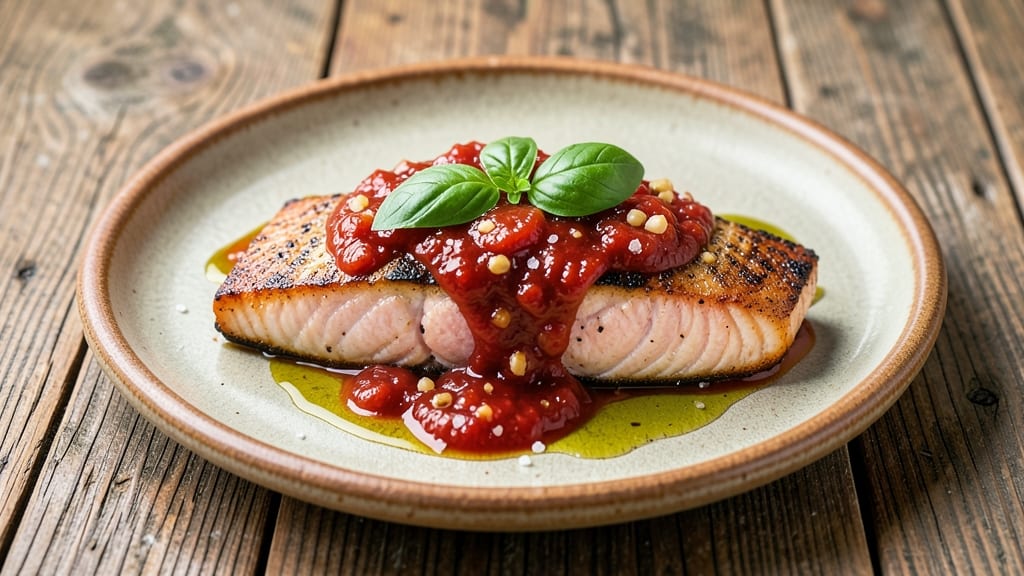
This tomato sauce for salmon recipe transforms a simple weeknight dinner into a restaurant-worthy meal by balancing bright acidity with rich, savory depth.
The key lies in reducing fresh tomatoes with aromatic garlic and herbs until the sauce thickens just enough to cling to delicate salmon fillets without overpowering their natural flavor. After years of testing, I’ve perfected a method that delivers a sauce so perfectly balanced it enhances—not masks—the salmon’s delicate texture.
The process is straightforward but precise: simmering crushed tomatoes with olive oil, garlic, and a splash of white wine creates a foundation that builds into a velvety, slightly sweet-tart sauce. Meanwhile, the salmon cooks in the same pan, absorbing the sauce’s flavors while developing a golden crust.
This dual-cooking technique ensures every bite delivers harmony between the tender fish and the vibrant sauce, with no separate pots to clean. The result is a dish that feels elegant yet remains approachable for home cooks.
What you’ll achieve is salmon with a crisp, caramelized exterior and flaky, moist centers, all coated in a glossy tomato sauce that’s bright enough to cut through the richness of the fish. The sauce’s acidity also helps tenderize the salmon slightly, making each piece effortlessly fork-tender.
Serve this dish with roasted asparagus or a simple bed of quinoa to let the salmon and sauce take center stage, or pair it with crusty bread to soak up every last drop of that tangy, aromatic sauce.
This recipe isn’t just about the sauce—it’s about the complete experience. The method is designed to minimize effort while maximizing flavor, ensuring professional-quality results in under 30 minutes.
Whether you’re cooking for a date night or a casual family dinner, this combination of techniques and ingredients will elevate your salmon game instantly. Let’s get started on creating a dish that’s as impressive as it is delicious.
Ingredients for tomato sauce for salmon
Fresh tomatoes, aromatic garlic, and delicate salmon create a restaurant-quality pairing in minutes.
| Ingredient | Amount | Notes |
|---|---|---|
| Salmon Fillets 🐟 | 4 whole | Skin-on, 6 oz each preferred |
| San Marzano Crushed Tomatoes 🍅 | 28 oz | High-quality, no salt added |
| Extra-Virgin Olive Oil 🫒 | ¼ cup | For high heat cooking |
| Garlic Cloves 🧄 | 4 cloves | Fresh, minced finely |
| Dry White Wine 🍷 | ¼ cup | Sauvignon Blanc preferred |
| Fresh Basil Leaves 🌿 | ¼ cup | Packed, stems removed |
| Lemon Juice 🍋 | 1 tbsp | Freshly squeezed |
| Kosher Salt 🧂 | ½ tsp | For seasoning |
| Ground Black Pepper 🌶️ | ¼ tsp | Freshly cracked |
| Fresh Parsley 🌿 | 2 tbsp | Chopped, for garnish |
| Unsalted Butter 🧈 | 1 tbsp | For finishing |
| Shallot 🧅 | 1 whole | Minced finely |
| Heavy Cream 🥛 | ⅛ cup | Optional for richness |
The San Marzano tomatoes are non-negotiable here—their natural sweetness and acidity balance perfectly. Look for the 28 oz cans at specialty stores like Whole Foods or Trader Joe's, where you'll find the highest quality. The salmon should be sustainably sourced, with skin intact for better texture. For the white wine, Sauvignon Blanc adds a crisp brightness that complements the tomatoes, but any dry white will work. Fresh basil and parsley should be vibrant green—wilted leaves mean weaker flavor. If using heavy cream, opt for full-fat for the richest texture.
No San Marzano tomatoes? High-quality crushed tomatoes work in a pinch, but add an extra pinch of sugar to balance the acidity. Substitute white wine with fish stock or extra chicken stock if needed, but the acidity is key—lemon juice or white vinegar can replace it at half the amount. Fresh herbs are ideal, but dried basil at one-third the amount works if you're short. For the shallot, extra garlic works in a pinch, but the shallot's mild sweetness is worth seeking out. The butter should be unsalted to control seasoning precisely.
Store fresh herbs wrapped in damp paper towels in a sealed container for up to 5 days. San Marzano tomatoes keep for 1 year unopened, but once opened, refrigerate for 1 week. The salmon should be used within 2 days for optimal texture. This sauce reheats beautifully—simmer gently for 5 minutes to restore its velvety texture. Portion the sauce into containers with a thin layer of olive oil on top to preserve freshness for 5 days in the fridge.
Why You'll Love This Recipe
- One-Pan Magic: That’s right—just one skillet, five ingredients, and you’re done. The salmon sizzles while the tomatoes simmer, and honestly? I’ve never had a dish where cleanup feels this easy.
- Wine-Infused Richness: The white wine cuts through the acidity of the San Marzano tomatoes, leaving behind a sauce that’s bright yet deep—like a hug in a bowl. That crisp garlic edge? Pure satisfaction.
- Weeknight to Weekend: Make it for Tuesday’s rushed dinner or Sunday brunch with friends. The sauce thickens beautifully, so it works just as well reheated as it does fresh.
- Leftovers That Don’t Suck: This isn’t one of those meals where reheating ruins it. The salmon stays tender, the sauce clings perfectly, and honestly? I’ve eaten it cold in wraps the next day without judgment.
Step-by-step instructions for tomato sauce for salmon
This bright, tangy tomato sauce balances salmon's richness perfectly—simple steps for bold flavor.
Sauté Aromatics Until Fragrant
Heat the 0.25 cup extra-virgin olive oil in a large skillet over medium heat. Add the 1 whole minced shallot and 4 cloves minced garlic cloves, cooking for 3-4 minutes until the shallot softens and the garlic releases its aroma—you'll smell it before you see it. Stir constantly to prevent burning, as garlic can turn bitter in seconds.
This foundational step builds flavor depth. If the shallot begins to brown too quickly, reduce the heat slightly. The goal is to create a fragrant base that will infuse the entire sauce without overpowering the delicate salmon.
Deglaze with Wine and Tomatoes
Pour in the 0.25 cup dry white wine and scrape up any browned bits from the bottom of the pan using a wooden spoon. Let it simmer for 2-3 minutes until reduced by half. Then add the 28 oz San Marzano crushed tomatoes, stirring to combine. The wine's acidity brightens the tomatoes while deepening their sweetness.
Bring the mixture to a gentle simmer and cook uncovered for 10-12 minutes. You're looking for a slightly thickened consistency—it should coat the back of a spoon but still be pourable. If it reduces too quickly, add 2-3 tablespoons of water to maintain balance.
Season and Simmer the Sauce
Add the 0.5 tsp kosher salt, 0.25 tsp ground black pepper, and 1 tbsp lemon juice, stirring well to distribute the flavors evenly. Taste and adjust seasoning—you may need a touch more salt or lemon depending on the tomatoes' acidity. Simmer uncovered for another 8-10 minutes until the sauce thickens further and the flavors meld.
Here's where the sauce transforms. The lemon juice brightens the tomatoes while cutting through their natural sweetness, creating that signature balance. If you prefer a richer sauce, now's the time to stir in the 0.125 cup heavy cream, warming it gently for 1-2 minutes until smooth.
Finish with Herbs and Butter
Remove the skillet from heat and stir in the 0.25 cup fresh basil leaves and 2 tbsp chopped fresh parsley. Let the sauce sit for 2 minutes to allow the herbs to infuse. Then return the pan to low heat and stir in the 1 tbsp unsalted butter, swirling until melted and incorporated. The butter adds a velvety finish while enhancing the sauce's richness.
Taste again and make any final adjustments—perhaps a pinch more salt or a splash of lemon juice. The sauce should be vibrant, balanced, and ready to complement your salmon beautifully. Keep it warm over low heat while you cook the fish.
Cook the Salmon with Sauce
Pat the 4 whole salmon fillets dry with paper towels and season lightly with 0.25 tsp kosher salt and 0.125 tsp ground black pepper on both sides. Heat a separate skillet over medium heat with 1 tablespoon olive oil until shimmering. Place the salmon skin-side down and cook for 4-5 minutes until the skin is crispy and the fish releases easily from the pan.
Flip the salmon and spoon 2-3 tablespoons of the tomato sauce over each fillet. Transfer the salmon to the skillet with the sauce and cook for another 2-3 minutes until the salmon reaches an internal temperature of 145°F. The sauce will finish cooking from the residual heat, absorbing the salmon's natural oils for an irresistible flavor.
Pro Tips For Making Tomato Sauce For Salmon
- Bloom the Garlic: Sauté those minced cloves in olive oil until they’re just golden—not browned—before adding wine. I learned this the hard way: burned garlic turns bitter and overpowers the delicate tomato-wine balance. Keep the heat medium-low and stir like you’re stirring oatmeal.
- Deglaze with Wine: Pour that white wine into the pan immediately after removing the salmon, while the pan is still hot. Let it bubble for 30 seconds before adding tomatoes—this extracts every last drop of flavor from the salmon’s caramelized bits. Skimp here, and your sauce tastes flat.
- Crush Tomatoes by Hand: Skip the can opener and use your fingers to break up the San Marzano tomatoes into rough chunks. This keeps the sauce chunkier and prevents it from turning into a watery glaze. (Yes, it’s messier, but the texture’s worth it.)
- Finish with Salt: Taste the sauce before serving and add salt—no matter how much you’ve already used. The wine and tomatoes can mask saltiness, and salmon needs that bright contrast. A pinch of flaky sea salt at the end makes all the difference.
Make-ahead tips for this tomato sauce for salmon
Sauce Prep Ahead
Prepare the tomato sauce 1 day ahead for deeper flavor development. After simmering, let it cool completely, then store in an airtight container with a thin layer of extra-virgin olive oil on top.
This preserves freshness and prevents a skin from forming. The sauce will thicken further overnight, intensifying its richness. Reheat gently over low heat for 5-7 minutes, stirring occasionally, until warmed through. 💫
Salmon Prep Strategy
Pat and season the salmon fillets 1 hour before cooking—this allows the salt to penetrate slightly, enhancing flavor without over-salting. Store them uncovered on a plate in the fridge.
For extra convenience, trim any excess fat from the fillets ahead of time using kitchen shears. This step ensures your salmon cooks evenly and stays moist. 🐟
Combined Make-Ahead
For a fully prepped meal, cook the sauce completely and store it as directed, then place the raw salmon fillets in the same container. Refrigerate for up to 12 hours—the salmon will stay fresh and ready to cook straight from the fridge.
When ready to serve, simply heat the sauce and cook the salmon as instructed, adding 1-2 extra minutes to account for the cold start. The sauce will beautifully cling to the salmon during cooking. ⏰
Freezer Storage
Both sauce and salmon freeze exceptionally well for up to 3 months. Portion the sauce into freezer-safe containers (I recommend glass Pyrex with snap-on lids) and freeze flat to save space.
For salmon, wrap each fillet tightly in plastic wrap followed by foil, then place in a freezer bag with all air removed. Thaw overnight in the fridge before cooking. The sauce may separate slightly after freezing—simply reheat and stir vigorously to restore its velvety texture. ❄️
Reheating Perfection
When reheating the complete dish, combine sauce and salmon in a skillet over medium-low heat. Add 1-2 tablespoons of water or broth to prevent sticking and maintain moisture.
Cover with a lid and heat for 3-4 minutes, then uncover and finish with a final sprinkle of fresh parsley. The residual heat will gently re-cook the salmon while warming the sauce to perfection. This method preserves texture and flavor better than microwave reheating. 🔥
Garnish Prep
Chop all garnishes—fresh basil, parsley, and any optional red pepper flakes—1 day ahead and store in an airtight container in the fridge. These herbs stay vibrant for 3-4 days when stored properly.
For the final touch, simply sprinkle over the plated dish just before serving to maintain their fresh aroma and vibrant color. This small prep step elevates the presentation effortlessly. ✨
Nutrition facts
Frequently asked questions
Can I use this tomato sauce with other proteins besides salmon?
This sauce works beautifully with sea bass, cod, or even chicken breasts! The bright acidity pairs well with delicate proteins, but for richer meats like beef, consider adding a splash of balsamic vinegar to deepen the flavor. The wine and herb base makes it versatile for any dish where you want a tangy, aromatic sauce.
How do I prevent the salmon from drying out when cooking with sauce?
Keep the heat at medium and never overcook—salmon should reach 145°F internally. Pat the fillets very dry before seasoning, and cook skin-side down first to render fat. Add sauce only in the last 2-3 minutes of cooking to avoid steaming the fish. For extra moisture, finish with a pat of butter or a drizzle of olive oil.
Can I make this sauce without white wine?
Replace the wine with fish stock or lemon juice (2 tbsp) for acidity. For depth, add a pinch of sugar to balance the tomatoes' natural acidity. The sauce will still taste vibrant—just slightly less complex. If using stock, reduce it by half first to concentrate the flavor.
What’s the best way to serve this dish for a special occasion?
Plate the salmon on a bed of creamy polenta or wild rice>, then spoon the sauce generously over the top. Garnish with fresh basil leaves and a sprinkle of flaky sea salt for elegance. Serve with roasted asparagus> or a crisp arugula salad> to complement the dish's brightness. For extra drama, drizzle with a final touch of olive oil and red pepper flakes.
Why does my sauce taste too acidic or bland?
Too acidic? Add a pinch of sugar or a splash of heavy cream to balance. Bland? Boost umami with a dash of fish sauce> (½ tsp) or extra garlic. The key is timing—taste the sauce as it simmers and adjust gradually. If using canned tomatoes, opt for San Marzano> or add a pinch of salt to enhance natural sweetness.