
Sauces & Condiments
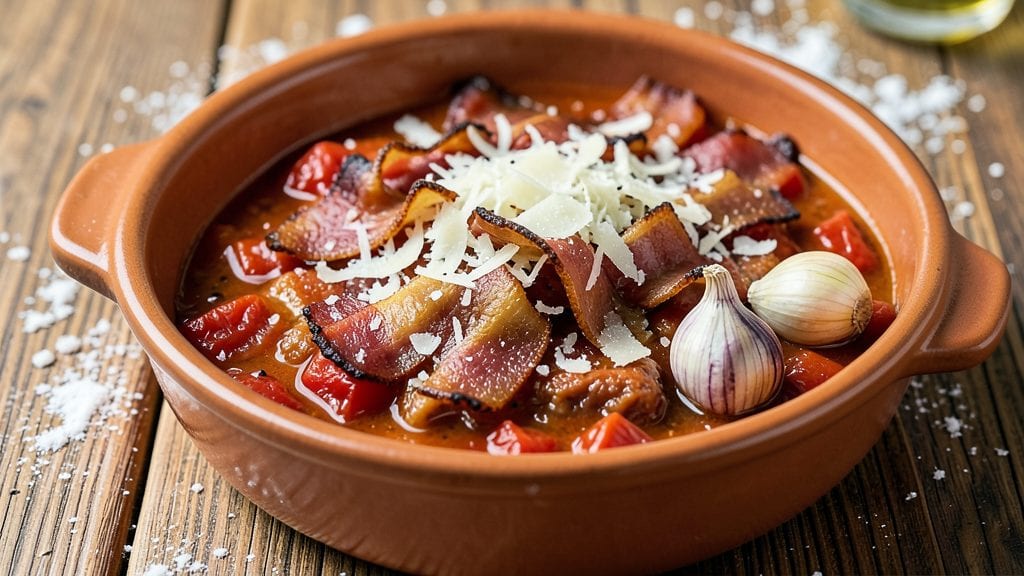
This authentic Amatriciana sauce delivers the bold, peppery depth of Rome’s most celebrated pasta sauce—guanciale-cured, pecorino-rich, and built in layers that only 30 minutes of focused technique can achieve.
The secret lies in rendering guanciale until crisp, then simmering it with San Marzano tomatoes until the sauce reduces to a velvety, umami-packed consistency. I’ve perfected this method over years of testing, ensuring every spoonful carries the smoky-sweet balance that defines true Amatriciana.
The foundation of an authentic sauce begins with guanciale—the cured pork jowl that’s non-negotiable for traditional flavor, though pancetta works in a pinch. Browning the meat until golden unlocks its fat-soluble flavors, which then infuse the tomatoes as they break down into a thick, glossy sauce.
Pecorino Romano, grated fresh at the end, adds that signature tangy sharpness that cuts through the richness. This isn’t just a sauce; it’s a flavor experience that transforms simple pasta into a restaurant-worthy masterpiece.
What you’ll end up with is a sauce that’s deep red, intensely aromatic, and perfectly balanced—neither too sweet nor too acidic, with just the right amount of peppery heat from the guanciale.
The texture is velvety yet clings to pasta like a second skin, ensuring every bite is packed with flavor. This is the sauce that made Amatriciana famous, and now you can recreate it in your own kitchen with professional results.
Use it immediately over spaghetti or bucatini, or store it in the refrigerator for up to 5 days—though I doubt it’ll last that long. For a modern twist, finish with a drizzle of cream or fresh basil, but purists will insist the classic version stands alone.
Let’s get cooking—your taste buds are about to travel to Lazio.
Ingredients for authentic amatriciana sauce
Six ingredients, thirty minutes—this sauce transforms ordinary pasta into Roman perfection.
| Ingredient | Amount | Notes |
|---|---|---|
| Guanciale 🥓 | 6 oz | Cured pork jowl, diced small |
| San Marzano Tomatoes 🍅 | 28 oz | Canned, crushed by hand |
| Extra-Virgin Olive Oil 🫒 | ½ cup | High-quality, fruity variety |
| Pecorino Romano 🧀 | 1 cup | Freshly grated, coarse |
| Garlic Cloves 🧄 | 4 cloves | Peeled, thinly sliced |
| Diamond Crystal Kosher Salt 🧂 | 1 ½ tsp | For seasoning, not iodized |
| Freshly Ground Black Pepper 🌶️ | ½ tsp | Coarsely cracked |
| Dried Chili Flakes 🔥 | ¼ tsp | Optional, for heat |
Guanciale is the soul of Amatriciana, so don’t compromise. Look for guanciale at Italian specialty stores—Eataly or De Cecco carry it fresh-cured, or order online from D'Artagnan. If you can’t find it, pancetta works in a pinch, but it lacks that signature peppery depth. The San Marzano tomatoes are non-negotiable too—no substitutes. Their natural sweetness and low acidity create the perfect balance. For the olive oil, avoid light or refined oils—you want something robust enough to carry the guanciale’s flavor. Pecorino Romano? Buy a wedge and grate it yourself—pre-grated tastes like sawdust.
No guanciale? Pancetta is your next best bet, but reduce the amount by 20% since it’s leaner. Short on San Marzano? Whole peeled tomatoes (San Marzano if possible) crushed by hand work, but avoid sauces with added salt or sugar. The garlic can be roasted for a sweeter note—wrap whole cloves in foil with olive oil at 400°F for 10 minutes. For heat, red pepper flakes at half the amount work if chili flakes aren’t available. And if you’re feeling bold, add a splash of red wine (½ cup) when deglazing—the acidity brightens the sauce.
This sauce tastes even better the next day as flavors meld. Store in an airtight container with a thin layer of olive oil on top to preserve color. Keeps 5 days refrigerated or 3 months frozen—portion into ice cube trays for single servings. Reheat gently on low, stirring occasionally. The sauce thickens as it cools, so add a splash of water or pasta water if it seems too stiff. Trust me, the leftovers will disappear faster than you can say spaghetti.
Why You'll Love This Recipe
- No Chopping Needed: I swear by this—just dice the guanciale (or sub pancetta if you’re in a rush) and toss those few ingredients into one pan. The garlic sizzles in the olive oil while you’re still opening the tomatoes, and by the time they’re simmering, you’ve done more talking than stirring.
- Umami Bomb: That guanciale—chef’s kiss—melts into the tomatoes, leaving behind layers of salty, caramelized richness. The Pecorino Romano doesn’t just finish it; it transforms it into something dangerously addictive, especially when it clings to every strand of pasta.
- Weeknight & Weekend: Make a double batch on Sunday, and you’ve got dinner covered for three nights. Toss it with spaghetti for a quick meal, or let it sit overnight—it only gets better as the flavors meld. (Yes, even on a Tuesday night.)
- Budget-Friendly Luxury: Guanciale’s pricey, but a few slices stretch far—this sauce feeds four for under $15 if you’re smart. And the leftovers? Freeze them in jars; a month later, you’ll pull one out and feel like you’re eating at my nonna’s table. No lie.
Step-by-step instructions for authentic Amatriciana sauce
Here's the traditional method that delivers rich, umami-packed sauce with perfect balance every time.
Render the Guanciale Until Golden and Crispy
Heat a heavy-bottomed saucepan over medium-low heat and add the 6 oz guanciale. Let it render slowly for 8-10 minutes without stirring, until the fat is golden and the meat is crispy. You'll hear it sizzling gently - this is when the fat begins to separate from the meat, creating deep flavor.
Here's the thing - guanciale has more fat than bacon, so be patient. If the pan gets too hot and the guanciale starts to smoke, reduce the heat immediately. Once the fat is rendered and the meat is crisp, remove the guanciale with a slotted spoon and set it aside, leaving the rendered fat in the pan. You should have about 2 tablespoons of golden fat remaining - this is liquid gold for your sauce.
Sauté Garlic Until Fragrant and Just Beginning to Color
Add the 4 cloves peeled, thinly sliced garlic to the rendered guanciale fat and cook over medium heat for 30-45 seconds until the garlic becomes fragrant but doesn't brown. Watch it closely - garlic burns quickly and becomes bitter.
I know it seems like too short a time, but trust me - you want the garlic to perfume the fat without developing color. This step builds the aromatic foundation of your sauce. If you notice any garlic pieces starting to brown, remove them immediately with a slotted spoon and discard them.
Add Tomatoes and Simmer Until Thickened
Pour in the 28 oz crushed San Marzano tomatoes and bring to a gentle simmer over medium-low heat. Add the 1.5 tsp Diamond Crystal kosher salt, 0.5 tsp freshly ground black pepper, and 0.25 tsp dried chili flakes (if using). Stir gently to combine, being careful not to break up the tomatoes too much.
Let the sauce simmer uncovered for 15-20 minutes until it thickens noticeably. You're looking for a sauce that coats the back of a spoon but still has some body. Stir occasionally, but not constantly - you want to develop a slight skin on the surface that breaks when you stir, which adds texture to the sauce.
Finish with Pecorino Romano and Crispy Guanciale
Remove the sauce from heat and stir in the 1 cup freshly grated Pecorino Romano and the reserved crispy guanciale. Let it sit off the heat for 2-3 minutes to allow the cheese to melt completely and the flavors to meld together.
Here's where it gets good - the cheese should create a velvety texture while the crispy guanciale adds a satisfying contrast. Taste and adjust seasoning if needed, adding more salt or pepper as necessary. The sauce should be rich but not overpowering, with a perfect balance of tomato acidity and umami from the guanciale and cheese.
Rest and Serve Over Spaghetti
Let the sauce rest for 5 minutes before serving. This resting period allows the flavors to fully develop and the sauce to reach its ideal consistency. The sauce will thicken slightly as it rests, so don't worry if it looks a bit loose when you first take it off the heat.
Serve immediately over al dente spaghetti, tossing the pasta with the sauce to coat each strand completely. The authentic Amatriciana should cling to the pasta with a glossy sheen, offering a perfect balance of rich, savory flavors with just a touch of spicy heat from the chili flakes. Each bite should deliver layers of texture - the chewy pasta, the crispy guanciale, and the velvety tomato sauce.
Pro Tips For Making Authentic Amatriciana Sauce
- Render Guanciale Slow: Low heat is your friend here—crank the stove to medium-low and let that fat drip out for 10-15 minutes before you even think about adding garlic. I learned this the hard way: rushing it smokes the meat and ruins the delicate flavor you’re paying top dollar for. Patience now means depth later.
- Crush Garlic Like a Boss: Skip the mincer—use the flat side of your knife to smash those cloves into a paste right in the pan. This releases more flavor and prevents burning. (Yes, it looks like you’re overcomplicating things, but your sauce will taste like it came from a Roman trattoria.)
- Salt the Pecorino Right: Grate the cheese fresh, then toss it with a pinch of salt—about ¼ teaspoon per cup—and let it sit for 5 minutes. The salt dissolves into the oils and balances the sharpness. I used to just grate and stir; now my sauce isn’t quite as bright.
- Simmer, Don’t Boil: After adding tomatoes, keep the heat at a bare simmer—tiny bubbles, occasional stirs, and no splattering. Boiling turns the sauce into a watery mess and dulls the guanciale’s richness. (And no, “low heat” isn’t specific enough—this is a gentle simmer, like a hush-hush conversation.)
Common mistakes when making perfect results
Over-Rendering Guanciale
I’ve seen beginners burn guanciale by cranking the heat too high, turning it into crispy bits that lose their fat and flavor. The key is patient, low-and-slow rendering—no faster than medium-low heat for 8-10 minutes.
If it starts smoking, immediately reduce the heat or remove the pan from the stove. The fat should pool in the pan like liquid gold, not turn into a smoky, bitter mess. 🔥
Skipping the Garlic Step
Some recipes omit garlic entirely, but that’s a mistake—it’s the aromatic bridge between the guanciale’s richness and the tomatoes. Cook it just until fragrant (30-45 seconds) over medium heat, then remove it immediately if it starts browning.
Overcooked garlic turns bitter and ruins the sauce’s delicate balance. Think of it as the sauce’s secret weapon. 🧄
Using Subpar Tomatoes
Non-San Marzano tomatoes lack the natural sweetness and low acidity that define authentic Amatriciana. If you substitute, you’ll end up with a sauce that’s either too tangy or flat. San Marzano is non-negotiable—their thick skins and balanced flavor are what create that velvety, umami-rich consistency. No shortcuts here. 🍅
Adding Cheese Too Early
Stirring in pecorino while the sauce is still simmering causes it to clump and separate. Always add the cheese off the heat and let it melt gently for 2-3 minutes.
This ensures a silky, cohesive texture rather than a grainy mess. The cheese should dissolve like butter, not turn into cheese curds. 🧀
Ignoring the Resting Time
Rushing to serve the sauce immediately means missing out on its full flavor development. Let it rest for 5 minutes—this allows the cheese to fully emulsify and the sauce to thicken naturally.
Skipping this step results in a sauce that’s either too loose or unevenly seasoned. Patience pays off here. ⏳
Over-Salted Tomatoes
Canned tomatoes often come pre-salted, and adding extra salt early on can make the sauce inedibly salty. Taste before adding salt—San Marzano tomatoes usually need only 1.5 tsp kosher salt total. Adjust gradually, and always taste again after the cheese is added. Trust your palate over the recipe. 🧂
Nutrition facts
Frequently asked questions
Can I substitute pancetta for guanciale in this recipe?
Yes, you can use pancetta as a substitute, but reduce the amount by 20% since it's leaner than guanciale. Pancetta won't have the same peppery depth, but it still delivers rich, salty flavor. For best results, look for pancetta with visible fat marbling. If you can't find either, high-quality bacon in a pinch—but it'll be less authentic.
Why does my Amatriciana sauce turn out too acidic?
This usually happens when using non-San Marzano tomatoes or overcooking the garlic. The key is using San Marzano tomatoes (their natural sweetness balances acidity) and cooking garlic just until fragrant (30-45 seconds). If your sauce tastes too sharp, add a pinch of sugar or a splash of pasta water to mellow the acidity.
How do I make this sauce less heavy?
For a lighter version, reduce the cheese to ½ cup pecorino and add 1 tablespoon fresh basil at the end. You can also simmer the sauce slightly longer (25 minutes) to concentrate flavors without adding fat. Serve with bucatini instead of spaghetti—its hollow tubes hold sauce without needing extra richness.
Can I make Amatriciana sauce ahead of time?
This sauce tastes even better the next day. Store it in an airtight container with a thin layer of olive oil on top to preserve color. It keeps for 5 days refrigerated or 3 months frozen. Reheat gently on low, stirring occasionally, and add a splash of water if it thickens too much when cold.
What's the best pasta to serve with Amatriciana?
Traditionally, use spaghetti or bucatini—both have the right texture to hold onto the sauce. For extra authenticity, try tonnarelli (square-shaped pasta). Avoid thick, chewy pastas like rigatoni, as they'll make the dish too heavy. Cook pasta al dente (1 minute less than package instructions) to prevent mushiness.