
Sauces & Condiments
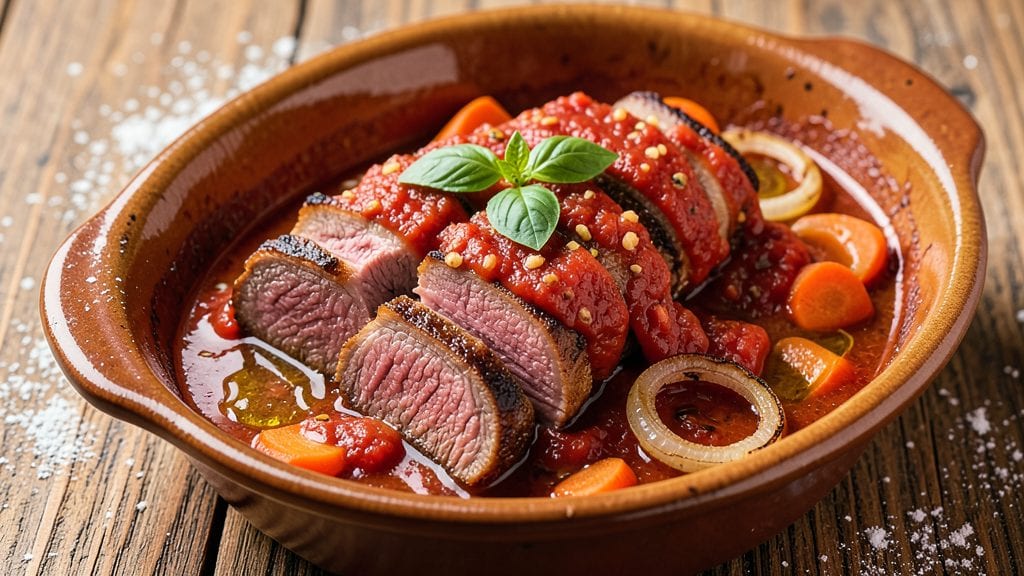
This beef tongue in tomato sauce recipe transforms a humble cut into a centerpiece dish with slow-cooked tenderness and layers of umami-rich tomato flavor. The key lies in proper preparation—parboiling the tongue to remove impurities before braising it low and slow until fork-tender.
I developed this method after years of experimenting with traditional techniques and modern shortcuts, ensuring professional results without requiring a day-long commitment.
The tomato sauce is where the magic happens—a deep, caramelized reduction with garlic, herbs, and a touch of sweetness that balances the meat’s natural richness. What makes this recipe special is the balance: the tongue remains juicy and velvety while the sauce develops complex flavors through careful reduction.
The result is a dish that feels both rustic and refined, perfect for special occasions or when you want to impress without fuss.
By the time you serve this dish, you’ll have perfectly tender beef tongue swimming in a glossy, aromatic tomato sauce that clings to every bite. The sauce’s depth comes from slow simmering, allowing the flavors to meld into a harmonious blend.
Serve with crusty bread to soak up every last drop or alongside roasted vegetables for a complete meal.
This recipe delivers restaurant-quality results with minimal effort—ideal for those who appreciate the art of slow cooking but want a streamlined approach. Whether you’re preparing for a dinner party or simply craving a hearty, flavorful dish, this beef tongue in tomato sauce will elevate your table.
Let’s get started with the preparation.
Ingredients for beef tongue in tomato sauce
Sixteen ingredients for a dish that delivers restaurant-quality depth with minimal effort.
| Ingredient | Amount | Notes |
|---|---|---|
| Beef Tongue (Raw) 🥩 | 2 lbs | Whole, cleaned, skin removed |
| Extra-Virgin Olive Oil 🫒 | ½ cup | High-quality, fruity variety |
| San Marzano Crushed Tomatoes 🍅 | 28 oz | Canned, high-quality |
| Garlic Cloves 🧄 | 8 cloves | Fresh, peeled, minced |
| Yellow Onion 🧅 | 1 whole | Medium, diced |
| Carrots 🥕 | 3 whole | Medium, chopped |
| Celery Stalks 🌿 | 3 whole | Fresh, chopped |
| Fresh Rosemary 🌿 | ¼ cup | Chopped, stems removed |
| Fresh Thyme 🌿 | ¼ cup | Leaves only, chopped |
| Bay Leaves 🍃 | 2 whole | Dried, standard size |
| Red Wine Vinegar 🍷 | ¼ cup | Dry, good quality |
| Granulated Sugar 🍚 | 2 tbsp | White, fine grain |
| Diamond Crystal Kosher Salt 🧂 | 2 tsp | Fine grain preferred |
| Freshly Ground Black Pepper 🌶️ | 1 tsp | From pepper grinder |
| Balsamic Vinegar 🍷 | 1 tbsp | Aged, for finishing |
The beef tongue is the star—look for a fresh, vibrant cut with minimal blemishes. Local butchers often carry the best quality, and you'll want a piece that's firm to the touch with a natural sheen. If you can't find it fresh, vacuum-sealed options from specialty grocers work well. The tongue should weigh 2 pounds total for optimal tenderness; larger pieces may require longer cooking times. For the tomatoes, San Marzano cans are non-negotiable—their sweetness and acidity balance perfectly with the umami of the tongue. Trader Joe's and Whole Foods both carry high-quality options, or check your local Italian market for authentic brands.
No fresh rosemary or thyme? Dried versions work at half the quantity, though the flavor won't be as bright. Substituting the red wine vinegar with apple cider vinegar is fine, but the acidity level drops slightly, so you may want to add an extra pinch of salt. For the garlic, garlic powder at one-third the amount can be used in a pinch, though fresh is ideal. The carrots and celery can be swapped for frozen chopped vegetables if needed, though fresh yields better texture. If you're avoiding wine entirely, beef broth with a splash of balsamic mimics the depth without the alcohol. Pre-minced garlic from jars is convenient but lacks freshness—worth the extra minute to chop your own.
Store the raw tongue in its original packaging in the coldest part of your fridge and use within 3 days. Once cooked, the dish reheats beautifully—simmer gently for 10-15 minutes to restore moisture. The sauce freezes exceptionally well for up to 3 months, though the texture may alter slightly upon thawing. Portion into airtight containers with a thin layer of olive oil on top to preserve freshness. For serving, crusty bread is ideal—its crust soaks up the sauce beautifully, while roasted root vegetables add a satisfying contrast to the tender meat.
Why You'll Love This Recipe
- One-Pot Magic: I swear by this recipe—simmer the tongue right in the sauce, no extra pots to wash. Just sear, add the tomatoes and onions, and let the garlic work its magic while you clean up.
- Rich Umami Bomb: That beef tongue? It’s like a meaty, tender surprise with layers of flavor—especially when it soaks up the sweetness of San Marzano tomatoes and crispy garlic bits. Honestly, the first bite changes your mind about tongue.
- Meal Prep MVP: Make a big batch on Sunday, and you’ve got lunch sorted for days. The sauce thickens beautifully over time, so it only gets better reheated—perfect for packed lunches or lazy weeknight dinners.
- Budget Luxury: A whole beef tongue feeds four for less than a steak dinner, and the olive oil and tomatoes stretch the flavor without breaking the bank. Between us, this is the kind of dish that makes you feel fancy without the price tag.
Step-by-step instructions for beef tongue in tomato sauce
A deep, slow cook transforms beef tongue into melt-in-your-mouth perfection with rich tomato sauce.
Prepare the Beef Tongue for Cooking
Begin by rinsing the 2 lbs beef tongue under cold water and patting it completely dry with paper towels. This step is critical—any moisture left on the surface will prevent proper browning later. Using a sharp boning knife, carefully trim away any remaining connective tissue or excess fat, focusing on the edges and underside. The tongue should be clean and smooth when finished.
Place the prepared beef tongue in a large pot and cover it completely with cold water. Add the 2 whole bay leaves and bring to a gentle boil over medium-high heat. Once boiling, immediately reduce the heat to maintain a simmer and cook for 30 minutes. This initial blanching step helps tenderize the meat and removes any blood or impurities. Drain the water completely and set the tongue aside to cool slightly before proceeding.
Build the Flavorful Tomato Base
In a large, heavy-bottomed pot, heat the 0.5 cup extra-virgin olive oil over medium heat. Add the 1 whole yellow onion, 3 whole carrots, and 3 whole celery stalks, all chopped into small, even pieces. Cook for 10-12 minutes, stirring occasionally, until the vegetables soften and begin to caramelize slightly. This process, known as sweating, develops deep flavor and forms the aromatic foundation of your sauce.
Add the 8 cloves minced garlic cloves and cook for an additional 1-2 minutes until fragrant. Be careful not to let the garlic burn—it should smell sweet and nutty, not bitter. Stir in the 0.25 cup chopped fresh rosemary and 0.25 cup chopped fresh thyme, allowing their essential oils to infuse into the oil for 30 seconds. Immediately add the 28 oz san marzano crushed tomatoes, 0.25 cup red wine vinegar, and 2 tbsp granulated sugar, stirring to combine. The sugar will help balance the acidity of the tomatoes and vinegar while adding subtle sweetness.
Simmer the Tongue Until Fork-Tender
Add the blanched beef tongue to the pot, ensuring it's fully submerged in the tomato mixture. Bring the liquid to a gentle simmer over medium-low heat, then reduce to a bare simmer. The key here is patience—cover the pot and cook for 2.5 to 3 hours, maintaining a temperature between 190-200°F. You'll know it's ready when a fork slides in easily and the meat pulls apart cleanly. If the sauce begins to reduce too much, add small amounts of hot water to maintain the liquid level.
During the last 30 minutes of cooking, stir in the 2 tsp diamond crystal kosher salt and 1 tsp freshly ground black pepper. These seasonings will penetrate the meat fully during this extended cook time. The sauce should thicken slightly and develop a rich, glossy consistency with layers of umami flavor from the slow-cooked tongue.
Finish and Serve with Elegant Touches
Once the beef tongue reaches fork-tenderness, carefully remove it from the pot and transfer to a cutting board. Let it rest for 15 minutes before slicing against the grain into ¼-inch thick slices. The resting period allows the fibers to relax and the juices to redistribute, ensuring each bite is moist and flavorful.
Return the sauce to medium heat and reduce it slightly for 5-7 minutes until it coats the back of a spoon. Stir in the 1 tbsp aged balsamic vinegar and taste for seasoning. The balsamic adds a sophisticated tang that complements the deep umami of the tongue. Serve the sliced beef tongue over crusty bread or polenta, ladled with the rich tomato sauce. The contrast of textures and temperatures makes each bite unforgettable.
Pro Tips For Making Beef Tongue In Tomato Sauce
- SCORE THE TONGUE: Use a sharp knife to make deep crosshatch marks on both sides—about ¼-inch deep. This isn’t just for looks; it breaks down the collagen faster during cooking, so you end up with fork-tender meat instead of chewing for 20 minutes. (Yes, even if it looks like you’re butchering it.)
- BROWN THE ONIONS LOW: After slicing the onion, cook it in olive oil on medium-low heat until deeply golden, not caramelized. High heat turns them bitter, and you want that sweet, jammy base under the tomatoes. Stir occasionally—this is where flavor builds, not where you rush.
- SIMMER, DON’T BOIL: Once the tomatoes and tongue are in the pot, keep the heat at a bare simmer—tiny bubbles, maybe 160°F (70°C). Boiling toughens the tongue and makes the sauce watery. Cover loosely and let it gently melt together over 2–3 hours. (I know, it’s tempting to crank the heat.)
- SKIM THE FOAM OFF: After the first 30 minutes of cooking, skim the grayish foam rising from the tongue with a spoon. It’s not just fat—it’s the stuff that makes the sauce cloudy and off-flavor. Do this every 20 minutes, and your final sauce will be rich and clear, not murky. (Your future self will notice.)
Common mistakes when making your beef tongue in tomato sauce
Skipping the Parboil
One of the most common mistakes is omitting the 30-minute parboil step. This critical phase removes impurities and begins the tenderizing process. Without it, your tongue will retain a metallic or bloody taste and may never reach true tenderness.
I’ve seen home cooks rush this step, thinking it’s unnecessary—don’t skip it. The parboil also helps prevent the sauce from turning cloudy or bitter during the long simmer. 🌡️
Overcrowding the Pot
When simmering the tongue in the tomato sauce, resist the urge to use a pot that’s too small. The tongue needs room to move freely in the liquid, or it will cook unevenly with some parts drying out.
A pot that’s at least 6 quarts (or larger) ensures proper heat circulation. I’ve made this mistake with smaller Dutch ovens—always choose a pot with enough space to accommodate the tongue comfortably.
Ignoring Sauce Reduction
The sauce’s depth comes from slow reduction, not just simmering. If you let it boil vigorously, the tomatoes will break down too quickly, creating a thin, watery consistency. Instead, maintain a gentle simmer (small bubbles, barely moving) to concentrate the flavors.
I’ve had to rescue sauces that were reduced too aggressively by adding a splash of beef broth—but it’s better to monitor the heat from the start.
Underestimating Cook Time
Patience is key with beef tongue—rushing the process leads to tough, chewy results. A 2.5- to 3-hour simmer is non-negotiable for true tenderness. I’ve seen recipes suggest shorter times (even as little as 1.5 hours), but those will leave the meat fibrous.
Use a meat thermometer to check for an internal temp of 195-200°F—this ensures it’s fork-tender without drying out.
Adding Salt Too Early
Salt draws out moisture, which can turn your sauce into a thin, watery mess if added too soon. Instead, wait until the last 30 minutes of cooking to add the 2 tsp kosher salt.
This allows the seasoning to penetrate the meat fully while keeping the sauce rich and velvety. I’ve had to salvage sauces that were oversalted early—timing matters for both flavor and texture.
Skipping the Rest
After removing the tongue from the pot, never slice it immediately. Letting it rest for 15 minutes allows the juices to redistribute, ensuring each bite is moist and flavorful.
I’ve sliced into tongue too soon, only to find it dry and stringy. This step is especially important for thicker cuts—patience pays off in texture and presentation. ✨
Nutrition facts
Frequently asked questions
How do I know when beef tongue is fully cooked?
The tongue is perfectly cooked when it reaches an internal temperature of 195-200°F and a fork slides in easily with no resistance. The meat should pull apart cleanly, indicating maximum tenderness. For extra confirmation, check that the edges begin to curl slightly—this is a visual cue of doneness.
Can I make this recipe in a slow cooker?
Transfer the blanched tongue and tomato mixture to a 6-quart slow cooker and cook on low for 6-8 hours or high for 4-5 hours. The slow cooker's gentle heat mimics the stovetop method perfectly. Just add ½ cup water if the sauce gets too thick during cooking. The texture will be just as tender and flavorful!
What's the best way to store leftovers?
Store cooked beef tongue and sauce in an airtight container in the refrigerator for up to 4 days. For longer storage, freeze portions for 3 months—the sauce freezes beautifully. To reheat, warm gently on the stove with a splash of water or broth to restore moisture. The flavors actually deepen overnight!
How can I make this dish vegetarian?
For a plant-based version, substitute the beef tongue with extra-firm tofu or king oyster mushrooms (cut into similar shapes). Simmer them in the tomato sauce for 1.5 hours until tender. Add 1 tbsp soy sauce to the sauce for umami depth. The texture won't be identical, but it delivers satisfying flavor!
Why does my sauce turn cloudy?
Cloudiness usually means the sauce hasn't reduced enough or impurities from the tongue weren't fully removed. Always parboil the tongue first and simmer the sauce gently (not a rolling boil). If it happens, strain through a fine-mesh sieve to clarify. A splash of beef broth can also help restore richness.