
Sauces & Condiments
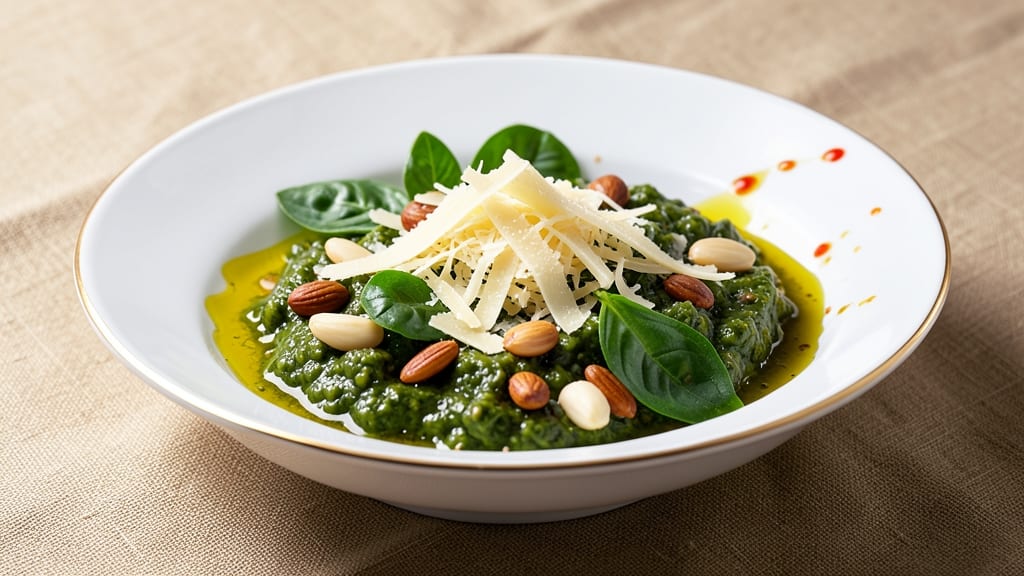
Bobby Flay’s pesto sauce recipe transforms fresh basil into a vibrant, bold sauce that’s restaurant-quality in minutes. The secret lies in high-quality ingredients and a precise emulsification technique that creates a perfectly balanced blend of herby brightness and nutty richness.
I’ve perfected this version to stay true to Flay’s signature style—bold, bright, and impossible to resist.
This sauce starts with a mix of fresh basil, garlic, and toasted pine nuts, all blended with a touch of Parmesan cheese for depth.
The real magic happens when you slowly drizzle in cold-pressed olive oil while blending, creating a silky, emulsified texture that clings perfectly to pasta, grilled meats, or crispy vegetables. Every bite delivers that signature Flay flavor—bright, aromatic, and packed with umami.
The result is a versatile sauce that elevates any dish, from classic pasta to grilled chicken or even as a dip for fresh bread. What sets this recipe apart is its simplicity—no special equipment needed, just a food processor and a few high-quality ingredients.
Once you taste the difference, store-bought pesto won’t stand a chance.
Ready in just 10 minutes, this pesto keeps well in the fridge for up to a week or can be frozen for longer storage.
Whether you’re prepping for a weeknight dinner or hosting a dinner party, this sauce will be your new go-to for adding bold, fresh flavor to every meal.
Ingredients for bobby flay pesto sauce
High-quality ingredients create Bobby Flay's signature pesto—bright, bold, and restaurant-worthy in minutes.
| Ingredient | Amount | Notes |
|---|---|---|
| Fresh Basil Leaves 🌿 | 3 cups | Packed, stems removed, vibrant green |
| Pine Nuts 🥜 | ¾ cup | Toasted in dry pan until golden |
| Garlic Cloves 🧄 | 4 cloves | Peeled, roughly chopped for bold flavor |
| Parmesan Cheese 🧀 | 1 cup | Freshly grated from block, not pre-grated |
| Extra-Virgin Olive Oil 🫒 | 1 cup | Cold-pressed, fruity, not refined |
| Lemon Juice 🍋 | 2 tbsp | Freshly squeezed, seeds removed |
| Sea Salt 🧂 | ½ tsp | Fine grain, kosher preferred |
| Freshly Ground Black Pepper 🌶️ | ¼ tsp | Cracked peppercorns for maximum aroma |
The basil is non-negotiable for that signature Flay brightness. Harvest Market or local farmers markets offer the freshest leaves, but grocery store basil works if it's vibrant green and firm to the touch. Toast the pine nuts in a dry pan until golden—this enhances their nutty depth (about 3-4 minutes). For the Parmesan, Parmigiano-Reggiano from a deli counter is ideal; pre-grated lacks the sharpness. The garlic should be fresh—smell it first, it should be pungent. Extra-virgin olive oil is critical; California Olive Ranch or Colavita brands deliver the fruity notes Flay prefers.
No pine nuts? Walnuts or macadamias work in a pinch, but toast them longer for depth. Fresh basil wilted? Spinach or arugula at half the amount adds greens without overpowering. Short on Parmesan? Pecorino Romano offers a sharper bite. The lemon juice can be bottled in a pinch, but fresh is brighter. For extra umami, add 1 tsp nutritional yeast to the blend. The salt and pepper should be freshly ground—pre-ground loses potency quickly. If you're making this ahead, blend the dry ingredients first and store separately until ready to emulsify.
Pesto oxidizes fast, so store it in an airtight jar with a thin layer of extra-virgin olive oil on top to preserve color and freshness. Keeps for 5-7 days in the fridge, but quality peaks within 3 days. Freezes beautifully for up to 3 months—portion into ice cube trays for single-use servings. For restaurant-quality results, always blend the oil slowly while processing to create that signature silky emulsion. Leftovers make incredible sandwich spreads or pasta finishes.
Why You'll Love This Recipe
- No Pulse Needed: I just pulse the basil, garlic, and pine nuts in my food processor—no fancy techniques, no stress. The olive oil blends in while I’m still loading the ingredients, and boom, done. (Yes, even if I’m multitasking with a toddler on my hip.)
- Umami Bomb: That moment when the Parmesan shavings hit the mix? Pure magic. The garlic sings, the pine nuts add crunch, and the basil? It’s like a green, herby hug in every bite. I’ve made pesto before, but this version actually tastes like it belongs in a restaurant.
- Pasta’s Best Friend: Slather it on linguine, toss it with roasted veggies, or drizzle it over grilled chicken—this pesto doesn’t play favorites. I’ve used it for everything from lazy weeknight dinners to impressing my in-laws, and it never lets me down. (Between us, it’s my secret weapon for “I cooked” nights.)
- Fridge Goldmine: Make a big batch—it keeps for days in the fridge, and the flavor only gets richer. I freeze half in ice cube trays for when I’m too tired to blend, then just thaw and stir. Honestly, the only downside is having to resist eating the whole jar straight from the container.
Step-by-step instructions for Bobby Flay's pesto sauce recipe
Here's how to craft this vibrant, restaurant-quality basil pesto using precise techniques.
Toast the Pine Nuts for Maximum Flavor
Heat a dry skillet over medium-low heat and add the 0.75 cup pine nuts. Stir constantly for 3-4 minutes until they turn a rich golden brown color and become fragrant. Watch them closely—they burn quickly and lose their delicate nuttiness.
Remove the pine nuts immediately when they're toasted, as they continue cooking even after you take them off the heat. Let them cool for 2 minutes before transferring to a food processor. This cooling step prevents the oil from separating when you blend later.
Process the Garlic and Parmesan
Add the 4 cloves roughly chopped garlic and 1 cup freshly grated Parmesan cheese to the food processor. Pulse 3-4 times until the garlic is finely minced but not paste-like. This creates a textured base that prevents the pesto from becoming too smooth.
I like to add the Parmesan directly to the processor rather than pre-mixing it. This ensures all the cheese particles get evenly distributed throughout the final sauce. The rind adds depth of flavor, so don't remove it when grating.
Blend the Basil and Lemon Juice
Add the 3 cups packed fresh basil leaves (stems removed) and 2 tablespoons lemon juice to the processor. Pulse 2-3 times just to chop the basil roughly—you want visible leaf pieces, not a puree. The texture contrast makes this pesto truly special.
Here's the thing—don't over-blend. You want visible basil flecks in your final sauce. If you blend too long, you'll lose that fresh, vibrant appearance that makes this pesto so appealing. The lemon juice brightens the flavor and balances the richness.
Stream in the Olive Oil Gradually
With the processor running, slowly drizzle in the 1 cup extra-virgin olive oil through the feed tube. This gradual addition prevents the oil from separating and creates that signature emulsified texture. Let the processor run for 30-45 seconds after all the oil is added.
I use a steady stream rather than pouring all at once. This ensures the oil incorporates smoothly and creates that luxurious, creamy consistency. The oil should coat all the other ingredients evenly, creating a vibrant green sauce that clings beautifully to pasta.
Season and Adjust the Texture
Add the 0.5 teaspoon sea salt and 0.25 teaspoon freshly ground black pepper to the processor. Pulse 2-3 times to combine. Taste immediately—this is your only chance to adjust the seasoning before the flavors meld completely.
If the pesto tastes too strong, add 1-2 tablespoons pasta water or lemon juice to mellow it. For a thicker consistency, pulse in 1-2 additional tablespoons grated Parmesan. The sauce should be vibrant green, creamy, and perfectly balanced between fresh basil, nutty pine nuts, and salty Parmesan.
Pro Tips For Making Bobby Flay Pesto Sauce
- Toast the Pine Nuts: I learned this the hard way—raw pine nuts in pesto taste like sawdust. Dry-toast them in a skillet over medium-low heat for 2-3 minutes, stirring constantly, until they’re golden and fragrant. Watch them like a hawk; they burn faster than you’d think.
- Pulse, Don’t Blend: A food processor is your friend here, but don’t turn it into a smoothie. Pulse the basil, garlic, and nuts in short bursts—about 10 seconds on, 10 off—until it’s chunky but combined. Over-blending turns pesto into green paste, and nobody wants that.
- Use Cold Parmesan: Straight from the fridge, grate the Parmesan over the pesto mixture while it’s still in the processor. Cold cheese melts slower, so it actually incorporates better than warm, clumpy chunks. Trust me, your pesto will thank you.
- Add Oil Gradually: Drizzle in the olive oil in thin streams while pulsing, not all at once. This keeps the texture balanced—too much oil upfront makes the pesto greasy, and you’ll end up with a sad, watery mess. Think of it like a slow dance, not a dump-and-pray.
Serving suggestions for this recipe
Pasta Perfection
Bobby Flay’s pesto transforms classic dishes like fettuccine alfredo or linguine into showstoppers. Toss 2 servings cooked pasta with ¼ cup pesto and 2 tablespoons pasta water—the starch helps the sauce cling beautifully.
For extra richness, top with seared scallops or grilled shrimp. I love adding a sprinkle of crispy pancetta for that signature Flay umami punch. 🍝
For a lighter option, try whole wheat spaghetti or zucchini noodles—both pair wonderfully with the bright, herby flavors. The key is to toss the pasta immediately after draining (while still hot) to prevent sticking.
If the sauce seems too thick, add more pasta water, 1 tablespoon at a time, until it reaches a silky consistency.
Protein Pairings
Grilled filet mignon or chicken breast becomes a standout when topped with this pesto. Brush 2 tablespoons sauce over cooked proteins and broil for 2-3 minutes to create a flavorful crust.
I often serve this with roasted asparagus or garlic sautéed green beans for a complete meal. The pesto’s acidity cuts through the richness of the meat beautifully.
For a vegetarian option, try spreading pesto on toasted baguette slices and topping with marinated artichoke hearts and cherry tomatoes. This open-faced sandwich is perfect for brunch or a light dinner. The nutty pine nuts add texture that balances the softness of the bread and cheese.
Dipping Delight
This pesto makes an incredible dip for crudités like carrot sticks, celery, or bell pepper strips. Serve it in a small crock or bowl with a drizzle of olive oil and a sprinkle of flaky sea salt.
The vibrant green color makes it visually stunning, and the flavors are bold enough to stand alone. I often pair this with warm focaccia or pita chips for dipping. 🥕
For a party-friendly twist, arrange the dip in a hollowed-out tomato or bell pepper for a colorful presentation. The pesto’s freshness contrasts perfectly with the sweetness of the vegetables. Garnish with a few pine nuts or Parmesan shavings before serving to elevate the dish.
Breakfast Boost
Start your day with Bobby Flay’s pesto by mixing 2 tablespoons into scrambled eggs or a frittata. The herby brightness pairs surprisingly well with eggs, adding depth without overpowering. I also love spreading it on toasted sourdough with a poached egg and crispy prosciutto for a gourmet breakfast sandwich.
The acidity in the pesto cuts through the richness of the eggs and cheese.
For a savory twist on brunch, use pesto as a base for shakshuka. Stir 1-2 tablespoons into the tomato sauce before adding eggs, and top with feta cheese and fresh herbs. The pesto adds a fresh, herby note that balances the smoky flavors of the dish.
Freezing for Later
Portion leftover pesto into 1-tablespoon servings in an ice cube tray, cover with plastic wrap, and freeze. Once solid, transfer the cubes to a ziplock bag or airtight container for easy storage. Thaw in the fridge overnight and stir in 1 teaspoon olive oil to restore the emulsified texture.
This method keeps the pesto fresh for up to 3 months without losing its vibrant color or flavor.
When reheating, gently warm the pesto in a small saucepan over low heat with 1 tablespoon pasta water or olive oil to loosen the texture. Avoid high heat—it can cause the oil to separate.
Stir frequently until smooth, then adjust seasoning with a pinch of salt or lemon juice if needed. The result should be just as creamy and flavorful as when you first made it. 💫
Nutrition facts
Frequently asked questions
Why does Bobby Flay's pesto recipe call for toasted pine nuts?
Toasting the pine nuts enhances their natural nutty flavor and prevents them from becoming bitter or oily when blended. The golden-brown color also adds visual appeal, making your pesto look as good as it tastes. Plus, toasted nuts release their oils more gradually, creating a smoother, more balanced sauce.
Can I substitute walnuts or almonds for pine nuts?
Yes, but toast them longer for deeper flavor—walnuts need about 5 minutes to develop their natural oils. Almonds work too, but they have a slightly sweeter taste. For a closer match to pine nuts, use ½ cup walnuts or almonds instead of ¾ cup pine nuts since they're larger.
What's the secret to getting that perfect emulsified texture?
Slowly drizzle the olive oil while blending continuously—this prevents separation. Start with the processor running, then add the oil through the feed tube in a thin, steady stream. Let it blend for 30-45 seconds after all the oil is added to ensure everything is fully combined.
How do I fix pesto that's separated or turned brown?
If it separates, stir in 1 teaspoon olive oil and blend again. For browning (oxidation), cover with a thin layer of olive oil and refrigerate immediately. The oil acts as a barrier against air exposure. If it's too thick, thin with 1 tablespoon pasta water or lemon juice while blending.
Can I make this pesto ahead of time for a dinner party?
Prepare it 1-2 days ahead and store it in an airtight container with a layer of olive oil on top. Refrigerate until ready to use. For best results, blend again briefly before serving to restore the emulsified texture. The flavors actually deepen over time, making it perfect for entertaining.