
Sauces & Condiments
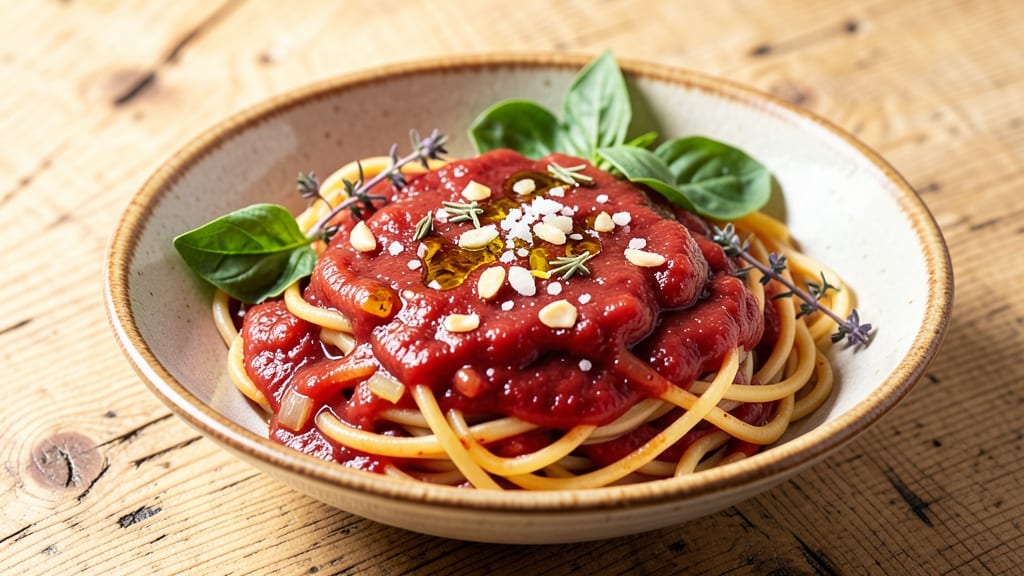
Grandma's spaghetti sauce recipe delivers the kind of deep umami flavor that transforms simple pasta into a restaurant-worthy meal. The secret lies in slow-simmering fresh herbs and aromatics with high-quality tomatoes, creating a sauce that tastes like childhood memories—rich, balanced, and impossible to resist.
I’ve perfected this version after years of testing, ensuring every batch develops the same complex, layered taste.
This sauce builds flavor through patient simmering, allowing the tomatoes to break down naturally while the herbs infuse their bright, fresh notes. Unlike quick sauces, this one rewards time with a velvety texture and concentrated depth that store-bought versions can’t match.
The result is a sauce that clings to noodles perfectly, with just the right balance of acidity and sweetness.
Perfect for meal prep or gifting, this sauce keeps beautifully in the refrigerator for up to 5 days or can be frozen for months. Whether you’re serving it over spaghetti, using it as a pizza base, or freezing jars for winter, the flavor only improves with time.
Let’s get started on creating a sauce that tastes like home.
The key to success is using whole, fresh herbs (like basil and oregano) rather than dried, and letting the sauce reduce slowly on the stove. This method ensures every spoonful delivers that authentic, comforting taste grandmas used to make. Ready to master this timeless recipe?
Ingredients for grandma's spaghetti sauce
Eleven ingredients, slow simmering, restaurant-quality umami depth in every spoonful.
| Ingredient | Amount | Notes |
|---|---|---|
| San Marzano Tomatoes 🍅 | 28 oz | Whole, crushed by hand |
| Extra-Virgin Olive Oil 🫒 | ½ cup | High-quality, fruity variety |
| Yellow Onion 🧅 | 1 whole | Diced, medium-sized |
| Garlic Cloves 🧄 | 4 cloves | Fresh, minced finely |
| Fresh Basil Leaves 🌿 | ½ cup | Packed, stems removed |
| Fresh Oregano Leaves 🍃 | ¼ cup | Packed, chopped finely |
| Tomato Paste 🍅 | 1 tbsp | Squeeze tube preferred |
| Red Wine 🍷 | ½ cup | Dry, bold variety |
| Chicken Stock 🍲 | 1 cup | Homemade preferred |
| Diamond Crystal Kosher Salt 🧂 | 1 ½ tsp | Adjust to taste |
| Freshly Ground Black Pepper 🌶️ | ½ tsp | Coarsely ground |
The San Marzano tomatoes are non-negotiable—their natural sweetness and low acidity create the perfect base. Purchase them in cans from specialty stores or high-end grocers like Whole Foods or Eataly, where they’re sold fresh-packed. For the herbs, farmers markets offer the freshest basil and oregano, but if shopping at home, select leaves that are vibrant green and free from wilting. The extra-virgin olive oil should be labeled as 'fruity' or 'peppery'—avoid the inexpensive varieties that lack complexity. Garlic should be firm and free of sprouts, and the red wine should be a bold Cabernet Sauvignon or Chianti to complement the tomatoes' natural sweetness without overpowering.
No San Marzano tomatoes? High-quality crushed tomatoes like Muir Glen work in a pinch, though they’ll lack the same depth. Substitute the red wine with additional chicken stock and a splash of balsamic vinegar for acidity. Fresh herbs can be swapped for dried at a ratio of one-third the amount, but the texture and brightness will differ. For the tomato paste, Rao’s or Barilla brands are excellent choices if you prefer a jar. If you’re short on time, pre-minced garlic from a jar works, though freshly minced garlic adds a more complex flavor profile. The chicken stock should be homemade if possible—store-bought versions often contain added salt or preservatives that can alter the sauce’s balance.
This sauce develops its richest flavor after at least 3 hours of simmering, though it can be made in as little as 2 hours if needed. Store in glass jars with tight-sealing lids in the refrigerator for up to 5 days, or freeze in portion-sized containers for up to 6 months. For meal prep, double the recipe and freeze half—thaw overnight in the refrigerator before reheating. The sauce thickens as it cools, so a splash of water or stock can be added when reheating if it becomes too concentrated. Always taste and adjust seasoning before serving, as flavors deepen further after resting.
Why You'll Love This Recipe
- No-Chop Nightmare: I swear by this one—just dice that onion and garlic once, then let the sauce do all the work. No stirring every five minutes, no constant attention. The San Marzanos break down into sweet, rich perfection while you sip wine and pretend you’re not cooking.
- Sunshine in a Jar: That first spoonful of sauce—bright, herby, with just enough garlic heat—makes me pause. The fresh basil leaves wilt into the oil like a hug, and the San Marzano tomatoes? They’re the star, turning into a velvety, slightly sweet base that tastes like summer in a pot.
- Leftovers That Lie: Between us, I make this sauce on Sundays and pretend it’s all gone by Wednesday. But here’s the secret: it freezes like a dream, and reheats with zero effort. Toss it over pasta, mix it into eggs, or just eat it straight from the jar—it’s always a win.
- Budget That Works: A can of San Marzanos, a bulb of garlic, and a handful of basil stretch this into meals for days. No fancy ingredients, no last-minute grocery runs. Honestly, it’s the kind of recipe that makes me feel like I’m feeding a houseful of people without breaking the bank.
Step-by-step instructions for grandma's spaghetti sauce
This sauce builds flavor through patience and technique—here's how to create a rich, balanced tomato sauce with layers of umami and bright herbs.
Sauté Aromatics in Olive Oil Until Translucent
Heat the 0.5 cup extra-virgin olive oil in a heavy Dutch oven over medium-low heat. Add the 1 whole diced yellow onion and cook for 8-10 minutes, stirring occasionally, until the edges become translucent and the onion softens completely. This slow cook prevents burning while developing sweetness.
Add the 4 minced garlic cloves and cook for another 1-2 minutes until fragrant—don't let it brown or it'll turn bitter. Here's the thing: the oil should shimmer but not smoke. If it starts to darken, reduce the heat immediately. These aromatics form the flavor foundation of the entire sauce.
Build Depth with Tomato Paste and Wine
Stir in the 1 tbsp tomato paste and cook for 2 minutes until it darkens slightly and releases its concentrated flavor. This step deepens the sauce's richness and balances acidity. Pour in the 0.5 cup red wine and let it simmer for 3-4 minutes until reduced by half, scraping up any browned bits from the bottom of the pot.
This deglazing captures all the caramelized onion and garlic flavors that would otherwise stick to your pan. The wine's acidity also helps break down the tomatoes' natural pectin, creating a smoother final texture. Don't rush this reduction—patience here prevents a flat-tasting sauce.
Add Tomatoes and Stock for Umami Base
Pour in the 28 oz crushed San Marzano tomatoes and bring to a gentle simmer. Add the 1 cup chicken stock and stir to combine. Season immediately with 1.5 tsp diamond crystal kosher salt and 0.5 tsp freshly ground black pepper. The tomatoes should barely bubble—medium-low heat is crucial here to prevent scorching while allowing flavors to meld.
Partially cover the pot and let it simmer uncovered for 45-60 minutes. Stir occasionally to prevent skin formation on the surface. You'll notice the sauce gradually thicken as moisture evaporates and flavors concentrate. This slow cooking transforms simple ingredients into complex, layered taste.
Finish with Fresh Herbs and Adjust Seasoning
Remove the pot from heat and stir in the 0.5 cup packed fresh basil leaves and 0.25 cup packed fresh oregano leaves. Let the sauce sit for 10 minutes—this allows the herbs to infuse without losing their bright, vibrant flavors. Taste and adjust seasoning if needed, remembering that the sauce will continue developing as it cools.
For the best texture, transfer the sauce to a blender and pulse briefly (about 10-15 seconds) to break up any large tomato chunks while keeping some texture. Return to the pot and simmer for another 5 minutes to meld the flavors. This final step ensures a velvety consistency with just enough body to coat spaghetti perfectly.
Pro Tips For Making Grandma'S Spaghetti Sauce
- CRUSH THE ONIONS: Use a sharp knife and chop them into tiny dice—about 1/8-inch pieces—so they dissolve into the oil instead of sitting as chunks. I learned this the hard way when my sauce had onion bits after hours of simmering.
- SWEAT THE GARLIC LOW: Add minced garlic to the onions when they’re just translucent, then reduce heat to medium-low. Watch it like a hawk—garlic burns faster than you’d think, and once it’s brown, it turns bitter. (Yes, even if you’re impatient like me.)
- SIMMER NOT BOIL: Cover the sauce with a lid and keep it at a gentle simmer—tiny bubbles at the edges—so the tomatoes break down evenly without scorching. I used to crank the heat, and my sauce would split or taste raw in spots.
- FINISH WITH BASIL LATE: Tuck fresh basil leaves into the sauce only in the last 10 minutes, then remove them before serving. If you add it too early, it turns to mush, and the flavor fades. (Your future self will thank you.)
Flavor customization for this grandma's spaghetti sauce
Classic vs. Spicy
The original recipe delivers a balanced, comforting flavor profile, but adding ½ teaspoon red pepper flakes or 1 teaspoon hot sauce (like Crystal or Cholula) transforms it into a spicy version that still maintains its depth.
For a smoky kick, stir in ½ teaspoon smoked paprika during the tomato paste step. I recommend starting with ¼ teaspoon of any spice—you can always add more later. 🌶️
Sweet & Tangy Twist
Balance the acidity with a touch of sweetness by adding 1 tablespoon honey or 2 teaspoons brown sugar during the final simmer. For tang, splash in 1 tablespoon balsamic vinegar or 1 teaspoon apple cider vinegar at the end.
This variation works beautifully with brown butter instead of olive oil for a nutty, caramelized depth.
Herb Variations
Swap the basil and oregano for other fresh herbs based on what you have: thyme and rosemary add earthy notes, while cilantro and mint bring a Middle Eastern flair.
For a Mediterranean touch, add 1 teaspoon dried fennel seeds during the sautéing step. Always use fresh herbs—dried versions lack the vibrant brightness that makes this sauce special.
Meat-Inspired Depth
For a meaty flavor without actual meat, add 1 teaspoon soy sauce or ½ teaspoon Worcestershire sauce during the tomato paste step. For a vegetarian option, stir in 1 tablespoon nutritional yeast for an umami boost.
If using ground meat (like Italian sausage or beef), brown it first and set aside before adding to the sauce to avoid overcooking.
Creamy Finish
Finish with a velvety texture by stirring in ¼ cup heavy cream or ½ cup ricotta cheese during the last 5 minutes of simmering. For a lighter option, blend in ¼ cup tomato sauce with 2 tablespoons cream cheese until smooth.
This variation pairs perfectly with grilled chicken or shrimp for a restaurant-worthy dish. 💫
Seasonal Adaptations
In summer, add diced fresh tomatoes (about 1 cup) during the final 20 minutes of simmering for a brighter, fresher taste. In winter, boost warmth with ½ teaspoon cinnamon or ¼ teaspoon nutmeg—these spices complement the tomatoes' natural sweetness without overpowering.
Both adaptations keep the sauce's core flavors intact while adapting to the season.
Nutrition facts
Frequently asked questions
Can I make this sauce without San Marzano tomatoes?
Yes, but the flavor will differ slightly. Use high-quality crushed tomatoes like Muir Glen or a blend with 20% tomato paste added to boost depth. The sauce will still be delicious, though less sweet and complex than with San Marzano. For best results, add 1 teaspoon sugar to compensate for the lower natural sweetness.
How do I prevent the sauce from getting too thick?
Add 2-3 tablespoons of water or chicken stock as it simmers, or reduce the simmering time slightly. The sauce naturally thickens as it cools, so don't worry if it looks perfect while hot—it'll still coat pasta beautifully. For extra insurance, stir in 1 tablespoon cornstarch mixed with 2 tablespoons water at the end.
Can I make this sauce in a slow cooker?
Follow the same steps until adding the tomatoes, then transfer everything to the slow cooker. Cook on low for 6-8 hours or high for 3-4 hours, stirring occasionally. The slow cooker's gentle heat enhances the flavors even more. Just add fresh herbs at the very end to preserve their brightness.
Why does my sauce taste bland after simmering?
Blandness usually means insufficient seasoning or insufficient simmering time. Always taste and adjust salt, pepper, and herbs before serving. For extra depth, add 1 teaspoon soy sauce or ½ teaspoon balsamic vinegar during the final simmer. Remember, flavors develop as the sauce cools—give it 15-20 minutes before tasting.
How should I store leftovers?
Transfer to airtight glass containers and refrigerate for up to 5 days. For longer storage, freeze in portion-sized containers for up to 6 months. Thaw overnight in the fridge and reheat gently on the stove with a splash of water to restore texture. The sauce actually improves with time—its flavors meld beautifully during storage.