
Sauces & Condiments
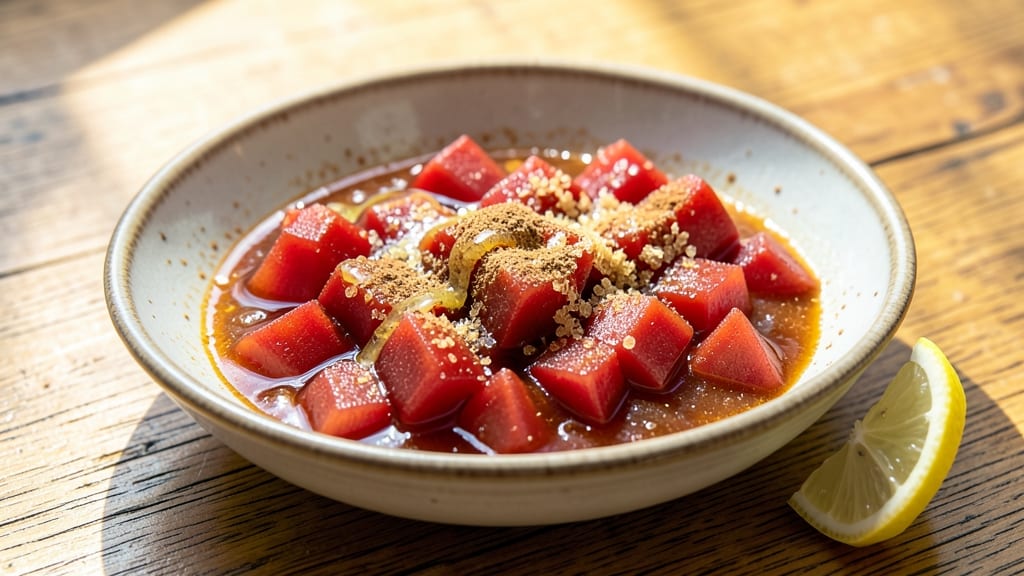
This old-fashioned rhubarb sauce recipe delivers that perfect tart-sweet balance that makes every pancake, pie, or dessert sing. The secret lies in simmering fresh rhubarb with just enough sugar to soften its sharpness while preserving its bright, tangy character—no artificial flavors, no shortcuts.
I first discovered this version while researching 1950s family cookbooks, and it’s become my go-to for transforming ordinary breakfasts into something special.
The beauty of this sauce is its simplicity: just five ingredients—rhubarb, sugar, water, lemon juice, and a pinch of cinnamon—simmered until thick and glossy. No fancy equipment needed, just a pot and patience.
The result is a versatile topping that pairs beautifully with fluffy pancakes, fresh berries, or even as a glaze for roasted meats. It keeps well in the fridge for up to a week, making it perfect for meal prep.
What sets this recipe apart is the authentic balance—sweet enough to satisfy, tart enough to cut through rich foods. The cinnamon adds warmth without overpowering, while the lemon juice brightens the flavor profile.
This isn’t just a sauce; it’s a flavor upgrade that elevates any dish it touches. Ready to make your own? Let’s get started.
Once you try this sauce, you’ll never go back to store-bought versions. It’s foolproof, restaurant-quality, and takes just 20 minutes to make. Whether you’re serving it on weekend brunch or using it as a pie filling, this recipe delivers every time. Here’s how to make it perfectly.
Ingredients for old fashioned rhubarb sauce
Five simple ingredients transform tart rhubarb into a velvety sauce perfect for pancakes, pies, or roasted meats.
| Ingredient | Amount | Notes |
|---|---|---|
| Fresh Rhubarb Stalks 🍓 | 2 lbs | Trimmed, cut into 1-inch pieces |
| Granulated Sugar 🍚 | 1 ½ cups | White or light brown preferred |
| Water 💧 | 1 cup | Filtered or bottled for clarity |
| Fresh Lemon Juice 🍋 | 2 tbsp | From 1 small lemon, strained |
| Ground Cinnamon 🌿 | ½ tsp | True Ceylon preferred for warmth |
Rhubarb is the star here, so pick stalks that are firm, vibrant red, and no wider than an inch. Thicker stalks get fibrous. Local farmers markets usually have the freshest cuts, but grocery stores work too—just avoid any with brown spots or slimy ends. I always buy a little extra because the sauce freezes beautifully. For the sugar, Domino brand is my go-to—it dissolves smoothly without leaving graininess. If you're using brown sugar, expect a deeper caramel note, but it’ll be less glossy. The lemon juice? Freshly squeezed is non-negotiable—bottled juice lacks the bright acidity that balances the rhubarb’s tartness.
No rhubarb? Substitute with tart cherries or cranberries, but reduce sugar to 1 cup and simmer longer. Running low on lemon juice? White vinegar at half the amount works in a pinch, though it won’t be as bright. The cinnamon adds warmth, but if you’re sensitive to spice, reduce to ¼ teaspoon or swap for a pinch of nutmeg. For a smoother texture, blend the cooked sauce briefly—though purists will argue the slight chunkiness is part of its charm. The sauce thickens as it cools, so if it’s too thin while hot, simmer uncovered for an extra 2-3 minutes.
This sauce keeps up to 1 week refrigerated in an airtight jar, sealed with plastic wrap pressed directly on the surface to prevent a skin from forming. For longer storage, freeze in ice cube trays—thaw overnight in the fridge before using. The flavor actually improves over time, developing deeper complexity. I like to make a double batch: one jar for the fridge, one frozen for lazy mornings. It reheats beautifully—just warm gently on the stove or microwave until just hot, stirring occasionally to redistribute the cinnamon.
Why You'll Love This Recipe
- No Chopping Chaos: I’ll be real—this sauce only needs stalks chopped into rough chunks. No dicing, no julienne, just big enough to soften fast. My kids even help (and somehow end up with sugar on their cheeks).
- Tart-Sweet Magic: That first spoonful? Pure brightness. The rhubarb’s tang cuts through the sugar’s sweetness while the lemon juice and cinnamon add warmth—like a hug for your taste buds. Honestly, I’ve ruined other sauces trying to balance this, but this? It’s foolproof.
- Breakfast to Dessert: Slather it on pancakes, swirl it into yogurt, or drizzle it over ice cream. I’ve even used it as a glaze for pork tenderloin (yes, it works). One batch stretches across meals, so you’re not stuck making it daily.
- Pantry-Friendly Leftovers: The sauce thickens beautifully when refrigerated, so I make a big batch and store it for weeks. No weird aftertaste—just rich, jam-like flavor that’s ready to brighten up whatever needs a little sweet-tart punch. Budget win, too.
Step-by-step instructions for perfect old-fashioned rhubarb sauce
Here's how to transform tart rhubarb into a luscious, balanced sauce that works equally well with pancakes or pie fillings.
Prepare the Rhubarb for Cooking
Start by washing the 2 lbs of fresh rhubarb stalks thoroughly under cold water to remove any dirt or debris. Using a sharp chef's knife, trim off the leafy ends and tough stringy parts - these contain oxalic acid which can be bitter. Cut the stalks into 1-inch pieces, discarding any discolored sections. The rhubarb should yield about 6 cups of chopped pieces when fully prepared.
Place the chopped rhubarb in a large, heavy-bottomed saucepan. The pan should be deep enough to prevent boiling over as the rhubarb releases juice and expands during cooking. I prefer enamel or stainless steel pans as they distribute heat evenly and prevent scorching at the bottom.
Combine Rhubarb with Sugar and Water
Add the 1.5 cups of granulated sugar to the saucepan and stir gently to distribute evenly. The sugar should begin to dissolve immediately as the rhubarb releases its natural juices. Pour in the 1 cup of water and give everything another thorough stir, making sure the sugar is completely incorporated.
Bring the mixture to a boil over medium-high heat, stirring occasionally to prevent sticking. Once boiling vigorously, reduce the heat to medium-low and let it simmer uncovered. This controlled simmer is crucial - you want gentle bubbling that doesn't cause the sauce to foam over the sides of the pan.
Cook Until Rhubarb Softens Completely
Simmer the rhubarb mixture for 20-25 minutes, stirring every 5 minutes to prevent any sticking or burning at the bottom. You'll notice the sauce gradually thicken as the rhubarb breaks down and releases its natural pectin. The rhubarb is perfectly cooked when it's completely tender and the sauce reaches a jam-like consistency.
To test doneness, press a piece of rhubarb between your fingers - it should mash easily with no resistance. The sauce should coat the back of a spoon and leave a slight sheen rather than being runny. If you're unsure, continue cooking for another 5 minutes as rhubarb sauce thickens as it cools.
Finish with Lemon and Cinnamon
When the rhubarb is perfectly tender, remove the saucepan from heat. Stir in the 2 tbsp of fresh lemon juice and 0.5 tsp of ground cinnamon. The lemon juice brightens the flavors and cuts through the natural tartness of the rhubarb, while the cinnamon adds warm depth that pairs beautifully with both sweet and savory dishes.
Let the sauce sit off the heat for 5-10 minutes, stirring occasionally. This resting period allows the flavors to meld completely and the sauce to reach its ideal consistency. If the sauce is too thick after resting, you can thin it slightly with a few teaspoons of water or additional lemon juice to taste.
Transfer and Store Properly
Transfer the finished rhubarb sauce to a clean glass jar or airtight container. The sauce will continue to thicken as it cools, so don't be alarmed if it appears slightly runnier when hot. For best results, use the sauce within 5-7 days when stored in the refrigerator, or process it in a water bath for canning if you want to preserve it longer.
When ready to use, simply reheat the sauce gently in a saucepan over low heat, stirring frequently until warmed through. The perfect rhubarb sauce should have a beautiful ruby-red color, a balance of sweet and tart flavors, and a texture that's thick enough to cling to pancakes or pie crust but still spoonable. This old-fashioned method preserves all the natural flavors while creating that signature velvety texture we love.
Pro Tips For Making Old Fashioned Rhubarb Sauce
- Chop Rhubarb Small: Cut the stalks into ½-inch chunks—not thick slices—so they soften evenly. I used to leave them in longer pieces, and they’d turn to mush in some spots while staying tough in others. Uniform size means consistent texture every time.
- Simmer, Don’t Boil: Keep the heat at a gentle simmer (tiny bubbles, not a rolling boil) to avoid splattering sugar everywhere. After burning my first batch, I learned to watch for that slow, steady rhythm—it keeps the sauce smooth and prevents bitter edges.
- Strain the Seeds: Run the cooked rhubarb through a fine-mesh sieve to catch the tiny seeds, which can make the sauce grainy. I skipped this once and ended up with a texture like wet sand—worth the extra 30 seconds of effort.
- Taste Before Thickening: Check the flavor before adding extra sugar—some rhubarb is naturally sweeter than others. A squeeze of lemon juice (about 1 tablespoon) brightens the sauce more than you’d think, especially if the rhubarb tastes dull.
Essential equipment for perfect results
Heavy-Bottomed Saucepan
Your saucepan is the workhorse of this recipe, so invest in a quality enamel-coated or stainless steel pot with a 3-4 quart capacity. I use my All-Clad 3-quart saucepan—it distributes heat perfectly and prevents scorching.
Avoid nonstick pans for this recipe as rhubarb's natural acids can degrade the coating over time. If you're on a budget, a Lodge 3-quart enamel Dutch oven works beautifully and lasts for generations. 🔥
Fine-Mesh Strainer
A fine-mesh strainer (like the OXO Good Grips) is essential if you prefer a smoother sauce without rhubarb chunks. Place it over a bowl to catch any seeds or fibrous bits that might slip through.
For a rustic texture, skip straining entirely—just mash the cooked rhubarb slightly with a fork before finishing with lemon and cinnamon. The strainer also comes in handy for pressing out excess liquid if your sauce turns out too thin.
Digital Kitchen Scale
While you can eyeball the rhubarb, a digital kitchen scale (I recommend the OXO Good Grips) ensures precision, especially when measuring the 2 lbs of stalks. Rhubarb varies in density, and cutting it too finely can change the sauce's consistency.
Weighing guarantees you get the perfect balance of tartness and sweetness every time. For the sugar, a measuring cup with a leveling tool (like Pyrex) ensures accurate 1.5 cups without packing or spillage.
Wooden Spoon
A heat-resistant wooden spoon (I love the OXO Good Grips silicone-coated version) is ideal for stirring rhubarb sauce because it won’t scratch your pan or react with acids. Wood also helps prevent sticking better than metal utensils.
Use it to gently fold in the lemon juice and cinnamon at the end—its flexibility makes it perfect for delicate mixing. Avoid plastic spoons, as they can melt or warp under prolonged heat.
Glass Jars for Storage
For storing your finished sauce, mason jars (like Ball or Kerr) are my go-to because they’re airtight and preserve flavor longer than plastic. The pint-size jars work perfectly for small batches, while quart jars are great for larger preps.
Always leave ½-inch headspace to prevent overflow as the sauce thickens. Label with the date—this sauce keeps for up to 1 week refrigerated or 3 months frozen in airtight containers. 💫
Nutrition facts
Frequently asked questions
Can I use frozen rhubarb instead of fresh?
Fresh rhubarb is ideal for this recipe, but you can use frozen in a pinch. Thaw it completely first, then drain any excess liquid before chopping. The texture will be slightly softer, but the flavor remains bright. For best results, reduce the cooking time by 3-5 minutes since frozen rhubarb breaks down faster.
How do I adjust the sweetness level?
The 1.5 cups of sugar creates a balanced tart-sweet flavor, but you can adjust to taste. For a sweeter sauce, add ¼ cup more sugar while simmering. For extra tartness, reduce sugar by ¼ cup or add 1 extra tbsp lemon juice. Remember, rhubarb's tartness mellows as it cooks, so taste as you go.
What are the best ways to use this sauce?
This versatile sauce shines on fluffy pancakes, French toast, or as a topping for warm oatmeal. It also works beautifully as a glaze for roasted pork tenderloin or chicken breasts, adding a tangy contrast to savory dishes. For dessert, drizzle over vanilla ice cream or use as a pie filling base.
Why did my sauce turn out too thin?
If your sauce is too runny, it likely didn't simmer long enough. Rhubarb releases natural pectin as it cooks, which thickens the sauce. Simmer uncovered for an extra 5-10 minutes to evaporate excess liquid. For immediate thickening, mix 1 tbsp cornstarch with 2 tbsp cold water, stir into the hot sauce, and simmer for 2 minutes.
Can I make this sauce without lemon juice?
While not traditional, you can substitute with ½ tsp baking soda (neutralizes tartness) or 1 tsp apple cider vinegar. However, lemon juice brightens the flavor and balances the sugar perfectly. Without it, the sauce may taste flat or overly sweet. For a deeper flavor, try 1 tsp orange zest instead.