
Sauces & Condiments
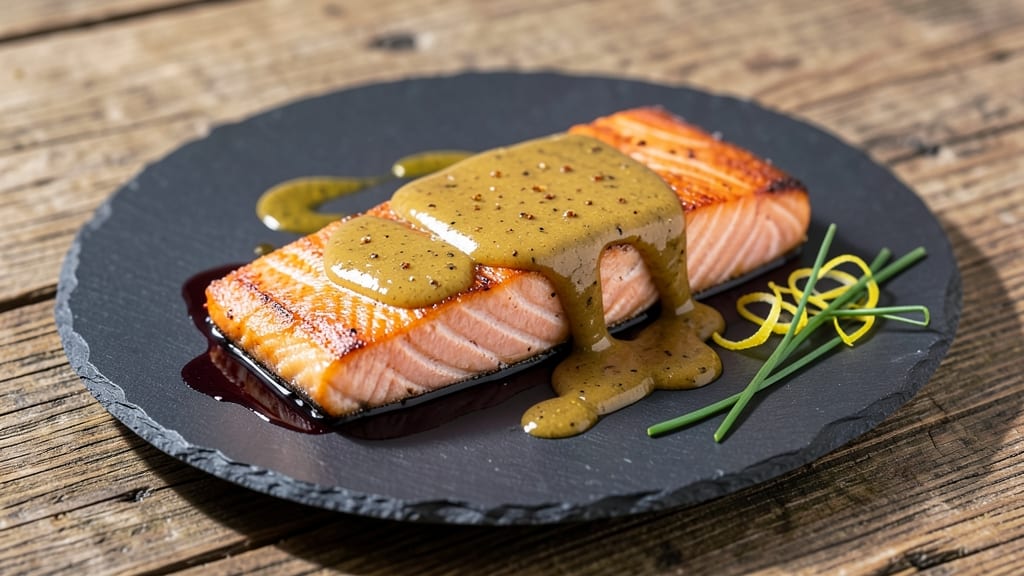
Pan-seared salmon with a rich mustard sauce transforms simple weeknight dinners into restaurant-quality meals. The secret lies in balancing tangy Dijon, sweet balsamic reduction, and perfectly cooked fish that flakes effortlessly.
I’ve perfected this method over years of testing—no fancy techniques, just precise timing and a sauce that clings to every bite.
What makes this recipe stand out is the sauce: a velvety blend of mustard, balsamic vinegar, and butter that caramelizes into a glossy finish. The salmon cooks in just 10 minutes, leaving the center tender while the edges stay crisp.
This dish delivers elegant results without requiring advanced skills—ideal for pescatarians or anyone craving a flavorful, protein-packed meal.
The harmony between the sauce and salmon is where the magic happens. The mustard adds depth, the balsamic brings brightness, and the butter ties everything together in a silky consistency. Serve with roasted asparagus or a fresh salad to complete the plate—this recipe is designed to impress with minimal effort.
Ready in under 20 minutes, this dish proves that sophisticated flavors don’t require complicated methods. The key is patience: let the sauce reduce properly, and the salmon rest before serving. Trust the process, and you’ll achieve a restaurant-worthy meal every time.
Ingredients for salmon with mustard sauce
Fourteen quality ingredients transform simple salmon into restaurant-worthy elegance through precise technique and sauce mastery.
| Ingredient | Amount | Notes |
|---|---|---|
| Center-Cut Salmon Fillets 🐟 | 1 ½ lb | Skin-on, evenly thick cutlets |
| Extra-Virgin Olive Oil 🫒 | 2 tbsp | High-quality, fruity variety |
| Unsalted Butter 🧈 | 4 tbsp | Cold, cubed for sauce |
| Dijon Mustard 🌶️ | 2 tbsp | Smooth, not grainy |
| Balsamic Vinegar 🍷 | 1 ½ tbsp | Aged, dark variety |
| Fresh Lemon Juice 🍋 | 1 ½ tbsp | From 1/2 lemon, freshly squeezed |
| Shallots 🧅 | 2 whole | Minced, finely chopped |
| Fresh Thyme Leaves 🌿 | ¼ cup | Stems removed, chopped |
| Diamond Crystal Kosher Salt 🧂 | 1 tsp | Fine grain preferred |
| Freshly Ground Black Pepper 🌶️ | ½ tsp | Coarse grind preferred |
| Garlic Cloves 🧄 | 2 cloves | Minced, finely chopped |
| All-Purpose Flour 🌾 | 1 tbsp | For dredging salmon |
| Fresh Parsley Leaves 🌿 | ⅛ cup | Chopped, for garnish |
The salmon selection is critical—center-cut fillets with skin ensure even cooking and optimal texture. Whole Foods or Trader Joe's carry excellent pre-portioned fillets, but if buying whole, ask the fishmonger to remove the pin bones for you. Look for vibrant pink flesh with minimal bruising; the skin should be intact and shiny. For the mustard, Maille or Amora deliver superior smoothness, while balsamic vinegar should be aged at least 12 months for depth. Fresh thyme and parsley elevate the dish—Penzeys or local farmers' markets offer superior quality, but grocery store bunches work if used immediately. The butter matters too: Plugrá or Land O'Lakes unsalted provide the right balance of richness without overpowering.
No Dijon mustard? Whole-grain mustard thinned with water works in a pinch, though texture will differ slightly. Substituting balsamic vinegar with red wine vinegar plus 1 tsp honey mimics the sweet-tart profile, though aged balsamic's complexity is unmatched. Short on fresh thyme? Dried thyme at one-third the amount suffices, but fresh is ideal. The flour dredge prevents sticking—use all-purpose, not cake flour, for proper adhesion. For garlic lovers, roast the cloves first to mellow their intensity and add sweetness. The lemon juice must be freshly squeezed; bottled versions lack the bright acidity needed to balance the sauce's richness.
Salmon fillets should be used within 2 days of purchase for peak freshness; store them skin-side down on a plate lined with paper towels to retain moisture. Fresh herbs keep best wrapped in damp paper towels inside a plastic bag for up to 5 days. The sauce components (mustard, vinegar, butter) can be prepped ahead and stored in airtight containers in the fridge for 1 week, though the butter may solidify—simply soften at room temperature before use. Once assembled, the sauce reheats beautifully; store it in a sealed container for up to 3 days, adding a splash of water or lemon juice if it thickens too much upon reheating.
Why You'll Love This Recipe
- I’ll be real: this works for a Tuesday night when I’m too tired to think, and when I’m hosting because it looks impressive. Serve it with roasted potatoes or a simple salad—no one will guess it took less than 20 minutes. (Yes, even on a Tuesday night.)
- Five-Ingredient Magic: Honestly, this recipe only needs five things—no fancy shopping list, no forgotten spices. The salmon cooks in butter and olive oil while you whisk together mustard and balsamic in a bowl. That’s it. No chopping, no stress, just meltingly tender fish with a sauce that takes two minutes.
- Tangy Creamy Bliss: Between us, the combo of Dijon mustard and balsamic vinegar cuts through the richness of the butter, giving you this perfect balance—smooth, bright, and just a little sharp. The sauce clings to the salmon like a hug, and that crispy skin? Absolute victory.
- Weeknight to Dinner Party: I’ll be real: this works for a Tuesday night when I’m too tired to think, and when I’m hosting because it looks impressive. Serve it with roasted potatoes or a simple salad—no one will guess it took less than 20 minutes. (Yes, even on a Tuesday night.)
Step-by-step instructions for balsamic-kissed salmon with mustard pan sauce
Master this technique and you'll transform simple salmon into a restaurant-worthy centerpiece.
Prepare the Salmon for Perfect Crisp
Pat the 1.5 lb center-cut salmon fillets dry with paper towels—this is non-negotiable for crispy skin. Season both sides generously with the 1 tsp diamond crystal kosher salt and 0.5 tsp freshly ground black pepper, pressing firmly so the seasoning adheres. Let the seasoned fillets rest at room temperature for 15 minutes while you prepare the aromatics.
While waiting, dredge each fillet lightly in the 1 tbsp all-purpose flour, shaking off any excess. This creates a delicate crust that enhances browning without overpowering the salmon's natural flavor. I like to work quickly here—flour left on too long can make the skin gummy rather than crisp.
Build the Mustard-Balsamic Base
Heat the 2 tbsp extra-virgin olive oil in a large skillet over medium heat until shimmering. Add the 2 whole minced shallots and cook for 3 minutes until softened and translucent. This gentle cooking prevents the shallots from burning while developing their sweet, oniony depth.
Add the 2 cloves minced garlic and cook for another 30 seconds until fragrant—you should smell that unmistakable garlic aroma before it turns bitter. Immediately pour in the 2 tbsp dijon mustard and stir vigorously for 1 minute. This step creates the sauce's foundational flavor profile, where the mustard's tangy depth begins to meld with the shallots and garlic.
Sear the Salmon to Golden Perfection
Carefully add the salmon fillets to the skillet, skin-side down. Cook undisturbed for 4-5 minutes until the skin is deep golden brown and crisp. I press down gently on the fillets during the first minute to prevent curling—this ensures even contact with the pan. Flip the salmon and cook for another 3-4 minutes until the flesh is opaque throughout and flakes easily with a fork.
Remove the salmon to a warm plate and tent loosely with foil to keep warm. The residual heat will finish cooking the fillets while you complete the sauce. If the pan appears dry, add 2 tablespoons of water to deglaze and capture those flavorful browned bits.
Complete the Balsamic-Kissed Sauce
Reduce heat to medium-low and add the 4 tbsp cold cubed unsalted butter to the skillet. Stir constantly for 2 minutes until the butter melts and the sauce begins to emulsify. This butter infusion creates the sauce's velvety texture that clings beautifully to the salmon.
Pour in the 1.5 tbsp balsamic vinegar and 1.5 tbsp fresh lemon juice, stirring to combine. The vinegar adds a subtle sweetness that balances the mustard's sharpness, while the lemon brightens the entire dish. Add the 0.25 cup chopped fresh thyme leaves and simmer for 1 minute to infuse the sauce with aromatic depth.
Plate and Garnish for Presentation
Return the salmon to the skillet and spoon the sauce generously over the top. Let it sit for 1 minute to absorb the sauce's rich flavors. Transfer the salmon to serving plates, spooning any remaining sauce from the skillet over the top.
Garnish with the 0.125 cup chopped fresh parsley leaves and serve immediately. The contrast of crispy skin, tender flesh, and the silky mustard-balsamic sauce creates a harmonious balance of textures and flavors that will impress even discerning diners.
Pro Tips For Making Salmon With Mustard Sauce
- Test for Doneness: Pull the salmon at 120°F internal—yes, it’ll look undercooked, but it’ll hit 145°F while resting. I learned this the hard way after serving dry fish to guests who still thought they were eating raw salmon. Let it rest 5 minutes under foil; the carryover heat finishes it perfectly.
- Whisk the Mustard: Warm the Dijon mustard with the butter first—just until it melts—before adding vinegar. Cold mustard clumps like glue, and you’ll end up with a lumpy sauce. A quick 30-second whisk on low heat makes all the difference.
- Pat Dry, Then Salt: Press the salmon fillets between paper towels until they’re bone-dry—no moisture left. Salt them immediately after, or the skin won’t crisp. I used to skip this, and my pan would steam instead of sear.
- Deglaze with Vinegar: After cooking the salmon, splash in the balsamic vinegar right away—it cuts through the butter residue and adds depth. Skip this, and your sauce will taste flat. Use a wooden spoon to scrape up those browned bits; they’re flavor gold.
Troubleshooting your salmon with mustard sauce
Sauce Too Thin?
If your mustard-balsamic sauce turns out too thin, it’s likely because you didn’t reduce the liquid enough. After adding the butter, let the sauce simmer uncovered for an extra 2-3 minutes to thicken naturally.
For immediate thickening, mix 1 tsp cornstarch with 1 tbsp cold water, stir into the sauce, and cook for 1 minute until glossy. I’ve also found that using aged balsamic vinegar (12+ months) adds more depth and helps the sauce cling better to the salmon. 💡
Salmon Overcooked?
Overcooked salmon is a common issue, but it’s easy to fix with precise timing. The salmon is done when it reaches an internal temperature of 145°F and flakes easily with a fork.
If yours turns out dry, try this: After removing the fillets from the pan, tent them with foil and let them rest for 5 minutes before slicing. This redistributes the juices. For next time, reduce the heat slightly after 3 minutes of cooking to prevent over-searing. 🌡️
Mustard Too Strong?
The mustard flavor can overpower if not balanced properly. To mellow it, add an extra 1 tbsp of lemon juice or a splash of white wine while making the sauce.
If the dish is already cooked, serve it with a side of creamy mashed potatoes or roasted sweet potatoes to absorb the excess tang. I’ve also found that a pinch of sugar (just ½ tsp) in the sauce helps round out the sharpness. 🍋
Skin Not Crispy?
Crispy skin is all about patience and technique. First, ensure your salmon fillets are completely dry before seasoning—any moisture will steam the skin instead of crisping it. Use a 12-inch cast-iron skillet (like Lodge) for even heat distribution.
Cook the salmon skin-side down over medium heat (not high) for 4-5 minutes without moving it. If your pan isn’t hot enough, the skin will stick and steam instead of crisp. 🔥
Sauce Separating?
Sauce separation happens when the butter and liquid don’t emulsify properly. To fix it, whisk in 1 tbsp of warm water or lemon juice while stirring vigorously. For prevention, add the cold butter to the sauce gradually, one cube at a time, stirring constantly until fully melted.
If the sauce still separates, place the skillet over low heat and whisk gently until smooth. I’ve found that removing the skillet from heat briefly while adding the butter also helps create a stable emulsion. ✨
Flavor Too Mild?
A mild flavor profile often means the sauce needs more depth. Boost the mustard’s kick by adding ½ tsp of smoked paprika or a pinch of cayenne pepper to the sauce.
For extra brightness, increase the lemon juice to 2 tbsp and add a splash of fish sauce (just ½ tsp) for umami. If the dish is already cooked, serve it with quick-pickled onions or a sprinkle of toasted sesame seeds to add complexity. 💛
Nutrition facts
Frequently asked questions
Can I use whole-grain mustard instead of Dijon?
Yes, but thin it with 1 tsp water per 1 tbsp mustard to match Dijon's smooth consistency. Whole-grain mustard adds texture that may not emulsify as beautifully in the sauce. For best results, strain any large seeds before using to maintain that velvety finish.
How do I store leftovers?
Store salmon and sauce separately in airtight containers for up to 2 days. Reheat gently in a skillet over low heat, adding 1 tbsp water to restore moisture. Never microwave—it ruins the crispy skin. The sauce can also be frozen for 1 month (without salmon) by cooling it completely first.
What's the best side dish pairing?
This dish shines with roasted asparagus (tossed in olive oil and salt) or creamy risotto to balance the tangy sauce. For contrast, try cucumber salad with dill and lemon. The crispness of roasted vegetables or the silkiness of rice complements the salmon's texture perfectly.
Can I make this ahead of time?
Prepare the sauce components (mustard, balsamic, butter) up to 1 day ahead and store in the fridge. Cook the salmon fresh—it's best served immediately for crispy skin. If reheating, cook salmon from room temperature for 2-3 minutes per side over medium heat. The sauce reheats beautifully in the same pan.
What if I don't have fresh thyme?
Use ½ tsp dried thyme (one-third the amount) or substitute with ½ tsp dried oregano for a Mediterranean twist. For extra depth, add ¼ tsp ground coriander to mimic thyme's earthy notes. Fresh herbs elevate the dish, but dried works in a pinch—just bloom it in warm sauce for 1 minute before serving.